Middle Eastern tension is at the point of breaking down into outright chaos as the United States President Donald Trump announced on June 11, 2026 that the US was planning to carry out further airstrikes on Iran and that soon US forces would be seizing Iran’s most important oil export port, Kharg Island. Trump made this announcement through his social networking site just following three days after the military conflicts between the two sides. The President’s announcement reflects a complete change in US foreign policy towards Iran, from selective strikes to a plan for territorial takeover and economic control.
The most recent utterances by Trump have come after several incidents in which he has launched large bombing attacks on Kharg Island, claiming that these attacks “obliterated” all the military targets in the area. Threatening to take control of the Iranian oil and gas markets seems to be a repeat of the previous statements he made that “the preferred thing [was] to take the oil” from Iran.
Kharg Island: Iran’s Economic Lifeline Under Threat
The Kharg Island does not just stand as a strategic position for Iranian military but also forms the spine of the Iranian economy. This is because it lies in the Persian Gulf region near the southern coastline of Iran, where 90% of Iranian oil export takes place. The disruption of activities at this port will have a direct impact on the generation of revenue by Iran.
The importance of the island lies outside Iran. It serves as a vital node for global energy logistics networks and, as such, affects global oil prices and energy security. In fact, some analysts have predicted that the seizure of Kharg Island by America can lead to a complete upheaval of global energy relations with consequences such as price increases and supply problems. The readiness of President Donald Trump to strike at such an important economic facility clearly demonstrates how serious the present situation is.
Trump’s Bombastic Statements: A Pattern of Escalation
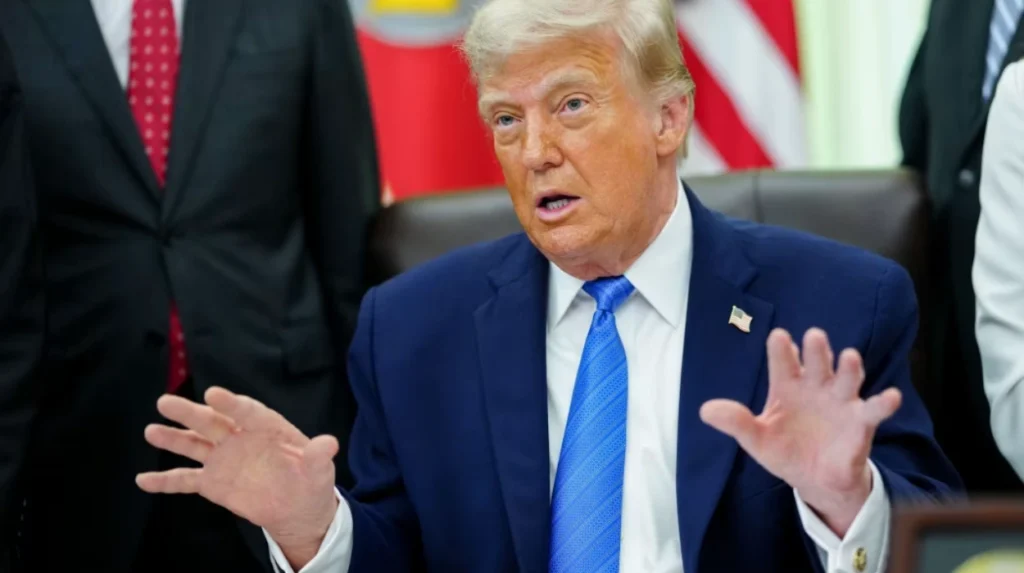
President Trump’s rhetoric has been consistently aggressive throughout this crisis, with his statements growing more inflammatory as tensions escalate. On June 11, 2026, Trump declared:
“At some point in the not too distant future, we will be taking Kharg Island, and other oil infrastructure points, and assume total control of their Oil and Gas Markets, much like we have with Venezuela.”
This statement, delivered in the context of ongoing military exchanges, signals a clear intent to transition from temporary strikes to permanent occupation.
Trump’s language echoes his earlier threats from March 2026. On March 30, he warned:
“If for any reason a deal is not shortly reached… we will conclude our lovely ‘stay’ in Iran by blowing up and completely obliterating all of their electric generating plants, oil wells and Kharg Island.”
This declaration, made amid negotiations, revealed Trump’s willingness to destroy Iran’s economic infrastructure if diplomatic efforts failed.
The President’s March 14 comments further highlighted his aggressive stance:
“We may hit it a few more times just for fun. We’ve completely decimated it.”
These remarks, delivered to NBC News, reflected a casual disregard for the consequences of military action and reinforced Trump’s image as a provocateur willing to gamble with regional stability.
Trump’s March 29 statement to reporters added another layer to his strategy:
“My preference would be to take the oil.”
This blunt assertion of economic revealed the President’s underlying motivation: not just military dominance but control over Iran’s most valuable resource.
U.S. Military Actions: From Strikes to Seizure
This policy has been implemented even before by the United States. From March 12th to 14th, 2026, U.S. troops carried out a number of bombing raids against Kharg Island. According to Trump, these bombings resulted in the total destruction of all military facilities on the island, which he called “the most powerful bombing raid in the Middle East.”
At the moment, it is not entirely clear whether Trump’s words were really true and how great the damage from the bombings was. However, it should be noted that Tehran has stated that they will respond even harder if their oil facilities on the island are bombed again.
The shift from targeted strikes to a vow of seizure marks a critical evolution in U.S. strategy. Trump’s June 11 announcement that the U.S. will “assume total control” of Kharg Island and other oil facilities represents a departure from traditional military objectives. Instead of a temporary operation, the U.S. is now positioning itself for a prolonged occupation of Iranian territory—a move that would constitute a direct violation of international law and a challenge to Iran’s sovereignty.
Iran’s Resistance: Threats of Retaliation and Regional Escalation
Iran has responded to U.S. aggression with a series of defiant threats. Tehran has declared that it will reduce U.S.-linked oil facilities to a “pile of ashes” if oil structures on Kharg Island are attacked. This statement underscores Iran’s willingness to target global energy infrastructure in retaliation for U.S. actions, potentially dragging the world into a wider conflict.
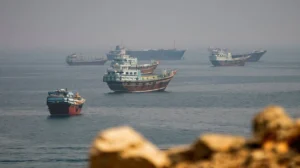
The Iranian regime has also promised to step up its actions if the Strait of Hormuz is closed. The Strait is an important bottleneck in the transport of oil, carrying around 20% of the world’s oil exports. Closing down this crucial lifeline will have devastating effects on the global market and can result in all-out war. The President of the United States has requested allied countries to send their naval fleets to protect the Strait of Hormuz from any such closure. However, given the Iranian regime’s threats to defend the Strait against all odds, any attempt to shut down the Strait can lead to a naval battle.
Global Implications: Energy Markets, Diplomacy, and Regional Stability
The threat by the U.S. government to capture the Kharg Island is of tremendous significance in the world’s energy market, foreign diplomacy, and peace within the region. Being the primary oil exporter, the Kharg Island plays a pivotal role in exporting 90% of Iran’s crude oil. If anything happens to this island, then there will be an escalation in oil prices that can slow down the economy of the whole world.
From the point of view of diplomacy, Trump’s behavior has been met with great disapproval from different world leaders. The act of capturing the territory of another state is against international norms such as territorial occupation and national sovereignty.
Regionally, the conflict threatens to destabilize the entire Persian Gulf. Neighboring countries, including Saudi Arabia, Kuwait, and Qatar, face the risk of being drawn into the conflict as Iran seeks to expand its retaliation. The U.S. presence in the region could also provoke backlash from other powers, including Russia and China, which have strategic interests in the Middle East.
The Diplomacy Deadlock: Failed Negotiations and Hardline Stances
Behind the military escalation lies a failed diplomatic process. Trump has claimed that Iran has agreed to
“most of” the 15-point list of U.S. demands
to end the war, but earlier assessments revealed Iran’s skepticism of Washington’s position. On March 14, Trump deflated hopes of a deal by stating that the “terms aren’t good enough,” signaling a breakdown in negotiations.
In this regard, the U.S. remains firm on demanding unconditional compliance by the Iranians while Iran rejects any deal that would be humiliating for them. Diplomacy is no longer seen as an effective tool since military action seems to be the new means through which the negotiations are being conducted. From the perspective of U.S. foreign policy, Trump’s aggression represents the new path chosen by the American President during his second term. In light of this new strategy, President Trump adopts a more unilateral way of dealing with foreign conflicts through the use of military power.