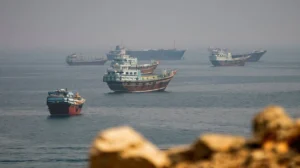
The waters of the Arabian Sea near Oman turned into an arena for a deadly encounter on Wednesday, June 10, 2026, following an attack by the U.S. Armed Forces against a Palau-registered oil tanker, known as MT Settebello, leading to the death of three Indian sailors. This particular event has gained importance due to the loss of life in the form of commercial seafarers amidst the increasing tension between the two countries, adding another layer of uncertainty in an already troubled region.
It was officially reported by the Indian government that the three crew members who were initially reported missing after the attack are now known to be dead. The remains of these three individuals were recovered and identified. This attack has resulted in quick condemnation from New Delhi, as well as some concern about the safety of shipping in waters essential to the delivery of energy throughout the world.
The Victims and Their Stories
The three dead sailors belong to varying positions and different backgrounds from the crew of the ship, each of whom has a family eagerly waiting for news which never came. First, Suresh Patnala who hailed from Himachal Pradesh was employed as an engineer at the higher levels on board the ship. Second, Aditya Sharma who was a deck cadet from Deoria, Uttar Pradesh, was at the start of his career in the shipping industry when his life was brutally cut short.
The above three were some of the 24 Indian sailors who had been traveling on board the merchant ship MT Settebello that had no military designation whatsoever. 21 of these fellow Indians had already been rescued from the bombed tanker when the ship was declared useless by the American military, hence forcing it to catch fire. While this move saved most of the crew, it could not help save the lives of these three sailors whose remains were never found.
United States Military Justification and Actions
There is a straightforward rationale that the US Central Command provided for the military operation. They noted that the bombing of the ship was done after the MT Settebello tried to breach the blockade set up by the United States around the Strait of Hormuz. This blockade is seen to be one of the fiercest policies adopted by the American government in its struggle with Iran, as it makes the international waterways militarized areas.
The American military force used the missiles in such a way that it left no room for the vessel to sail further, thus preventing any possible support from being offered to the enemy. While this may have been a smart strategic move, it came with severe humanitarian consequences in that there were three people killed in the process.
India’s Official Response and Diplomatic Condemnation
The Indian Ministry of External Affairs released an official statement criticizing the assault on the merchant vessel, stressing that MT Settebello was a commercial vessel with no military affiliations at all. The tone of the statement indicated how concerned the Indian Ministry of External Affairs was about this situation.
“We condemn the attack on the commercial vessel Settebello off the coast of Oman… It is deeply unfortunate to learn of the tragic incident,”
stated the Ministry of External Affairs, their words carrying the weight of official diplomatic condemnation while expressing genuine sorrow over the human cost.
Shipping Minister Sarbananda Sonowal provided additional context during his public remarks on the incident, confirming the deaths and expressing the government’s profound disappointment over the circumstances. His statement reflected the administration’s broader concern about the safety of Indian workers in conflict zones and the need for greater protection of commercial shipping.
“It is deeply unfortunate… Sadly, three Indian seafarers initially reported missing are now confirmed dead after bodies have been located and identified,”
said Shipping Minister Sarbananda Sonowal, his words marking the official acknowledgment of the fatalities that had been feared since the strike occurred.
Broader Context of US-Iran Military Exchanges
This incident cannot be understood in isolation from the broader pattern of military exchanges between the United States and Iran that have intensified over recent days. The strikes on MT Settebello follow a series of retaliatory actions that have threatened to derail ongoing peace negotiations between Washington and Tehran.
Iran carried out several missile and drone attacks against US military bases in Jordan, Kuwait, and Bahrain. The assault was viewed as Iran’s retaliatory measure for America’s actions in the region. Indeed, the Iranian move signified a huge escalation by targeting US military bases in various nations. Nevertheless, US intelligence reports indicated that almost all Iranian missiles and drones had been shot down before being able to hit their intended targets.
America’s counterattack saw the interception of several Iranian drones alongside an attack on one of the Iranian facilities used for drone control in the city of Bandar Abbas. It is worth noting that the above scenario shows a pattern whereby each attack triggers a corresponding reaction leading to possible escalation.
The Fragile Ceasefire and Negotiation Framework
A key factor in assessing the importance of this particular occurrence is that there was a ceasefire agreement between the United States and Iran signed in early April 2026. With the ceasefire being in place for more than two months, it is now faced with its greatest challenge ever. The present tension is indeed the gravest danger to the ceasefire since its inception.
Both countries have already made an agreement on how to prolong the truce by adding two more months and how to open the Strait of Hormuz to allow regular shipping again. Unfortunately, negotiations on this issue are being delayed now, which creates a lot of doubts concerning the viability of the truce. In such a context, one should question the chances of maintaining the truce after such an incident as the bombing of the MT Settebello ship.
Impact on Global Shipping and Energy Markets
The Strait of Hormuz remains one of the world’s most critical shipping lanes, serving as the primary route for Persian Gulf oil and gas exports. The immobilization of vessels and tankers in this strategic waterway, particularly near Musandam in Oman, has immediate implications for global energy supplies and maritime commerce.
Commercial shipping has been severely disrupted as vessels avoid the contested waters or face the risk of military engagement. The MT Settebello incident demonstrates that even commercial vessels with no military affiliation face genuine danger in these waters, potentially leading tanker operators and shipping companies to reconsider their routes through the region.
Maritime Union Response and Worker Safety Concerns
The Federation of Indian Seafarers Union (FSUI) has raised serious concerns about the safety of Indian maritime workers operating in conflict zones. Union officials reported that they initially could not establish communication with the ship following the strike, leaving families in the dark about their loved ones’ fate during the critical hours after the attack.
“The inability to establish connection with the ship left families in agony during those critical hours,”
noted FSUI General Secretary Manoj Yadav, whose statement highlighted the broader safety concerns facing Indian seafarers operating in increasingly dangerous waters.
The union’s response underscores the need for better protection mechanisms for commercial maritime workers and clearer guidelines about which waters remain safe for civilian shipping during periods of military tension.
Diplomatic and Strategic Implications
In the wake of the death of three Indian sailors, the conflict between the US and Iran is no longer bilateral but rather involves a third party which has experienced losses in the form of human casualties as a result of the military action.
With India condemning the military action while remaining neutral in the wider diplomatic conflict, there appears to be increased anxiety within neighboring nations regarding the implications this military conflict has on commerce and citizen safety. The involvement of Indian citizens has complicated this international issue by placing pressure on both sides to make peace.
Humanitarian Concerns and Casualty Verification
The confirmation of the three deaths came only after a difficult process of locating and identifying bodies from the damaged vessel. The initial uncertainty about the sailors’ fate, with three reported missing while twenty-one were rescued, created a painful period of uncertainty for families and the Indian government. The eventual identification of Patnala, Sharma, and Chaurasiya as deceased provided closure but at the cost of confirming the tragic loss.
This verification process highlights the challenges of accurately assessing casualties in maritime military incidents, where damage to vessels and the difficulty of recovering bodies from water can delay or complicate casualty counts.
Uncertainty and Potential Pathways
The way ahead is still unclear despite continuing diplomatic talks as the crisis escalates militarily. It hinges on whether the United States and Iran can come to a mutual understanding regarding de-escalation after this incident and revert back to their previous negotiating pattern. The killing of three Indian seamen has brought about urgency in this situation, but there is still much tension between the two nations.
Commercial shipping in the Strait of Hormuz will continue to face elevated risks until the military situation stabilizes, potentially affecting global energy markets and maritime trade routes for months. The international community watches with concern, hoping that the lessons from this tragedy will encourage faster de-escalation before additional civilian lives are lost in the escalating conflict.