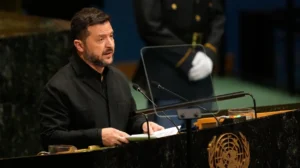
The Chinese authorities have arrested American professor Min Zin on espionage charges, triggering alarm bells in the global academic community over the safety of researchers working on geopolitically sensitive issues. The apprehension took place merely a few days after he participated in a conference in Kunming, Yunnan province, which is among the most important arrests involving an American citizen in China amid the rising tension between the two countries regarding academic freedom.
Min Zin is a U.S. and Burmese dual citizen who is currently completing his Ph.D. at UC Berkeley. In addition to Min Zin’s academic work on Myanmar politics and Chinese foreign policy, he is also known to have participated in the anti-military government movement that occurred in Myanmar in 1988. The historical significance of this particular case is further amplified by his involvement in the political events of that period in Myanmar. Chinese authorities have detained him criminally on grounds of committing espionage against Chinese national interests.
The Timeline of Disappearance and Official Confirmation
Zin disappeared on June 3, 2026, after participating in what was said to be an ordinary academic seminar in Kunming. Information regarding his disappearance was provided by his family and co-workers immediately following the incident. China confirmed Zin’s arrest on Friday, June 12, 2026, more than a week since he first vanished from sight.
China’s procedures for notifying other nations about Zin’s detention shed light on its legal procedures. According to official notification, China informed the U.S. Consulate General in Guangzhou that Zin had been detained under criminal charges against him.
The spokesperson stated:
“It is understood that Min Zin has been placed under criminal detention by the relevant authorities in accordance with the law on suspicion of engaging in espionage and endangering China’s national security.”
Lin Jian, spokesperson for China’s Ministry of Foreign Affairs.
This confirmation came just one month after President Trump’s visit to Beijing, adding diplomatic complexity to what many observers view as a politically sensitive case involving academic research on Chinese foreign policy and regional trade relations.
Min Zin’s Background: From 1988 Uprising to Contemporary Scholarship
The scholar’s background is significant in helping to explain the reasoning behind the actions taken by Chinese officials. Min Zin is a member of the group that participated in Myanmar’s uprising of 1988, which was an uprising that occurred as a response to the dictatorship by the military. It was eventually put down through the use of violence by the military.
Currently, Zin serves as the founder and executive director of the Institute for Strategy and Policy (ISP) Myanmar, a think tank that analyzes Chinese foreign policy and trade relations with Southeast Asian nations.
After the coup in 2021 by which military forces removed the government led by Aung San Suu Kyi from power, ISP Myanmar left Myanmar and was established abroad. The institution has had many discussions with Chinese scholars, and it has conducted much research on China–Myanmar relations, analyzing Myanmar’s rare-earth minerals exported to China.
Despite his past political activism, at present, Zin does not engage in any form of political activism. This information was provided to me anonymously by a Burmese activist. Presently, he is concerned primarily with academic and policy studies on China–Myanmar relations.
Chinese Foreign Policy Research and National Security Concerns
In particular, Zin’s research is now at the core of China’s espionage accusations. His activities at ISP Myanmar are centered around studying the policies of China towards Myanmar, in terms of trade relations and mineral exports in particular. It seems like the Chinese government in particular, is interested in research regarding the economic presence of China in Southeast Asia, which involves resources like rare-earth minerals.
The think tank founded by Min Zin has released reports on trade relations between China and Myanmar, analyzing the rare-earth minerals exported by Myanmar to China in particular. The rare earth minerals are strategic resources for China, used in its industry, making the research highly relevant. The scholar’s work has included regular dialogues with Chinese counterparts, suggesting he maintained professional relationships with Chinese academic and policy institutions while conducting research that authorities now view as threatening.
China’s emphasis on national security concerns reflects broader patterns in how the country handles foreign research on sensitive geopolitical topics. The detention suggests Chinese authorities view academic research on Chinese foreign policy and regional economic relations as potentially espionage-related when it involves strategic resources or diplomatic strategies.
International Academic Community Response and Diplomatic Implications
The arrest has sparked immediate worries on the part of international academic organizations and U.S. government officials concerning the safety of academic researchers working on Asian politics and China’s foreign policy. Academics supporting academic freedom have questioned whether Zin’s academic endeavor, based on his research into publicly available data about trade policies and diplomacy, qualifies as legitimate academic pursuit or espionage.
The fact that he was arrested just one month after the trip to Beijing by President Trump adds diplomatic complications to the case. It is argued that his arrest can be interpreted as the reflection of existing tensions between the two countries in connection with academic freedom and the work of academics in the area of geopolitics.
University officials at UC Berkeley, where Zin is pursuing his PhD, have expressed concern about his safety and legal status. The university’s international programs office has reportedly contacted Chinese authorities about the detention, seeking clarity on the legal proceedings and potential for diplomatic intervention.
Legal Procedures and Future Prospects
Under Chinese law, criminal detention for espionage cases can result in extended periods of investigation before formal charges are filed. The detention process typically involves security services conducting interviews, reviewing research materials, and potentially examining digital communications. Zin’s legal team, if granted access, will need to navigate complex Chinese legal procedures that differ significantly from U.S. constitutional protections.
The espionage charges carry serious potential consequences, including lengthy prison terms if convicted. Chinese courts handle espionage cases with particular scrutiny, often viewing them as threats to national sovereignty and security. The case will likely proceed through China’s judicial system with limited international oversight, making diplomatic intervention challenging.
Family members and colleagues have expressed uncertainty about the timeline for legal proceedings and the possibility of Zin’s release. Chinese authorities have not provided detailed information about specific evidence supporting the espionage allegations, leaving many questions about the legal basis for the detention unanswered.
Broader Context of Academic Freedom and Transnational Repression
This incident is part of a trend of increasing concern over academic freedom and transnational political pressure facing academics studying geopolitically sensitive subjects. Other instances involve researchers, writers, and activists focusing on Chinese foreign affairs, economic dealings, or human rights problems. The arrest of Min Zin is part of a larger issue surrounding international academic cooperation amid rising national security considerations.
The arrest of Min Zin has generated new conversations over the challenges facing academics working on Asian politics who have a history of activism and affiliation with dissident groups. Calls for better protection for researchers going to China have emerged from academic associations.
What This Means for Future Academic Exchange
In this regard, the Min Zin case is expected to impact the way US-based scholars conduct research on Chinese foreign policy and Southeast Asian politics. There will be stricter procedures at universities regarding traveling abroad, especially to nations that have limited academic freedoms. The incident poses a question as to whether academic research in geopolitics can be safe in nations that think differently about national security.
It is clear from the case above that issues of academic freedom and national security are deeply intertwined within geopolitical considerations today. The resolution of this issue will provide a good platform for the development of further discussion on the topic.
The international academic community continues to monitor this case closely, hoping for resolution that respects both Chinese national security concerns and fundamental principles of academic freedom and international scholarly exchange.