President Donald Trump’s abrupt order to “substantially reduce” the annual Ulchi Freedom Shield (UFS) joint military exercises with South Korea marks one of the most consequential shifts in U.S. alliance management in Northeast Asia in years.
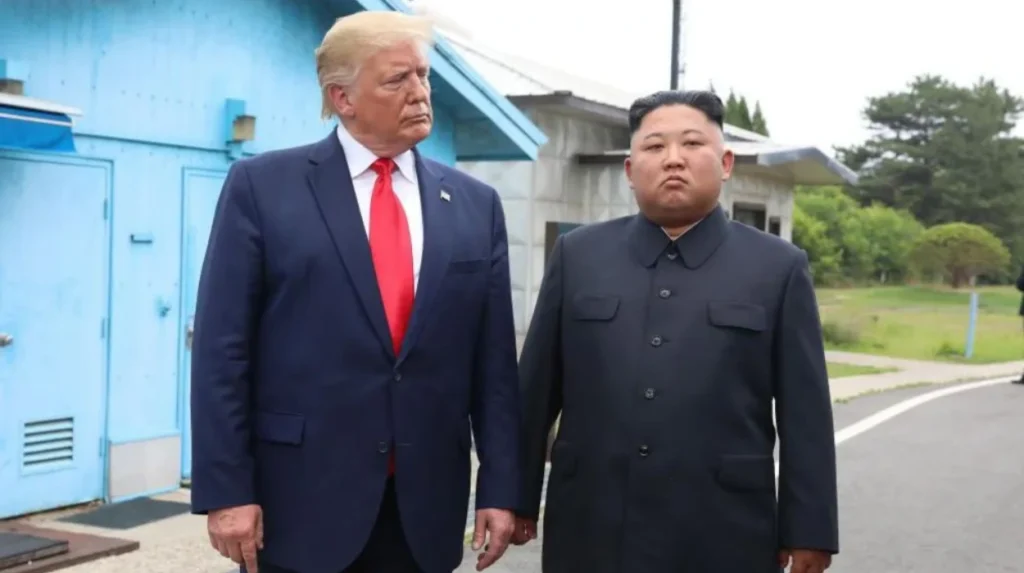
Announced on August 16, 2026, just a few hours prior to the start of an 11-day exercise, the action recasts U.S.-ROK security cooperation using the context of the transactional relationship between Donald Trump and Kim Jong Un of North Korea. The action represents a blend of cost-saving, personal relationship, and the reassessment of U.S. military presence in the Indo-Pacific region.
The Announcement: What Trump Said and Why
Trump’s statement, delivered via his Truth Social platform, fused personal diplomacy with fiscal grievance. He framed the exercises as both financially burdensome and diplomatically counterproductive.
“Based on my very good relationship with Kim Jong Un, of North Korea, I am not happy with the fact that the United States has, long ago, agreed to participate in Joint Military Exercises with South Korea,”
he wrote. He added that the drills
“are not only costly, with much of these costs paid for by the United States of America (as usual!), but send a signal that is totally inappropriate and hostile, to a Country that, as long as Donald J. Trump has been President, has been unthreatening and respectful.”
The operational directive followed swiftly:
“Therefore, and based on the fact that it is too late to cancel, I have instructed Secretary of War, Pete Hegseth, to substantially reduce the Joint Military Exercises!”
The timing is critical. UFS 2026 began on August 17, with Seoul and Washington having already mobilized thousands of troops and command structures. Trump acknowledged the logistical inertia—“too late to cancel”—but insisted on a mid-course contraction in scope.
Ulchi Freedom Shield 2026: Scale, Scope, and Strategic Intent
UFS forms the core of the joint defense strategy of the United States and Republic of Korea. It is intended to check interoperability and readiness in a number of situations that can arise on the Korean Peninsula. The current edition will take place between August 17 and 27 and involve approximately 18,000 troops from South Korea and U.S. troops from the Combined Forces Command. It will include a combination of command post simulations and field training and include such contemporary threats as counter drone operations, jamming of GPS and cyberattacks.
These new elements are introduced in consideration of the changes in the North Korean threat landscape and its combat experience acquired with Russia in Ukraine. The field training exercise known as Warrior Shield, which originally had 17 battalion-level exercises, was already reduced to 14 last year and indicates a general tendency toward reduction in the scale of the training program. However, international participation remains high with approximately 70 participants from 12 out of 18 nations belonging to the UN Command.
The Cost Calculus and Burden-Sharing Politics
His preoccupation with costs is consistent with another element that has characterized Trump’s foreign policy: the need for the allies to pay for their security. Although there has not been any official figure made public regarding the cost of UFS 2026, the cost of the American forces in South Korea is high. For instance, there are approximately 28,500 US soldiers deployed in the country, while the annual expenditure of Seoul to pay for the host nation support is over $1 billion. Additionally, South Korea paid for over 90 percent of the construction of Camp Humphreys in South Korea.
Trump’s framing—
“much of these costs paid for by the United States of America (as usual!)”
—oversimplifies a complex burden-sharing arrangement. Yet it signals a willingness to leverage alliance activities as bargaining chips in broader negotiations over defense spending, trade, and regional strategy. This approach aligns with his recent imposition of higher tariffs on South Korean autos and renewed pressure on Seoul to increase its financial contributions.
Pyongyang’s Posture: From Condemnation to Calculated Restraint
The response from North Korea towards UFS 2026 has predictably been aggressive, even before any involvement of President Trump. Specifically, between August 13-14, the regime accused the drills as being more provocative than the previous year and announced it would
“respond to a new level of threat with a new level of deterrent.”
The Ministry of Foreign Affairs said that the U.S.-Japan-South Korean alliance had developed into a “nuclear alliance,” and the new U.S. nuclear strategy could take the world to the “brink of a nuclear war.”
Prior to the conduct of the military exercises, North Korea conducted two tests of short-range ballistic missiles on August 6 and August 13, aiming at the Sea of Japan/East Sea. The launches have been perceived as a form of protests prior to UFS. However, it is important to note the statement from Trump that North Korea has been “unthreatening and respectful” throughout his presidency.
Seoul’s Response: Reassurance Amid Uncertainty
South Korea’s Defense Ministry moved quickly to reassure domestic and international audiences that the drills would proceed as planned.
“The Ulchi Freedom Shield (UFS) exercise is proceeding as previously notified and scheduled,”
the ministry said, adding that further updates would be provided if developments occurred. The Joint Chiefs of Staff confirmed the commencement of exercises on August 17, with participation levels similar to previous years.
Seoul’s stance reflects a delicate balancing act. On one hand, it must uphold the credibility of the alliance and demonstrate readiness in the face of North Korean provocations. On the other, it must navigate Trump’s unpredictable policy shifts without undermining the broader strategic partnership. The ministry’s measured response underscores a commitment to continuity, even as Washington signals a potential contraction in joint military activities.
Regional Implications: Deterrence, Diplomacy, and Alliance Credibility
The impact of Trump’s move on reducing the scale of UFS drills is wider than Korea alone. It raises questions about whether large-scale and high-profile drills are needed for effective deterrence and maintaining allied solidarity. The critics see a risk that a decrease in the size of the UFS exercises will encourage North Korea and reduce South Korea’s faith in America’s guarantees while conveying weakness to China and Russia. The advocates of the move consider that it creates opportunities for diplomatic efforts. Mentioning his “very good relationship” with Kim Jong Un, Trump alludes to the possibility of resuming the summit diplomacy.
The Iran Factor: A Transactional Thread in Alliance Politics
Trump’s statement also wove in a separate grievance: South Korea’s refusal to join U.S. efforts on Iran. “While somewhat unrelated (?), I recently asked the President of South Korea if they would like to join us in the Denuclearization of the Islamic Republic of Iran, and they said, ‘No thanks!’” This remark, while tangential to the Korean security equation, highlights Trump’s transactional approach to alliances. He views cooperation on one issue—whether drills, defense spending, or third-country conflicts—as leverage in broader negotiations.
This linkage complicates Seoul’s strategic calculus. South Korea has traditionally avoided entanglement in Middle Eastern conflicts, focusing instead on its immediate security environment. Trump’s expectation of alignment on Iran underscores the pressure allies face to conform to U.S. priorities across multiple theaters.
Operational Ambiguity: What Does “Substantially Reduce” Mean?
The Pentagon and the White House have not provided any details on how the presidential directive would be implemented. “Substantially reduce” can be defined as reducing field training, reducing the number of deployed troops, cutting down command post exercises, or a combination of all three. The absence of information creates operational uncertainties for those who have to plan on both sides of the Pacific Ocean. Military experts state that even minor reductions in UFS can prove to be both symbolic and tangible. The reduction in the number of battalion-level exercises, participation of the Air Force and Navy in exercises, or reduced command post exercises will result in diminished interoperability and readiness.
Historical Context: Trump’s Long-Standing Skepticism of Drills
Trump’s skepticism of large-scale joint exercises is not new. During his previous terms, he repeatedly criticized UFS and similar drills as expensive and provocative, often linking their scale to his personal rapport with Kim Jong Un. His latest intervention revives this theme, positioning the reduction as both a fiscal necessity and a diplomatic gesture.
This continuity suggests a broader strategic vision: one that prioritizes direct leader-to-leader engagement over institutionalized military posturing. Whether this approach yields sustainable peace or invites miscalculation remains an open question.
The Road Ahead: Diplomacy, Deterrence, and Alliance Adaptation
Over the next few weeks, the robustness of the alliance between the United States and South Korea as well as the effectiveness of Trump’s North Korea-focused diplomatic strategy will be put to the test. Should North Korea behave in a restrained manner or show any willingness to make concessions, then the decrease in joint military exercises can be viewed as a diplomatic success. In case North Korea takes advantage of the weakness in the alliance, both Seoul and Washington will be under pressure to increase joint exercises. For now, the alliance has reached a critical juncture. Trump’s suspension of UFS military exercises is a move that goes against deterrence norms, creates new diplomatic opportunities, and illustrates the transactional nature of Trump’s foreign policy.