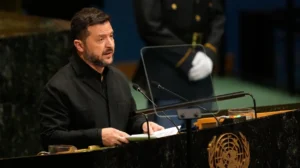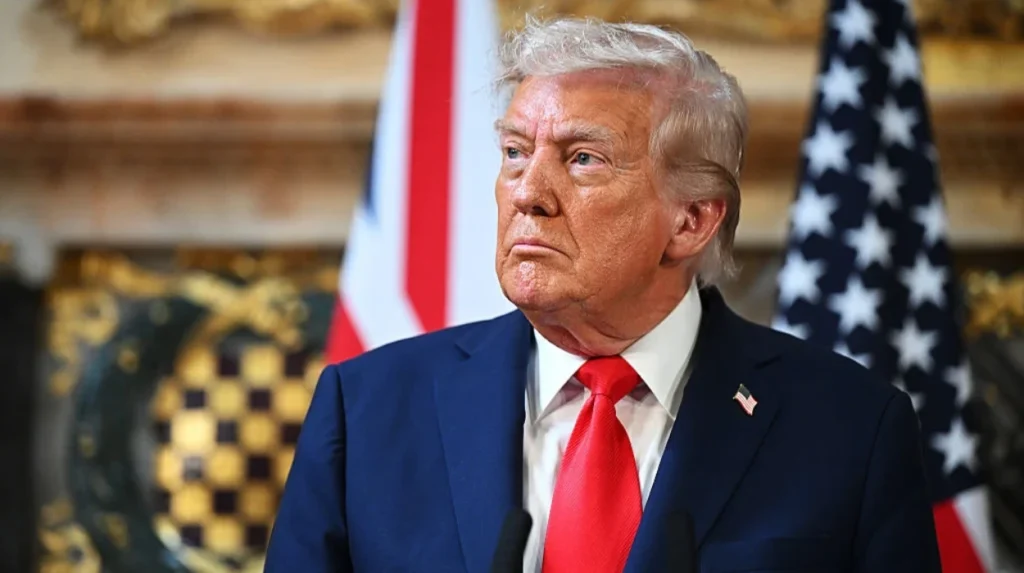
President Donald Trump entered the latest diplomatic week seeking to demonstrate American influence across several of the world’s most consequential disputes. His address to the United Nations, summit with Chinese President Xi Jinping, efforts to influence the Russia-Ukraine conflict and negotiations involving Denmark and Greenland placed US foreign policy at the centre of multiple international issues at once. Yet the outcomes highlighted a recurring challenge for the Trump administration: the ability of Washington to exert pressure does not automatically translate into the ability to secure the outcomes it seeks.
The week brought together several difficult tests of American leverage. China continued to protect its interests on Taiwan and critical minerals. Efforts to encourage Russia and Ukraine toward an energy ceasefire produced limited movement. European governments continued to demonstrate that they can resist US pressure on issues involving their own security and sovereignty. At the same time, the continuing Iran conflict has increased economic and political pressures on the administration at home. For Washington, the issue is therefore broader than the results of one diplomatic week. The developments raise questions about how far presidential pressure can translate into durable agreements when other major powers possess significant economic, military or political leverage of their own.
A Week Designed to Demonstrate American Influence
Trump’s diplomatic schedule was unusually concentrated. His UN address provided an international platform from which he could set out his approach to major security challenges. His subsequent meeting with Xi brought the world’s two largest economies together at a time when trade, artificial intelligence, Taiwan and critical minerals remain major areas of disagreement.
At the same time, the administration continued trying to influence the Russia-Ukraine conflict and promoted an agreement with Denmark concerning an expanded US military presence in Greenland. Taken individually, each initiative represents a different area of US foreign policy. Taken together, they demonstrate the breadth of Trump’s attempt to use direct presidential diplomacy and American economic and military leverage to influence international outcomes. The difficulty is that each counterpart has its own sources of leverage. China has critical-mineral advantages. Russia retains the ability to resist diplomatic pressure over Ukraine. European governments have their own political constraints. Iran remains capable of affecting regional security and energy markets. The result is a foreign-policy environment in which American power remains substantial but is increasingly contested by other actors.
The Xi Summit Shows the Limits of Coercive Leverage
The meeting between Trump and Xi was the clearest example of the administration’s challenge. The summit was highly visible and symbolically important, but the most tangible reported result was an extension of the existing US-China trade truce for two months. Major disagreements over Taiwan, artificial intelligence and other strategic issues remained.
The contrast with Trump’s earlier tariff-driven approach is significant. Washington has previously used tariffs and technology restrictions as major instruments of pressure against Beijing. But China’s control over rare earth minerals has complicated the equation. These materials are important to technology, automotive production and defence industries, giving Beijing an economic lever that can impose costs on US policy. Reuters reported earlier this week that China’s dominance of rare-earth mining, refining and production had contributed to a more cautious US approach ahead of the summit. This does not eliminate Washington’s leverage over China. The United States continues to possess major economic, technological and financial capabilities. It does, however, demonstrate that economic interdependence can work in both directions.
Taiwan Remains the Hardest Strategic Issue
Taiwan was another major unresolved issue surrounding the Trump-Xi meeting. Chinese state media reported that Xi urged Trump to oppose Taiwan independence and called for Washington to handle the Taiwan issue with caution. Taiwan remains one of the most sensitive subjects in US-China relations because Beijing claims the island while Washington maintains extensive unofficial relations with Taipei and is legally committed to providing the means for Taiwan to defend itself.
The challenge for Washington is that Beijing increasingly treats Taiwan as a core national-security issue rather than simply another component of bilateral negotiations. This limits the scope for compromise. For Trump, Taiwan also creates a strategic balancing problem. The United States must manage its relationship with China while maintaining credibility with Taiwan and US partners across Asia. Any perception that Washington is making unilateral concessions to Beijing could affect how regional allies assess American commitments. Conversely, a more confrontational US position could increase the risk of escalation with China. The diplomatic space is therefore narrow.
Rare Earths Have Changed the Negotiating Equation
The US-China relationship also demonstrates how supply-chain dependencies can influence foreign policy. China’s dominance in rare-earth processing and related production has given Beijing an important source of leverage. Reuters reported that China controls up to 70% of global rare-earth mining, around 85% of refining capacity and approximately 90% of rare-earth metal alloy and magnet production. These materials are important for sectors ranging from electric vehicles and advanced technology to defence systems.
That creates a problem for any US strategy based heavily on economic coercion. Washington can impose tariffs, export restrictions and sanctions, but Beijing can respond through restrictions affecting critical inputs. The effectiveness of American pressure therefore depends partly on how quickly the United States can diversify its supply chains. This makes industrial policy increasingly relevant to foreign policy. Reducing dependence on strategically important Chinese inputs is not simply an economic objective. It can also expand Washington’s room for manoeuvre in future negotiations with Beijing.
The Russia-Ukraine Track Produces Another Test
Trump’s diplomatic efforts were also tested by the continuing Russia-Ukraine conflict. Reuters reported that Trump’s attempt to pressure Moscow and Kyiv toward even a limited energy ceasefire failed to gain significant traction during the week. This illustrates another constraint on presidential diplomacy.
The United States can apply substantial economic, military and diplomatic pressure, but neither Russia nor Ukraine is entirely dependent on Washington for its decisions. Russia has its own military objectives and calculations. Ukraine has its own security requirements and territorial concerns. Any agreement therefore requires both sides to accept terms that they consider sufficiently compatible with their interests. The US president can attempt to accelerate negotiations, but cannot simply impose an outcome without the cooperation of the parties involved.
Europe Is Also Maintaining Its Own Strategic Choices
The Greenland issue provides another example of the limits of direct US pressure. Trump promoted an agreement with Denmark concerning an expanded US military presence in Greenland, but the reported arrangement fell short of his earlier demand that the United States should “own” the territory and his previous suggestion that force could potentially be used to obtain it. The episode illustrates an important feature of the transatlantic relationship.
European governments remain dependent on the United States for significant aspects of their security, but that dependence does not mean they will automatically accept every American demand. Denmark’s position on Greenland is shaped by sovereignty, domestic politics and its relationship with the autonomous territory. The broader European response is similarly influenced by national interests that do not always align completely with Washington. For US foreign policy, this creates a distinction between influence and control. American military and economic power can make Washington an indispensable partner without giving it unlimited authority over allied decisions.
Iran Continues to Consume Diplomatic and Economic Attention
The Iran conflict adds another layer to the administration’s foreign-policy challenge. Trump used his UN address to issue a renewed warning to Iran while diplomatic efforts continued around the possibility of a deal. At the same time, the conflict has affected energy markets and increased domestic economic pressure in the United States. The Strait of Hormuz remains particularly important because of its role in global energy transportation.
The administration therefore faces two interconnected challenges. Internationally, Washington must determine how much military and economic pressure can be applied to Tehran while keeping diplomatic channels open. Domestically, it must contend with the economic consequences of prolonged conflict, including higher fuel prices. This reduces the separation between foreign policy and domestic politics. A conflict that generates increasing economic costs can affect the administration’s room for manoeuvre even when military capabilities remain substantial.
The Cost of Managing Multiple Fronts
The wider pattern is important. The Trump administration is simultaneously dealing with China, Iran, Russia, Ukraine and European allies. Each issue requires a different combination of military, economic and diplomatic instruments. The problem is that pressure applied in one area can create complications elsewhere.
For example, maintaining pressure on China while securing rare-earth supplies requires diversification of critical minerals. Supporting European security while pressuring European governments on other issues requires careful alliance management. Attempting to influence Russia while supporting Ukraine requires balancing competing expectations. Foreign policy therefore becomes a problem of prioritisation. The United States possesses extensive resources, but those resources are not unlimited. Diplomatic attention, military capacity, economic leverage and political capital all have constraints.
The US-China Relationship Remains the Central Test
Among these challenges, the US-China relationship may ultimately be the most consequential. China is simultaneously an economic competitor, technological competitor, military power and permanent member of the UN Security Council. It also possesses substantial influence over critical supply chains. That makes the bilateral relationship fundamentally different from many of the other disputes confronting Washington.
Trump can use tariffs, technology restrictions, sanctions and diplomatic pressure, but Beijing can respond through its own economic and strategic tools. The latest summit therefore appears less like a resolution of the US-China competition and more like an effort to manage it. The reported extension of the trade truce can reduce immediate tensions, but it does not resolve the underlying disputes over Taiwan, technology, artificial intelligence, trade or critical minerals.
What the Week Says About American Leverage
The developments of the week do not indicate that US power has disappeared. The United States remains the world’s leading military power, possesses enormous economic resources and maintains an extensive network of alliances and partnerships. The issue is how effectively those resources can be converted into specific diplomatic outcomes.
The Trump administration’s approach relies heavily on direct pressure, negotiations and the personal involvement of the president. That approach can produce rapid diplomatic movement, but its effectiveness depends on whether counterparts believe Washington can sustain pressure and whether they have sufficient incentives to accept American demands. China’s position on Taiwan and rare earths, Russia’s resistance over Ukraine, Europe’s response to Greenland and the unresolved Iran conflict all demonstrate different forms of resistance to US pressure. For Washington, the strategic question is therefore not simply how much power the United States possesses. It is how that power should be allocated.
Domestic Politics Could Further Constrain Foreign Policy
The timing of these diplomatic challenges is also important. The Trump administration is approaching the November midterm elections, creating an additional domestic political constraint. Reuters reported that the continuing Iran conflict has contributed to higher US gasoline prices and declining approval ratings, while the administration’s Republican Party faces the midterm elections.
Foreign policy cannot be separated entirely from these domestic pressures. Military operations require political support. Economic policies have consequences for consumers and businesses. Diplomatic agreements can become subjects of domestic political debate. As the election approaches, the administration may therefore face greater pressure to demonstrate tangible results from its foreign-policy agenda. That does not necessarily determine the direction of policy, but it increases the political significance of international outcomes.
The Future of Trump’s Diplomatic Strategy
The next phase of Trump’s foreign policy will depend partly on whether the administration can convert high-level diplomacy into durable agreements. The Xi summit provides a temporary framework for managing trade tensions, but the deeper US-China competition remains unresolved. The Russia-Ukraine conflict continues without the limited ceasefire outcome Washington sought. Iran remains a major security and economic challenge. European governments continue to protect their own interests even while maintaining their alliances with the United States.
The broader lesson is that presidential diplomacy operates within a system of competing powers. Washington can initiate negotiations, impose economic measures, deploy military forces and offer incentives. But other governments retain their own sources of leverage and their own strategic objectives. That reality is likely to shape the next stage of US foreign policy.
The question for the Trump administration is no longer simply whether it can make dramatic diplomatic moves. It is whether those moves can produce sustainable outcomes across several simultaneous crises without exhausting America’s economic, military and diplomatic leverage. The answer will increasingly depend on how Washington manages the trade-offs between pressure and negotiation, confrontation and alliance management, and immediate political objectives and longer-term strategic interests.