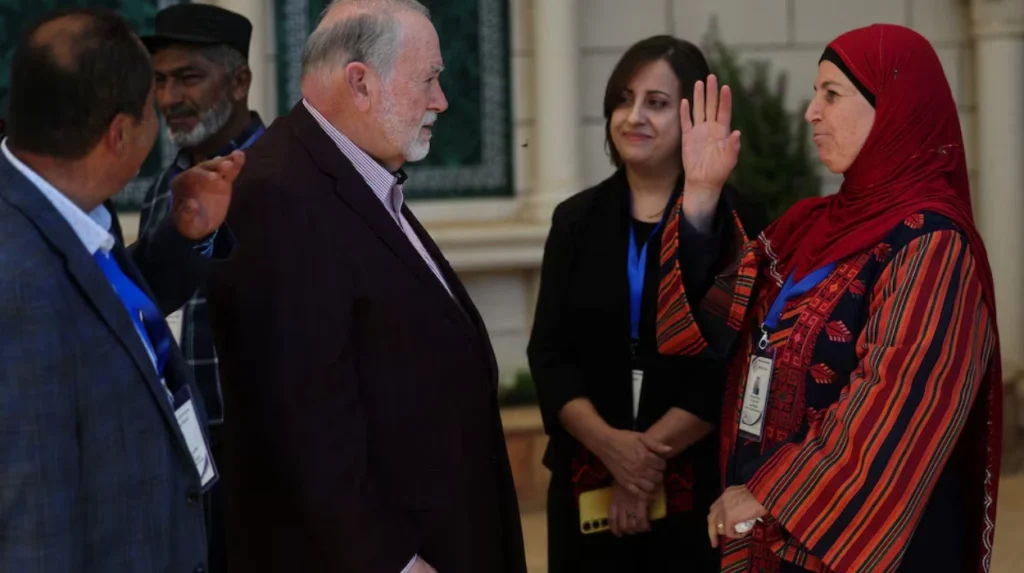
The visit by U.S. Ambassador Mike Huckabee to Turmus Ayya on 5 September 2026 is both a diplomatic signal and a recognition of a deteriorating security reality for Palestinians in the northern and central West Bank.
The encounter between the Ambassador and families of Americans killed by Israeli settlers and the firsthand testimony of people who report being unable to keep the militants out of their homes is an example of how the Ambassador found herself face-to-face with one of the most explosive fault lines of the occupation – a wave of violence on the part of the settlers that, according to UN officials, “has never been seen before.”
A symbolic stop in a town under siege
Turmus Ayya, a Palestinian town of around 3,000 inhabitants located near Ramallah, has taken on a more significant meaning because of this situation. Around 80% of the population is of Palestinian American descent, according to Turmus Ayya’s mayor Nawwaf Zaghoul, who makes this visit both politically and consularly charged. Ahead of the discussion, the mayor revealed that the town would appeal to the ambassador for assistance in ensuring “their safety and security” due to settler attacks that make families in Turmus Ayya afraid and harm their infrastructure.
The town is surrounded by several Israeli settlements, such as Shiloh, which Huckabee has visited numerous times since 2025. This proximity has turned the town into a frequent victim of harassments, assaults, and attacks on property, following the patterns observed throughout the West Bank, where towns near the settlements are repeatedly invaded and intimidated. The inability to keep settlers out of their territory, as mentioned by residents, is another issue faced by the community.
Record-breaking violence: the numbers behind the crisis
The urgency of the ambassador’s visit is rooted in stark data. The UN Office for the Coordination of Humanitarian Affairs (OCHA) and other monitors report that 2026 is on track to be the most violent year for settler attacks since records began. More than 1,540 settler attacks have been recorded since the start of the year, averaging over six attacks per day. In mid‑August alone, OCHA counted 80 settler incidents resulting in casualties or property damage, with recurrent attacks on the same communities restricting access to homes, farmland, roads, water, and electricity infrastructure.
The casualty statistics are no less concerning. Twenty-three Palestinians have been killed and over 1,040 injured in settler attacks during 2026. Palestinians are being injured by settlers at a rate of over three injuries per day, compared to two injuries per day in 2025 and one injury every three days in 2020, based on humanitarian reports. There is also an increased number of displacement cases, as over 2,300 Palestinians were displaced as a result of settler attacks and access restrictions during 2026, although some estimates are of over 3,700 when taking into account demolitions and evictions.
These numbers paint a picture of a situation where almost 260 Palestinian communities were affected by settler incidents and where some villages have become partially isolated as a result of repeated attacks. For example, in the village of Al Mugayir, the UN Human Rights Office recorded that between December 2024 and 2026, Israeli forces and settlers have killed nine Palestinians, five of whom were young people, and recorded over 50 settler attacks on this village alone in 2026.
Huckabee’s stance: “terrorists,” “severe consequences,” and political tightrope
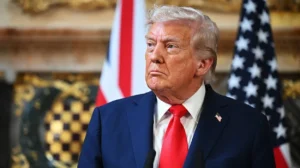
Mike Huckabee, a longtime supporter of Israeli settlements and a Baptist minister, has nonetheless adopted increasingly forceful language against violent extremists. Earlier in the week, he described occupiers committing crimes in the West Bank as “terrorists,” saying such violence damages Israel’s image.
When visiting Turmus Ayya, for example, he said that
“there should be severe consequences”
to end the West Bank violence, consistent with other U.S. statements that call for prosecution of the perpetrators, although recognizing that such violent settlers form a minority within the settler community in the order of some 750,000 people. It is an artful position that Huckabee maintains. While using the biblical terms “Judea and Samaria” to refer to the West Bank region and visiting Israeli settlements like Shiloh in close proximity to Turmus Ayya, Huckabee shows his ideological closeness to parts of the settlement enterprise. At the same time, he has condemned individual instances of settler misbehavior, like the destruction of a church in the Christian village of Taybeh in June 2025 that he called “an act of terror and a crime.”
Why now? Political drivers and the accountability gap
The escalation since late 2022 is no accident. Benjamin Netanyahu’s coalition government, described as the most right‑wing in Israel’s history, took office with parties and figures closely aligned with the settler movement. Under this government, settlement expansion has accelerated across the West Bank, further entrenching Israeli control over territory Palestinians seek for a future state. While Prime Minister Netanyahu has publicly condemned “criminal actions” by a “handful of rioters,” critics argue that rhetoric has not translated into decisive enforcement or deterrence.
One key factor behind the expansion of these violent practices is impunity. While there is evidence for thousands of incidents involving acts of violence by Jewish settlers against Palestinians, very few cases have gone through the prosecution process despite the fact that in many situations the perpetrators are known and have even been identified. EU officials and foreign media organizations have raised concerns regarding lack of arrest and prosecution of those who have been reported to attack Palestinians.
As a consequence, an ever self-repeating pattern results, in which impunity fosters more attacks, which in their turn normalize the violent behavior and contribute to further displacement and dispossession of Palestinians. All the processes have been especially exacerbated in light of the recent Oct 7, 2023 war in Gaza. Increased polarization, enhanced Israeli military actions, and greater organization of settler activists who claim defending the settlements have been accompanied by the increase in killing, injuries, and displacement since late 2023, culminating in 2026.
International response: condemnation without coercion
The international response has been consistent but not powerful enough. The OCHA has pointed out consistently that settler attacks have been carried out at the record pace; there have been on average 6.6 attacks daily that caused injury or damage. The UN Human Rights Office has criticized the killing of civilians in villages like Al Mugayir, noting that these attacks are often repeated against the same communities. The EU ambassadors have toured the places where the attacks took place, such as Qusra, where families live in isolation after being assaulted several times.
Foreign journalists’ associations have criticized the lack of arrest when there are people who can be identified as attackers. Washington has criticized harshly the “violence in West Bank” and appealed to legal means, although in some statements, the word “settler” was not used. Huckabee’s visit reflects the growing tendency to communicate directly with the communities that suffer from attacks, but by itself, it will not change the incentives for violence.
What residents want: protection, accountability, access
In Turmus Ayya and similar towns, demands are straightforward and practical. Residents seek protection from unchecked settler incursions and attacks, accountability through arrests and prosecutions of identifiable perpetrators, and unimpeded access to homes, farmland, roads, and basic services without fear of assault or property destruction. These are not maximalist political requests but basic security and rule‑of‑law expectations that, if met, would significantly reduce the daily toll of violence.
The mayor’s appeal to the ambassador to help “secure their safety and security” captures the core of the crisis: a community that feels exposed, with limited recourse to authorities tasked with protecting them. When residents say they cannot stop settlers from entering and damaging homes, they are describing a breakdown in order that has become routine across the northern and central West Bank.
Implications for U.S. policy and regional stability
The visit has implications beyond the confines of one town. The fact that the Ambassador met with the families of U.S. citizens that have been killed by settlers brings up an interest on behalf of the Americans, and this could potentially raise the political stakes of inaction in Washington. “Severe consequences” and the use of the term “terrorists” to describe the violent settlers represent a rhetorically harder stance that could increase the pressures on the Israelis to take tougher measures against these extremist groups. Nevertheless, the contradiction still persists in the foreign policy approach of the U.S. This country backs the security of Israel and rejects any measure it deems destabilizing, while, on the other hand, the expansion of settlements and the violence of settlers make the establishment of a two-state solution increasingly improbable.