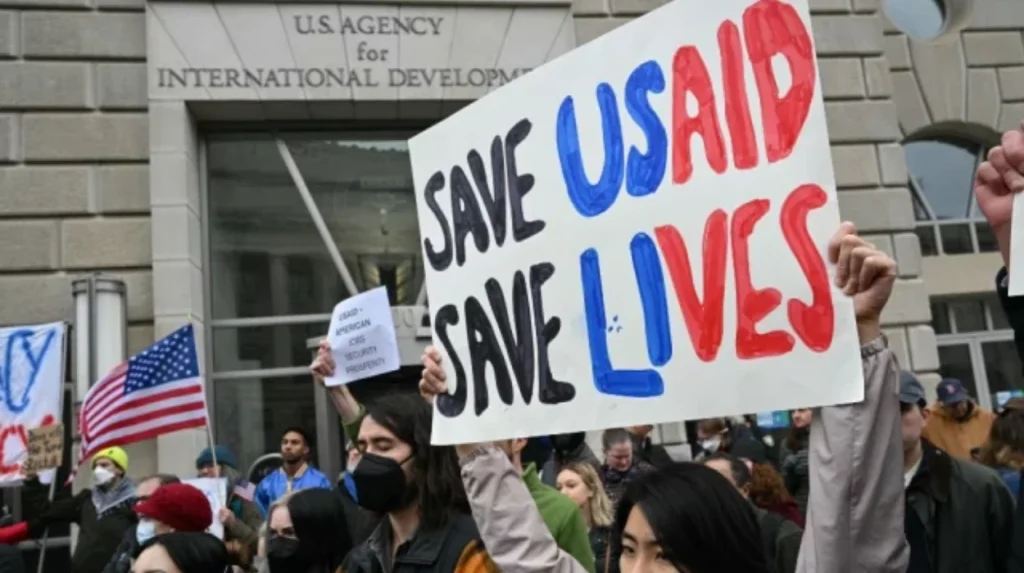
NEW YORK, The humanitarian cost of recent cuts to U.S. foreign assistance now puts the lives of over 14 million people in danger worldwide and are extremely alarming to the New York Center of Foreign Policy Affairs (NYCFPA), July 3, 2025. The fact that the decision comes in the face of ongoing crises on the global scale means that it is a direct abdication of the humanitarian leadership and it puts vulnerable communities currently on the brink of starvation, displacement, and death in the line of fire.
The NYCFPA is urging the United Nations (UN), U.S. Agency for International Development (USAID), World Health Organization (WHO), European Commission (EC), United Nations Office to coordinate Humanitarian Affairs (OCHA) and the African Union (AU) to move swiftly in a coordinated manner to offset the impact of this drastic withdrawal of funding.
Millions are at Immediate Risk
Evidence from international humanitarian organizations verify that sudden cuts in U.S. foreign aid have halted or reduced critical services in over 35 nations. Such services include food distribution programs, emergency medical activities, refugee assistance services, and critical vaccination campaigns.
“Cutting foreign aid at this scale is not just a budgetary decision—it is a moral failure with real human consequences,”
said Dr. Ayesha Karim, Director of Global Affairs at NYCFPA.
“Lives are not numbers. The 14 million at risk are families, children, and communities who now face a humanitarian abyss due to preventable policy choices.”
Foreign Aid Is a Strategic and Moral Imperative
The NYCFPA is firm that U.S. foreign aid is not charity—it is an essential tool of global stability, soft power, and long-term security. Cutting aid budgets throws away decades of diplomatic gains, erodes America’s credibility abroad, and fuels the story of enemies trying to fill the influence vacuum.
“The absence of sustained foreign assistance erodes trust in U.S. commitments and weakens democratic institutions in aid-dependent regions,”
said Ambassador Richard Levine (Ret.), Senior Policy Fellow at NYCFPA.
“We urge Congress and the White House to reassess these decisions in light of their strategic and humanitarian fallout.”
International Community Must Not Stand Idle
In order to lessen the terrible effects of U.S. cuts to foreign aid, the NYCFPA calls on the international community to respond immediately and with integrity. USAID should disclose thorough impact assessments and activate contingency financing, and the UN should hold an emergency coordination session aimed at ensuring humanitarian continuation.
It is requested of the World Health Organization (WHO) and UNICEF to deploy emergency health and nutrition response teams in stricken areas. At the same time, the coverage of regional aid and advocacy needs to be extended by the European Commission and the African Union. Moreover, the G7 and World Bank are needed to give financial bridges and other alternative aid strategies to avoid program failures. In addition, NYCFPA encourages bipartisan leaders in the U.S. Congress to hold immediate hearings investigating the impact of these cuts on humanitarian and geopolitical consequences, and to find a legislative solution that will guard emergency-foreign aid against disturbance in the future.
Upholding Human Dignity and American Values
With NYCFPA, we have an independent foreign policy think tank that is dedicated to evidence-based analysis, ethical policymaking, and upholding universal human dignity. We are of the opinion that the strength of a nation will be measured by whether or not it can safeguard the most vulnerable—not just within its own boundaries but throughout the international community.
“The U.S. cannot retreat from its humanitarian responsibilities without endangering its national interests and moral legacy,”
added NYCFPA Executive Director Nicole Rosario.
“The time to act is now—before these numbers become irreversible tragedies.”