Since President Donald Trump took office in January 2025, the United States’ Department of Justice under his regime has embarked on a vigorous denaturalization exercise focusing on naturalized Americans who are allegedly hiding their links to terrorism, war crimes, sexual abuse of children, and fraudulent immigration.
This new effort, based on the creation of a special Denaturalization Section in the administration’s early years, is the most significant number of referrals ever seen in America, with more than 384 referrals by April 2026 and a record-breaking 200 or more monthly referrals from the Department of Homeland Security—an incredible 20,000% increase over previous numbers.
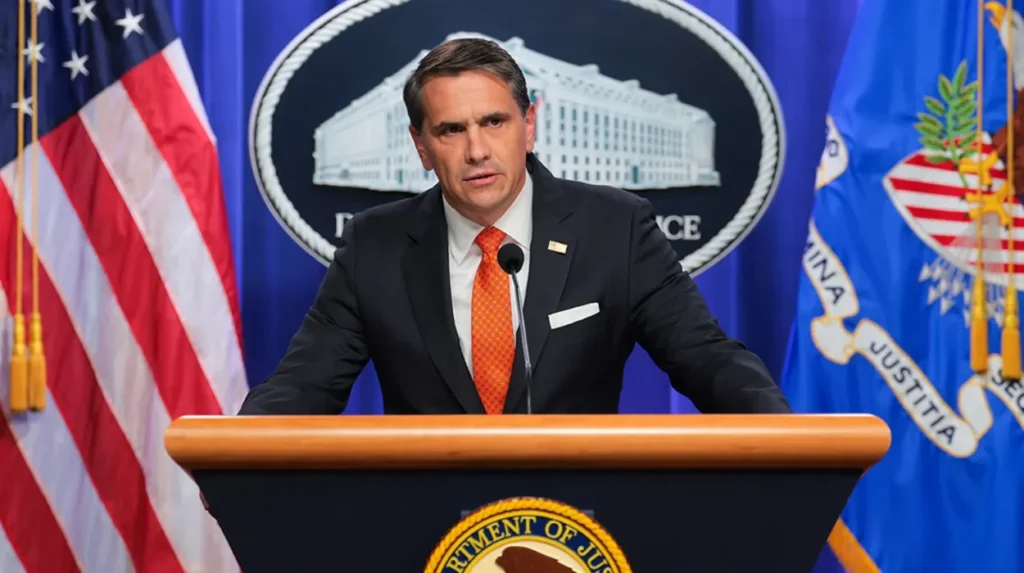
Acting Attorney General Todd Blanche has vowed to pursue these cases with unrelenting vigor, declaring that
“the Trump administration is taking action to correct these egregious violations of our immigration system. Those who intentionally concealed their criminal histories or misrepresented themselves during the naturalization process will face the fullest extent of the law.”
This trend stems from the larger philosophy in immigration enforcement whereby American citizenship is viewed as something that is no longer permanent but can be revoked for anyone considered a threat to national security.
Historical Revival and Legal Framework
The denaturalization process, codified in 8 U.S.C. § 1451, permits the federal government to revoke one’s citizenship when obtained “illegally” or “through concealment of a material fact or willful misrepresentation,” established by “clear and convincing evidence” in a federal district court trial without any time limit. Between 1990 and 2017, the average number of cases filed per year was merely 11, resulting in 305 total cases, mostly concerning elderly Nazis or war criminals after September 11.
The period of Trump’s presidency (2017-2021) saw an unprecedented upsurge in such actions, during which he filed 168 cases under a surge in filings of 200 percent and referrals of 600 percent against ISIS affiliates and frauds that provided false information about their backgrounds on Form N-400. The rate has slowed under President Biden; however, with the advent of Trump’s second term, it has been given an additional push, with 22 cases filed and 15 revocations made by May 2026, with the expectation of exceeding four-year-old Biden’s filings in “about a week,” according to Blanche’s statement at the Border Security Expo in June 2025.
This system works in a civil matter, rather than criminal; when revoked, the person returns to being a permanent resident, with deportation upon conviction of other crimes, but he may challenge the process. The DOJ emphasizes how high a standard was achieved in recent successes, with failures such as al-Shabaab affiliation or child abuse disqualifying someone from his naturalization oath.
One DOJ spokesperson encapsulated the stance:
“Individuals implicated in committing fraud, heinous crimes such as sexual abuse, or expressing support for terrorism should never have been granted citizenship.”
Critics, however, decry the process as a blunt instrument, potentially ensnaring immigrants with minor discrepancies amid Trump’s mass deportation rhetoric.
The May 2026 Batch: Terrorism and Crime Focus
The campaign hit a new milestone on May 7, 2026, when the DOJ announced filings against 12 foreign-born naturalized citizens in various U.S. district courts.
U.S. Department of Justice @TheJusticeDept said in a post,
“Justice Department filed denaturalization actions in various U.S. district courts against 12 individuals accused of serious offenses including: Providing material support to a terrorist group Committing war crimes Sexually abusing a minor “The Trump administration is taking action to correct these egregious violations of our immigration system. Those who intentionally concealed their criminal histories or misrepresented themselves during the naturalization process will face the fullest extent of the law.” – Acting Attorney General Todd Blanche.”
These people, between the ages of 28 and 75, from nations like Iraq, Somalia, China, India, Colombia, Morocco, and Gambia, concealed criminal acts in the course of naturalization. Salah Osman Ahmed, a naturalized Somali immigrant who obtained citizenship in 2007, confessed in 2009 that he provided aid to the terrorist organization known as al-Shabaab within five years of becoming an American citizen despite the fact that he concealed his involvement in filling out the required paperwork for citizenship.
There was an ex-police officer from Gambia who had been charged with war crimes due to extrajudicial executions, with other nationals from Africa (total five), Asia (total three), and South America (total two) being charged for involvement in gun-running, espionage, and violent crimes. All this is shown by DOJ press releases, where post-naturalization crimes or pre-application concealment emerges clearly.
This pattern of enforcement actions was established early in 2026, when, in March, the Department of Justice brought a case against a million-dollar tax fraud “mastermind” along with 11 other cases involving similar violations, including an al-Shabaab supporter and international arms dealer from Somalia. Blanche, speaking to immigrants in general, said that people who
“used fraud in order to become U.S. citizens should be worried,”
considering that DOJ’s efforts far exceed those made during the previous nine years, irrespective of demographic considerations.
Escalating Pace and Projections
Since January 20, 2025, denaturalization has grown from a peripheral law enforcement mechanism to a front-line tool. By April, there were 384 denaturalizations pending, the “highest volume on record,” and the Department of Homeland Security is handling more than 200 each month, surpassing the sluggishness of the Biden administration’s era.
Blanche reiterated at public forums:
“We are on track to surpass the number of denaturalization filings the Biden administration submitted in four years… in about a week,”
signaling institutional momentum. This surge dovetails with Trump’s border security mandates, where denaturalization complements mass deportations by clawing back statuses obtained via deceit.
The Denaturalization Section, based at the Office of Immigration Litigation, examines old documents, matching up information from the FBI, ICE, and foreign governments. The key to success lies in solid evidence like that provided by Ahmed’s admission of guilt or the death penalty paperwork of the Gambian. Once revoked, deportation begins for felons, but appeals continue.
Strategic Implications and Criticisms
For the Trump administration, this campaign fortifies national security credentials, targeting “a lot of individuals who are citizens who shouldn’t be,” per Blanche, without ethnic profiling claims. It echoes first-term rhetoric from Assistant AG Jody Hunt:
“When a terrorist or sex offender becomes a U.S. citizen under false pretenses, it is an affront to our system.”
Economically, it is a sign of fiscal responsibility by taking back the benefits that were based on fraudulent statuses. However, civil rights activists criticize it as an intrusion, claiming that the process may be politicized, thus targeting legal immigrants and depriving resources for violent offenders.
Internationally, the move creates waves, affecting the relationship between the source countries and the U.S., as in the case of Somalia. Domestically, it reinforces the views of Trump’s supporters by viewing citizenship as a reward. Judicially, it has proven itself feasible by receiving approval from the courts.
Broader Geopolitical Echoes
This renaissance of denaturalization places the Trump-era DOJ as the final arbiter of immigration enforcement, where hidden connections to terrorism such as allegiance to al-Shabaab or sympathies toward al Qaeda make the American Dream an illusion. “Should Be Worried” warns Blanche to the thousands now referred, as each act of denaturalization reinforces the image of a fortress for the administration.
As more cases arise, the pressure test grows for both courts and citizens. Does it help prevent fraud or damage faith in a system founded on the idea of redemption? In the era of Trump, citizenship’s vulnerability highlights a period of zero tolerance, where past wrongs cost one their citizenship.