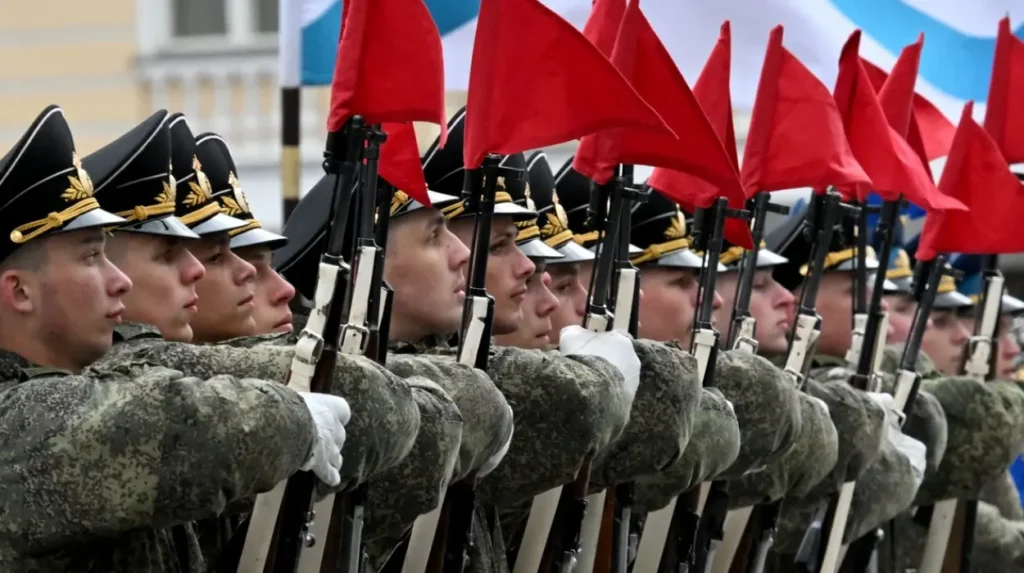
The official celebration of the nation’s most important day—Victory Day—took place on May 9, 2026, in Moscow’s legendary Red Square, where a noticeably smaller parade took place. This is quite different from what was happening in previous years, when Victory Day was celebrated as a big spectacle for the whole world to see, especially since this year marks the day on which Soviet soldiers defeated the Germans in World War II.
Vladimir Putin, the president of Russia, hosted the event and made an adamant speech portraying the Russian troops in Ukraine as
“an aggressive force… supported by the entire bloc of NATO.”
The event held this year was characterized by a significant lack of military equipment, tanks, missiles, and even soldiers’ training programs, which were last seen some two decades ago. These measures appear not only to be precautionary in nature but are also the result of the tit-for-tat escalation of hostilities in the current war. Fewer foreign dignitaries were in attendance, and most international media depended on Russia’s coverage of the event.
Parade’s Austere Transformation
The parade began at approximately 10 a.m. local time (07:00 GMT), when the military proceeded in order to arrange an orderly show of the Russian flag under the watchful eye of increased air defense. Officially explained by the “operational reality of the current situation” and the constant “threat posed by terrorists” originating from Ukraine, the size of the celebration was significantly reduced—other parades scheduled in Russia were simply cancelled. Kremlin spokesman Dmitry Peskov explicitly referred to “terrorists operating out of Ukraine” as the reason behind the absence of military displays.
Putin, with a sense of unwavering resolve, declared
“Victory has always been and will be ours,”
and his message was heard loud and clear, but not accompanied by the roar of tanks and airplanes that made this event so memorable in the past.
This change in the scale of the event is not merely technical; it echoes the weaknesses of Russia during its wartime endeavors. In the past, Victory Day was celebrated with large groups of T-14 Armata tanks, Iskander missile units, and young cadets parading in formation, showcasing their strength. This year, however, the event emphasized infantry soldiers and precise ceremonies.
The lack of foreign officials – greatly decreased compared to prior years – underscored Moscow’s position as a pariah state, as world leaders avoided attending the festivities due to allegations of ceasefire violations and refinery attacks. While Russian state-controlled media portrayed the abstention as a cautious stand, experts view it as an implicit recognition that the boundaries of the conflict have drawn closer to the capital.
Ukrainian Strikes: Precision Assaults on Russia’s Economic Lifeline
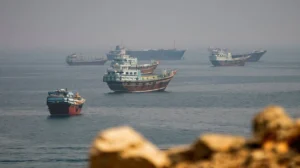
Alongside the parade’s modest pageantry, Ukraine ratcheted up its efforts to attack Russia’s oil production facilities, with drone attacks hitting their four-month high in April 2026 at 21 confirmed strikes against refineries, pipelines, and port terminals. Oil production sites such as the Tuapse refinery along the Black Sea coast were hit repeatedly since mid-April, setting off devastating fires and resulting in spilled oil contaminating the surrounding water, creating an environmental crisis known locally as “oil raining from the sky.”
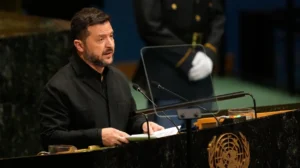
Further, the Perm refinery, located 1,500 kilometers away from the Ukrainian borders, was attacked and had its operations disrupted through strikes. The attacks have reduced the output capacity of Russia’s refineries to 4.69 million barrels per day, marking the lowest point since December 2009, resulting in losses worth $7 billion since January 2026, according to Ukrainian President Volodymyr Zelenskyy.
The Ukrainian tactics aim at the war chest of Moscow, which is being financed by the export of oil, constituting 40% of the Russian federal budget. The attack on the Tuapse terminal itself caused a massive environmental disaster, as evidenced by the darkening of skies and pollution of the coastal region. Russian air defense systems failed to prevent the onslaught of unmanned aerial vehicles.
Kiev considers these strikes a form of symmetrical response that prevents Russia from sustaining its invasion without causing harm to civilians. The attack was perfectly timed to coincide with Victory Day in an effort to dispel the illusion of certain victory for Putin.
Ceasefire Breakdown and Escalating Rhetoric
The shadow cast over the parade extended beyond that with mutual accusations over the fragility of cease-fires. Ukraine charged Russia with breaking a temporary cease-fire lasting three days brokered by the United States and a Ukrainian initiative led by Zelenskyy that began on May 6. By May 8, the Ukrainians reported over 140 missile attacks on Ukrainian positions along the Kyiv front line, coupled with constant missile and drone bombardment on Ukrainian cities. In response, Russia warned of a “massive retaliatory missile strike” against central Kyiv if the holiday were to be spoiled.
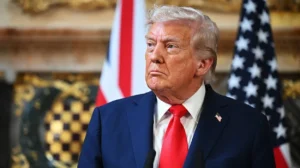
Both sides traded accusations over breaches of cease-fires, while U.S. President Donald Trump held out hope for an extension of the temporary cease-fire.
The pattern of allegations highlights how superficial diplomatic gestures can be. On one hand, Zelensky’s regime condemns the Kremlin for incessant attacks on Kyiv and other parts, viewing them as indications of ill intentions in the negotiations. On the other hand, Peskov’s description of terror activities in Ukraine resonates with Putin’s speech during the parade, where he accuses NATO of being the puppet master pulling Kyiv’s strings. The end of the truce, which occurred alongside the parade, reinforced the perception of ill intentions on the part of Russia.
Strategic Implications and Global Ripples
On the other hand, for Russia, the reduced parade is indicative of wider problems. The loss of oil revenues can undermine Russia’s economic stability, necessitating reductions in government spending or causing inflationary pressures within the country. In terms of military operations, the failure to defend refining facilities situated 1,500 kilometers away from Moscow suggests that the country may have overstretched.
By referring to Ukraine’s stance against the Nazis, Putin is trying to garner support among Russians, utilizing the memory associated with Victory Day as justification for sacrifices. However, the lack of grandeur associated with the celebrations poses the danger of undermining the spirit of patriotism in Russia.
Ukraine, meanwhile, leverages these strikes to asymmetric advantage, imposing costs disproportionate to its resources. Zelenskyy’s $7 billion figure, while contested, underscores the leverage gained from eroding Russia’s export capacity.
Environmentally, disasters like Tuapse’s spill compound Russia’s isolation, drawing international scrutiny on wartime conduct. Globally, the impasse tests Trump’s mediation ambitions, with NATO’s shadow looming large in Moscow’s calculus.
| Aspect | Traditional Parades | 2026 Reality | War’s Toll |
| Military Displays | Tanks, missiles, flyovers | None; infantry only | Refinery runs at 2009 lows |
| Youth Participation | Cadets marching prominently | Excluded entirely | $7B oil revenue lost YTD |
| Diplomatic Attendance | Dozens of leaders | Minimal | 21+ strikes in April alone |
| Security Posture | Routine | Drone threats dictate scale | Tuapse fires, Perm hits deep |
Broader Geopolitical Context
Victory Day 2026 thus encapsulates the war’s attrition phase: Russia’s pomp curtailed, economy battered, and rhetoric defiant; Ukraine striking boldly yet enduring bombardments. Putin’s “victory will be ours” echoes historical triumphs but rings hollow against burning refineries and empty parade grounds.
Amidst the accusations – Ukraine accusing the Kremlin of attacking Kyiv, Russia bringing out the NATO orcs – the way forward seems clouded. For analysts, the May 9 commemoration does not signify a festivity but rather an ominous occasion, where history from World War II converges with the realities of today’s hybrid war.
The ceremony’s Spartan nature serves as a harbinger of changes: Will the vulnerability of refineries lead to negotiations or greater provocations? As the oil pipeline is blocked and ceasefire agreements crumble, the absence of weaponized displays from the parade carries more weight than any cannonade. The Red Square of Moscow, once a display of power, is now a reflection of the country’s survival mode.