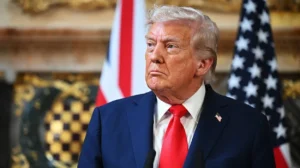
The U.S. President Donald Trump’s diplomatic strategy in 2025 has come to be compared more and more with a one-man show. His style, prompted by media influence and individual command, has troubled the allies and international observers. The shift in diplomacy to theatre is altering the U.S. foreign policy and its reputation world wide.
Most of the rhetoric of Trump is more political warfare than negotiation. The impulse, most evident in theatrical interactions in the media, has mixed with traditional rules of international protocol. With tensions rising throughout the globe, we may be asking ourselves just how long then the media-first form will last.
The Zelensky Encounter: A Diplomatic Misstep
Public Confrontation on Display
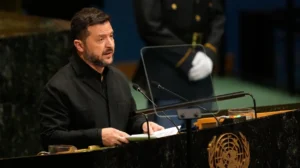
On 28 February 2025, an overdue Oval Office encounter between President Trump and Ukrainian President Volodymyr Zelenskyy abruptly broke apart with no conclusion. These two leaders taunted one another in warlike language, screamed and in front of an audience publicly denounced one another. The disheveled scene outraged European capitals and beyond, as partners and donors wondered about U.S. dedication.
Trump characterized the exchange as “a conversation under fire and pressure,” one that was about raw emotion, not diplomatic nicety. Critics contend that such antics erode U.S. credibility and the confidence of allies.
Impacts on Military Support
The repercussions were immediate. American military assistance to Ukraine was put on ice, making Kyiv’s defense against Russia that much harder. This abrupt change bolstered perceptions of U.S. support as transactional, based on performance for the moment, not on a long-term strategic fit.
For Ukraine, already under such strain, this portends greater danger. Allies now wonder whether Washington can be relied on to maintain consistent security commitments.
Ideology and Selective Gearing
Pragmatic Nationalism Shaping Alliances
Trump’s foreign policy merges protectionist economics, cultural nationalism, and selective partnerships. This blend has reshaped reactions to regimes based on ideological polarization rather than strategic necessity.
Support for Israel remains strong, based less on shared interests and more on cultural alignment. U.S. tariffs on China reflect ideological clash rather than clear economic calculus. With Russia, Trump’s rhetoric swings between criticism and cooperation, signaling unpredictable loyalties.
This approach complicates international relationships, making it hard for partners to anticipate U.S. actions. It leaves global policy grounded in presidential mood more than institutional objectives.
Diplomatic Norms Under Pressure
The jarring tone of Trump’s public appearances and his desire to matchmake ideologically threatens to erode long-standing diplomatic traditions. When bilateral collaboration is contingent on culture wars instead of common strategy, the durability of alliances comes under scrutiny.
Longstanding allies across Europe, Japan, and Canada have now started to express concern. Leaders from these nations now approach U.S. commitments cautiously. With ties fraying, multilateral efforts face additional obstacles.
Alliance Cohesion Under Strain
NATO and Transatlantic Tensions
Trump’s tweets and tariffs aimed at European allies have tested cohesion within NATO. His demands for increased spending, framed as media stunts, have strained trust. Member countries fear U.S. withdrawal could undermine mutual defense commitments.
Canada’s frustration over tariffs shows how trade disputes spill into security realms. These rifts weaken the alliance when unity is most vital amid rising global threats.
Fractures with Asian Partners
Japan and South Korea, once close allies, now face diplomatic uncertainty. Trump’s confrontational posture toward China complicates regional dynamics. These partners see rising unpredictability in U.S. intentions, prompting efforts to diversify with regional coalitions.
That alignment away from the U.S. reveals how spectacle diplomacy may be producing unintended geopolitical realignments.
The Spectacle Trap: Media vs. Policy
Headlines Without Infrastructure
Trump’s headline-grabbing gestures—like declaring short ceasefires—often lack durable frameworks. A notable instance in June 2025 was a 12-hour Iran-Israel truce. While impressive on TV, the brief nature of it left little to address underlying hostilities.
Experts argue this approach diminishes U.S. “soft power.” Diplomacy requires long-term relationship building, not just dramatic statements.
Risks for Bureaucratic Foundations
By sidelining experienced diplomats and vesting power in close aides, Trump has weakened key institutions. The State Department and allied agencies struggle to implement complex strategies without clarity from the top.
Exit before Fade was typical, raising questions about consistency. In sensitive areas—like nuclear negotiations or climate talks—this undermines process-oriented diplomacy.
Experts Weigh In
James M. Lindsay of the Council on Foreign Relations, in a recent interview, emphasized the value of balancing media influence with substance. He warned that neglecting soft power would leave long-term damage.
Fiona Hill cautioned that allies are losing trust in U.S. reliability. She described the current approach as destabilizing the global order and eroding trust networks.
Brahma Chellaney, writing in The Hill, critiqued the administration’s transactional stance. He observed that allies in Eastern Europe and the Middle East face greater insecurity amid constant policy shifts.
International Reaction: Alarm Across Capitals
European Leaders Speak
German Chancellor Olaf Scholz and French President Emmanuel Macron have both accused Trump of damaging alliances. They warn that Europe must take steps to ensure its defense future is sustainable.
In capitals across Europe, diplomats now prepare for shorter timelines in U.S. decision-making. The Belt and Road initiatives with China are seen as hedge options.
Echoes in Asia
Tokyo and Seoul interpret America’s performative stance as signals of U.S. retreat. South Korea has expanded defense cooperation with Australia and India. Japan is deepening ties with the EU. These are clear moves toward diversifying partnerships.
China and Russia, meanwhile, are noting the shifts. They are using the instability to push regional influence, testing weaker U.S. alignment as strategic openings.
Pressuring the Rules-Based Order
Trump’s approach undermines the global system built after World War II. Predictable and multilateral engagement is being replaced by impulsive announcements. That risks weakening international legal mechanisms.
Consider trade and climate negotiations. If the U.S. unexpectedly withdraws or demands immediate concessions, multilateral processes are compromised. Other nations begin to question whether agreements hold.
Real-World Consequences
Ukraine in Limbo
Ukraine’s battlefield success depends on consistent aid. Under Trump’s media-first diplomacy, support becomes hostage to televised events. This unpredictability gives Russia openings to press forward.
Iran-Israel Tensions
The June 2025 ceasefire garnered attention, but Iran’s nuclear ambitions remain unresolved. When diplomacy hinges on headline victories, strategic bodies lose relevance. Real progress requires sustained engagement and negotiation.
The Future of American Leadership
Trump’s approach may inspire leaders elsewhere. If political leaders worldwide see media performance as leverage, the global diplomatic system could shift toward shallow interactions.
Without clarity from the U.S., the world risks fragmentation. Cooperative mechanisms, whether on pandemic prevention or climate change, may falter under media-driven foreign policy.
Crossroads for U.S. Engagement
The question is now if the U.S. will persist along the trajectory of showmanship diplomacy or shift gears to reassert institutional fortitude and credibility.
This decision will determine whether diplomacy continues to be an instrument of long-lasting cooperation—or becomes a playing field for performance politics.