Within the first week of July 2025, Russia had carried out its most significant well-organized air attack against Kyiv since the invasion started in 2022. At least 550 drones and missiles were launched in one night to attack the Ukrainian capital, surpassing air defense capability, destroying and damaging infrastructure and creating fire all around. Two dozen or more civilians sustained psychological trauma and at least 23 sustained injuries in what Ukrainian officials termed as a “terror campaign by air.”
The attacks occur at a time when it can be seen that the war strategy of Russia has changed. As the counteroffensive by Ukraine is not reflected significantly, and the ground battles have taken a trench-like position, Moscow has already ramped up the airing strategy, aiming at tired moral and debilitation of energy, water, and communication systems in Ukraine. It has been frightfully expensive, reports indicate, because each time since May of 2025, the number of civilian casualties, including children, has been highly multiplied, with the capital being the most affected area in terms of bombardment.
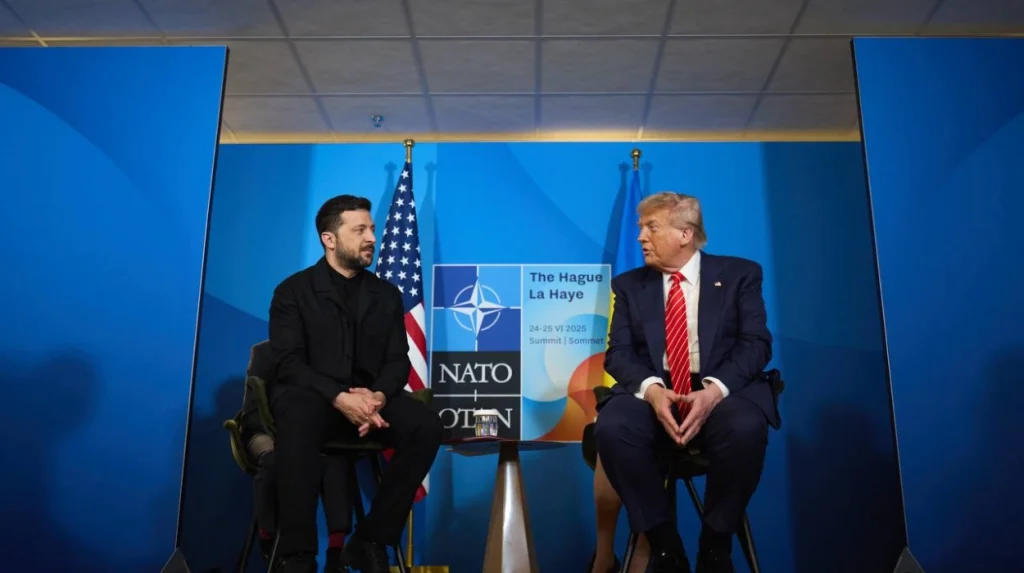
The situation in Ukraine is urgent considering that the country continually makes requests to its allies in the West to provide them with air defense. And then on July 4, 2025, history was made with such phone calls, as the President Volodymyr Zelensky of Ukraine and the President Donald Trump of the US talked in a meeting on a high level, which might be an alteration in the further phase of the conflict.
Understanding the Trump-Zelensky Air Defense Agreement
A Strategic Call Amid Strategic Uncertainty
This phone call between Zelensky and Trump took about 40 minutes. Both parties described the interaction as both positive and looking forward. Zelensky termed it as “very important and fruitful” as they understood the air defenses desired by Ukraine.
As the Ukrainian and U.S. sources revealed, both heads of the state decided to launch the causes of collaborative defence. This includes planning a meeting between U.S. and Ukrainian defense teams to explore co-production of air defense systems, evaluate paused weapons shipments, and discuss potential investments in Ukraine’s domestic defense industry. According to reports, Trump promised to read through the suspension of weapons delivery which became effective within days under the order of Pete Hegseth, the Defense Secretary.
Although it is not an official treaty or any kind of a military agreement, this pact is one of the signs of a fresher diplomatic outlook of Ukraine and American leadership. It is not yet clear how it will be translated into direct combat benefits but is already triggering a potentially momentous change in U.S. policy under the foreign influence currently reawakening under Trump.
Why Ukraine’s Air Defense Needs Are So Urgent
Beyond Missiles: Infrastructure and Morale
As the war has progressed, the use of layered air defense systems has also increased in Ukraine, especially in the use of U.S.-based Patriot batteries. They are also one of the few technologies that can be used as a hypersonic and cruise missile interceptor, and they have moved further past the role of shielding government, national centers to civilian neighbourhoods with high population density.
Despite a change of targeting strategy on March 2025 by seeking to attack not only energy grid but also hospitals, transport connections, and emergency response units, Russia emphasized the necessity to optimize the refreshing of the tactical map in order to attack energy grids with the quality which is superior to the quality of the initiated systematic restructuring in the system of the energy supply system. This has necessitated the availability of the scaling, renewable, and locally deployable defense solutions even more important. Kyiv’s existing air defense inventory, although bolstered by NATO allies, is being depleted faster than it can be replenished.
The Trump-Zelensky pact may offer a path toward defense sustainability. By encouraging joint production, Ukraine could reduce dependency on foreign shipment timelines and circumvent bureaucratic delays. Yet, turning those ambitions into operational capacity requires time, funding, and political will on both sides.
Disruptions in the U.S. Military Aid and European Reactions
The Weapons Shipment Pause and Its Fallout
The context of the Trump-Zelensky call is a high-profile suspension of the U.S. weapons deliveries to Ukraine that was launched by Secretary Hegseth at the beginning of the week. The short-term halt also impacted interceptors, missile batteries and artillery munitions which are required in repelling the recent attack of drones in Russia.
This hesitation shocked Ukrainian authorities and attracted some criticism in the U.S. Congress, where politicians were wondering why it happened at a time when increasing Russian aggression was noted. The discussion that Trump had with Zelensky was largely seen as aimed at ensuring the Kyiv that they will continue offering them support despite international divisions within the policy.
On the other side of the Atlantic, the Chancellor of Germany Friedrich Merz has been quoted to have already initiated negotiations with the Trump tribe to acquire Patriot systems directly out of the American stockpile. It is also part of an expanded European campaign to address such vacuums loosened by the American pause and another indication of the European Union nations retooling their help on their own as the United States shifts its way.
Can Co-Production Be a Game-Changer for Ukraine?
Building Domestic Defense Capabilities
One of the more strategic aspects of the Trump-Zelensky agreement is the potential co-production of air defense technologies on Ukrainian soil. This would mark a significant evolution from Ukraine’s current dependency model, where foreign donations and shipments dominate its military supply chain.
Establishing domestic production facilities for advanced systems like the Patriot or NASAMS would allow Ukraine to scale and customize its defenses based on real-time battlefield intelligence. It could also foster a defense economy resilient to global supply shocks and political hesitation.
However, co-production raises numerous logistical challenges. Licensing, intellectual property rights, skilled labor, and raw material access are major hurdles. In addition, there is the looming risk of Russian strikes targeting such facilities, requiring them to be heavily fortified or strategically concealed.
Moscow’s Position and the Escalation Outlook
Kremlin Dismisses Diplomatic Resolution
Russia’s response to the Trump-Zelensky developments has been predictably combative. Kremlin spokesman Dmitry Peskov reiterated that Moscow considers Ukraine’s Western partnerships as “hostile interference,” declaring that diplomatic solutions remain “impossible under current circumstances.”
Russian military doctrine continues to prioritize attrition through aerial dominance. Recent statements from General Valery Gerasimov suggest that the July 4 barrage was “only the beginning” of a summer campaign aimed at crippling Ukrainian defenses before winter. This timeline puts additional pressure on Ukraine and its allies to operationalize air defense upgrades swiftly.
Meanwhile, intelligence assessments from NATO indicate that Russia has expanded its drone supply network with assistance from Iran and North Korea, enabling sustained assaults without straining domestic production. This development further underscores the urgency behind any effort to scale up Ukraine’s interception capacity.
Public Support and Political Will
This person has spoken on the topic in an interview with CNN, emphasizing the critical need for enhanced air defense in Ukraine and cautioning that political fluctuations could jeopardize progress.
AXIOS:
— Russland-Analyse (@MRatzow) July 4, 2025
➡️ "Trump said he wants to help with air defense and that he will check what was put on hold if anything"
➡️ "Trump and Zelensky agreed that teams from the U.S. and Ukraine soon will meet to discuss air defense and other weapons supplies"
➡️ "The White House didn't…
Their comments reflect growing anxiety within the defense community about inconsistent support from Western capitals and the risk of aid becoming entangled in domestic politics. They also echo concerns voiced by Ukrainian officials that delays—no matter how brief—can have immediate battlefield consequences.
Will the Pact Shape the Future or Stall in Process?
The Trump-Zelensky pact emerges as both a diplomatic gesture and a potential catalyst for change. But the distance between rhetoric and implementation is wide. Co-producing advanced air defense systems will require months, if not years, of investment. The weapons shipment pause, while temporary, revealed how fragile external support can be in a polarized political climate.
What remains to be seen is whether Trump’s political capital—and his capacity to influence defense policy without holding office—can sustain this agreement beyond a phone call. A lot will hinge on follow-through: the pace at which the defense teams can get together, the adherence of any agreements achieved and the openness in which both sides can update each other.
With Ukraine expecting even more attacks on air and anticipating another winter offensive, the stability of its alliances will be strained as never before. The Trump-Zelensky deal stands to bring no immediate deliverables but it has prepared a more strategic model of collaboration, which is liable to shape the way Ukraine defends itself and the way its allies assist it.
How that phase evolves into a venue of serious action or a stage of stymied pledges will determine a large portion of the next act of the conflict. The world now watches not just for missiles in the sky, but for signatures on contracts, shipments in transit, and factories built to defend a future that remains under siege.