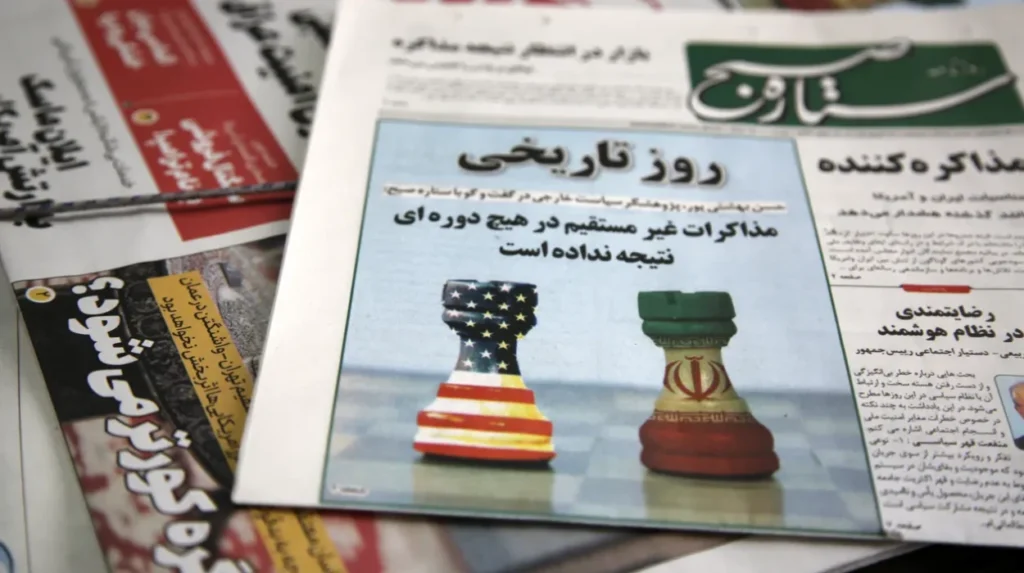
The well-timed discussions that the US and Iran had planned to hold in Switzerland on Friday have been canceled at the last minute, which is definitely one step backward for peace in the region. The delegation of the US Vice President JD Vance did not even take off for Burgenstock because Iran declined to send their delegates due to the continuous airstrikes that Israel was conducting in southern Lebanon. It has become clear that the weakness of the 14-point memorandum of understanding lies in the fact that there are no sanctions attached.
It is indeed unfortunate that it comes at such an inopportune time. On Wednesday, June 17, 2026, Presidents Donald Trump and Masoud Pezeshkian electronically signed the temporary truce that would extend the previous ceasefire agreement in April for 60 days, while the two parties negotiate a final peace deal. It is important to note that the agreement
“calls for an immediate and permanent cessation of military activity on all fronts, including Lebanon.”
However, by Friday, Israeli bombings had already killed 18 people in southern Lebanon and wounded 33 others, as reported by the Lebanese Health Ministry.
The Two-Week Ceasefire That Wasn’t
The 14 points of the ceasefire agreement carried a lot of ambitious clauses that could guarantee complete de-escalation of conflict. In addition to the ceasefire, the memorandum carried guarantees by the US on lifting of the naval blockade of Iran in 30 days, withdrawal of US troops from around Iran and granting waivers on Iranian oil exports. On its part, Iran gave a guarantee of free navigation through the Strait of Hormuz for 60 days without any fee, in addition to the guarantee of not developing nuclear weapons.
However, the agreement’s fatal flaw emerged immediately. Point three—respect for Lebanon’s sovereignty—proved incompatible with Israel’s stated policy of continuing operations against Hezbollah infrastructure. Israeli officials explicitly rejected Tehran’s demand for a linked ceasefire with Hezbollah, maintaining that attacks on Lebanese territory respond directly to “Hezbollah’s firing at Israeli territory.” This position directly contradicts the ceasefire’s requirement for immediate permanent cessation of operations “including Lebanon,” creating an enforcement vacuum that Tehran exploited to justify postponing negotiations.
Tehran’s Defiant Stance on Nuclear Negotiations
Iranian Foreign Minister Abbas Araghchi delivered Iran’s official position with unambiguous clarity, stating Tehran would not return to nuclear talks while the United States maintained what it characterized as excessive demands. The foreign minister’s statement carried historical weight, echoing his April 26, 2026, conversation with Russian President Vladimir Putin when he warned that
“US harmful practices—insistence on unreasonable demands, frequent shifts, threatening rhetoric, repeated breaches—slowed diplomacy.”
This pattern of US policy inconsistency has become a central Iranian grievance.
The choice to cease negotiations is something more than simply a temporary postponement of talks. As per reports by the Tasnim News Agency from Iran which was relayed through IRGC-associated networks,
“Iran stopped all talks and communications through Pakistan, which served as the mediator.”
It means a complete shut down of the dialogue process and not just a postponement of talks. Such an approach by Iran shows that the continuous strikes in Lebanon reflect a larger US-Israeli unwillingness to abide by the basic terms of the ceasefire agreement.
Washington’s Logistical Excuse Masks Strategic Uncertainty
The White House explanation of why the trip of Vance had been postponed seemed quite intentionally ambiguous, stating “logistical issues” as the reason for the postponement of the Switzerland trip. This is quite a different approach from that adopted by Iran, where talks have been refused on the basis of Israeli’s military operations. In his statement, made on Thursday, Mr. Vance indicated that
“Geneva was the plan, but that could change.”
The White House spokesman confirmed, on Thursday night, that
“Vance delayed his trip to Switzerland because of logistical issues.”
Switzerland’s Foreign Ministry provided the most neutral official statement, confirming “discussions involving US, Iran, Qatar, Pakistan postponed” while emphasizing
“Switzerland remains prepared to facilitate.”
The ministry’s acknowledgment that
“preparatory work at Burgenstock ongoing”
but providing “no new date” suggests neither side committed to rescheduling. This diplomatic positioning reflects the fundamental disagreement: the US maintains talks were postponed due to administrative obstacles, while Iran insists Israeli violence in Lebanon made negotiations impossible. The Swiss government’s neutral stance preserves future facilitation options while avoiding assignment of blame.
Lebanon Becomes the Ceasefire’s Fatal Weak Point
The 588 people who died in Lebanon since the ceasefire was agreed upon on April 17, 2026—including 23 children—as well as the 1,224 wounded individuals, illustrate the human price paid for the weakest part of the accord. With a weekly report by the Lebanese health ministry of 18 deaths and 33 wounded individuals due to recent attacks, it is shown that things can change very rapidly despite all diplomatic efforts. Around one million people have become refugees in southern Lebanon, making the situation more difficult regarding peace deals.
Deaths among Israeli soldiers are on the increase just like that among civilians. Four Israeli soldiers lost their lives in one fatal attack amidst the height of the increased violence, thus pointing out the reciprocity of the conflict. Attacks took place in various southern Lebanon areas including Southern Beirut, Kfar Tebnit, Zabadin, Tyre, and Nabatiyeh. Documentation carried out by Norwegian Refugee Council reveals that almost 600 people died within a period of four weeks due to the fragile ceasefire of April.
Hezbollah’s Rejection of American Mediation
Nabih Berri, the speaker of the Lebanese parliament and someone with strong ties to Hezbollah, gave the response on behalf of the group. The response by Hezbollah’s political leadership shows that the militia feels that the cease-fire does not offer enough safety from the Israeli military. Since Israel has been attacking Lebanon even though the terms specifically mention Lebanon, it seems that Hezbollah still holds the balance of power regarding the cease-fire.
The connection between Hezbollah’s military actions and Israel’s retaliatory strikes creates a cycle the ceasefire failed to break. Israel’s official statement that attacks respond to “Hezbollah’s firing at Israeli territory” establishes the militia’s ongoing offensive capability. This persistent military activity contradicts the ceasefire’s requirement for immediate permanent cessation of operations, providing Tehran with justification for postponing negotiations while maintaining that Iran itself honors the agreement’s terms.
Regional Implications of the Postponement
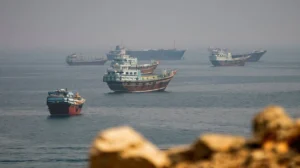
Blockade of the Strait of Hormuz, which has essentially confined more than 14 million barrels of Middle Eastern oil production daily since February 2026, is still an economic factor of this conflict. While the condition in the agreement that “Iran would guarantee ‘free passage through Strait of Hormuz for 60 days toll-free'” has not been put into test due to failures in the execution of the ceasefire before its effectuation, Gulf markets surged upon the announcement of the ceasefire in April, with their stock markets moving up along with the rest of world markets due to President Trump agreeing to the first two-week ceasefire.
The 60-day negotiation window for permanent truce on sanctions and Iran’s nuclear program now faces immediate uncertainty. Without resolved disagreements about Lebanon, these negotiations may stall entirely. Iran’s October 2025 statement that Tehran
“will not return to nuclear talks if US makes unreasonable demands”
suggests the current postponement could extend indefinitely if Washington and Tel Aviv fail to address Israeli operations in Lebanon. The binding UNSC resolution validating the deal provides international legitimacy but lacks enforcement mechanisms ensuring compliance.
The Fundamental Enforcement Problem
The main weakness in the ceasefire is the lack of provisions for enforcement. The document stipulates the immediate end of all operations in the area, but Israel keeps up attacks on civilian targets, stating that these attacks are in retaliation for the aggression by Hezbollah. The United States, being the chief American guarantor of the deal, finds itself in an impossible situation where it has to either pressure Israel to stop the operations (thereby possibly compromising the security needs of the Israeli government), or accept the fact that the ceasefire is not keeping its terms.
The 30-day timeline for US naval blockade lifting and military force withdrawal from Iran’s vicinity now faces uncertain implementation. If Israel continues Lebanese strikes, Iran may refuse to honor the Hormuz passage commitment, potentially triggering renewed economic warfare. The agreement’s mutual commitments become interdependent: US sanctions relief depends on Iranian nuclear restraint, while Iranian oil export waivers depend on Hormuz passage, creating a chain of obligations that Lebanon strikes threaten to break entirely.
Swiss Foreign Office announced “no new date provided” for the deferred negotiations, thus leaving the diplomatic schedule open-ended. The 60 days of negotiations for an indefinite ceasefire are ticking irrespective of whether negotiations commence or fail to take place. Complete absence of communication by Iran via Pakistan indicates that Iran does not intend to continue talks until Israel withdraws from Lebanon. The White House’s logistical justification ensures that diplomacy is served without admitting failure of the ceasefire.
President Trump’s announcement of a “breakthrough” with Pakistani Prime Minister Shehbaz Sharif as mediator now appears optimistic given the immediate collapse of implementation. The $300 billion-plus reconstruction plans US allies will deliver for Iran remain theoretical if the ceasefire fails. The region faces renewed uncertainty as the carefully constructed diplomatic framework encounters the reality of ongoing military operations that violate the agreement’s core provisions. The US-Iran peace talks postponement represents not merely scheduling delay but fundamental crisis in the ceasefire’s viability.