Middle East is still nervous because of Israeli continuous bombardment in Lebanon despite the deal between the United States and Iran to stop the conflict in the area. Explosion has occurred in southern Lebanon and outskirts of Beirut, and Israeli troops have begun targeting Hezbollah strongholds such as Dahieh, a suburb of south Beirut. Even after the deal between the United States and Iran, the number of attacks has been reduced, but not ceased.
The deal, expected to be officially signed on Friday, promises to conclude the conflict “on all fronts,” yet Israel maintains its military operations in Lebanon, citing the country’s exclusion from the ceasefire framework.
Failure to uphold the diplomacy is a turning point in the conflict that has lasted for a hundred days and caused thousands of casualties. This problem indicates not only the failure to maintain the ceasefire but also the growing rifts between Israel, the US, Iran, and Hezbollah.
The US–Iran Deal and Its Limitations
The deal between the US and Iran was supposed to end the war on several fronts such as Gaza, Syria, and Lebanon. In his speech, President Donald Trump announced that “the ceasefire is imminent” and further elaborated that he is about to make the deal with Iran to restore peace within the region. However, Israel clarified that the deal does not include Lebanon.
Prime Minister Benjamin Netanyahu declared,
“Lebanon was not included in the ceasefire deal,”
rejecting the notion that Israeli operations in the country should halt.
This exclusion has created a major diplomatic rift. Pakistan, which participated in mediation efforts, initially suggested the ceasefire covered “everywhere, including Lebanon.” That claim was quickly contradicted by both the US and Israel, revealing mismatches in diplomatic messaging and priorities. The US stance remains firm: the deal does not bind Israel regarding Lebanon, allowing military operations to continue despite regional pressure for de-escalation.
Israel’s Military Stance and Operational Continuity
Israel’s defense establishment has made no ambiguity about its position. Defence Minister Israel Katz stated,
“The military will persist with operations in Lebanon and will not withdraw,”
reinforcing the government’s determination to maintain pressure on Hezbollah.
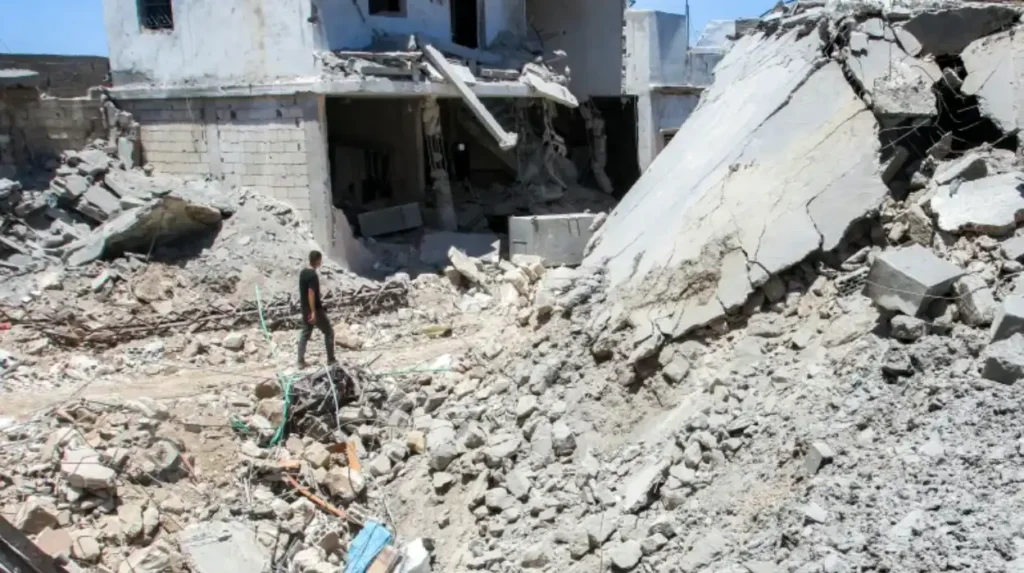
The Israeli air strikes have struck various targets; al-Abbassieh is among the many towns that lie in southern Lebanon which suffered one strike resulting in deaths of at least seven persons. One of the significant strikes that happened on June 14, 2026 was in Dahieh; it was the first strike to take place in the Beirut region after the ceasefire proposal was made. This strike was described by the Israeli forces as being directed towards the infrastructure of Hezbollah and they claim that such moves constitute part of a larger mission to neutralize the power of the group.
Hezbollah’s Rejection of Ceasefire and Continued Resistance
The Hezbollah terrorist organization, which has been a key part of the conflict and is backed by Iran, has not accepted any cease-fire deal that has been offered to it. The Hezbollah organization did not accept the US-sponsored conditional cease-fire agreement between Israel and Lebanon on June 3, 2026, which was reached in Washington in the absence of Hezbollah.
The Hezbollah’s position indicates that the organization is aligned with Iran and rejects any agreement that does not suit its strategic goals. According to Hezbollah, the US-Iran agreement is not enough without having assurances about Lebanon’s sovereignty and withdrawal of the Israeli forces from it. Thus, such a stance is making the decision of the Israeli forces to engage in military activities more determined than before.
Iran’s Warning and the Risk of Deal Collapse
Iran has issued sharp warnings about the consequences of continued Israeli bombing. Tehran stated that
“Israeli strikes could derail the US–Iran deal,”
expressing concern that operations in Lebanon could undermine the broader diplomatic effort. Iranian officials argue that the ceasefire agreement was intended to end fighting across all fronts, and Israel’s refusal to comply with that understanding threatens the stability of the entire deal.
The agreement between US and Iran was created in order to ease tensions not only between Israel and Hezbollah, but also throughout the entire Middle East region, including Gaza and Syria. The threat made by Iran shows its position as one of the main mediators and its readiness to withdraw from the agreement due to Israel’s activities. Such situation makes many diplomatic experts worry about another outbreak of violence in the region.
Humanitarian Toll and Regional Impact
The humanitarian cost of the conflict has been staggering. According to Lebanon’s health ministry, Israeli attacks have killed over 200 people and wounded 1,000 others in the April 2026 escalation alone.
At least 182 deaths have been reported as a result of this wave of attacks that occurred in Lebanon in April. On June 9, 2026, when the war reached its 100th day, thousands were dead, and tens of thousands displaced. The fact that the bombings continue in spite of the agreement between the United States and Iran has increased the concerns about the possibility of a humanitarian catastrophe. People living in southern Lebanon and Beirut live in fear of being killed, with damaged infrastructure and lack of basic utilities. International humanitarian organizations have asked all sides to observe the ceasefire, but their appeals were ignored by both parties.
Global Reaction and Diplomatic Concerns
Israel’s continued air strikes against Lebanon have met with international shock and outrage. Various nations and international bodies have been critical of the bombings and have called on both sides to abide by the cease-fire. UN has stressed the importance of protecting civilians and avoiding any further escalation of the crisis. The European Union leaders have feared a greater conflict if the US-Iran deal collapses.
Pakistan, initially involved in mediation, faced criticism for its contradictory statements about the ceasefire’s scope. The country’s claim that the agreement covered “everywhere, including Lebanon” was refuted by the US and Israel, highlighting the complexity of multilateral diplomacy in the region. The diplomatic mismatch has undermined confidence in international mediation efforts and raised questions about the feasibility of future ceasefire agreements.
Why This Crisis Matters Beyond Lebanon
It is not only a two-way problem between Israel and Hezbollah. There exist some more complex relations, which include the USA, Iran, and other countries of the region. Israel’s unwillingness to stop their activities in Lebanon demonstrates that Israel wants to exercise military pressure on the forces supported by Iran, even sacrificing peace talks for it. The threat made by Iran shows its importance for security in the region.
The US–Iran deal was intended to reduce tensions across the region, including in Gaza, Syria, and Lebanon. Its potential failure could lead to a surge in violence that affects multiple countries. The risk of escalation is particularly high given Hezbollah’s continued resistance and Israel’s commitment to military operations.
The immediate future remains uncertain. If Israel continues its bombing campaign, Iran may withdraw from the US–Iran deal, triggering a new wave of violence. Hezbollah is likely to maintain its resistance, further prolonging the conflict. The US faces pressure to enforce the ceasefire and prevent further escalation, but its ability to influence Israel’s military decisions remains limited.
Diplomatic observers warn that the region is approaching a critical threshold. Continued Israeli operations in Lebanon could destabilize the entire Middle East, with consequences that extend far beyond the immediate conflict. The world must watch closely as tensions rise and the prospects for peace diminish.