In a move that has alarmed officials on Capitol Hill and Middle East foreign policy circles alike, the American intelligence community has officially briefed President Donald Trump of the likelihood that Israel’s Prime Minister, Benjamin Netanyahu, will conduct more military raids on Hezbollah in Lebanon, effectively threatening the recent U.S.-Iran peace agreement signed only days before. According to the Washington Post,
“U.S. spy agencies fear Israeli attacks in Lebanon might threaten a tenuous new peace deal between the United States and Iran,”
on June 19, 2026.
The current assessment reflects a crucial point in the administration of President Trump regarding his foreign policy in his second term, especially since the memorandum of understanding with Iran was regarded as a turning point in ending the war, opening the Strait of Hormuz, and ensuring stability in the region. However, there are indications by intelligence agencies that the insistence of Israel on putting military pressure on Hezbollah may hinder the process before the effectiveness of the agreement can be seen. Intelligence agencies have reached the conclusion that Netanyahu is most likely to do things that will sabotage the efforts of the president.
The Staggering Human Cost of Continued Violence
There is no doubt that the persistence of the attacks by Israel has cost human life and changed the face of southern Lebanon completely. At least 3,912 people were killed and 11,873 people were injured during attacks carried out by Israel in Lebanon since March 2, 2026. These casualties have created one of the gravest humanitarian disasters that the area has seen recently, and children and women form the bulk of these casualties.
From among the dead, 247 children and 363 women have died ever since the war started. The health sector has endured the worst casualties, with 746 deaths of doctors and other health care practitioners occurring ever since the start of the war. Over a million Lebanese citizens have been made to leave their homes due to massive destruction of houses and public facilities. The last wave of fighting has not stopped despite the signing of the peace agreement, with the latest fighting killing four people in southern Lebanon through Israeli air raids on June 17, then three people were killed on June 18.
Iran’s Ironclad Position on Lebanon Withdrawal
Iranian authorities have shown that the Lebanon segment of the peace accord is not negotiable at all and is an essential part of the validity of the accord. Foreign minister Abbas Araghchi, who spoke on June 16, 2026, said,
“The end of the war in Lebanon is a basic part of the total cease-fire”.
This was the stand taken by Iran that an Israeli army in Lebanon is a violation of the agreement.
Araghchi further clarified Iran’s red line, stating that
“unless Israeli forces retreat from the regions they occupied during this conflict, hostilities cannot be considered fully resolved”.
The foreign minister made the consequences explicit:
“any additional Israeli strikes on Lebanon will be regarded by us as a breach of the Memorandum of Understanding”.
This position was reinforced by Iran’s Security Council, which announced on June 14 that “based on the agreements reached, the war and military operations on all fronts, including Lebanon, will end immediately and permanently as of tonight”.
Iranian Parliamentary Speaker Mohammad Bagher Qalibaf took to X on June 14 to deliver a stark warning to Washington:
“if you lack the will and ability to fulfil your commitments, speaking of continuing the path is not possible”.
The statement underscored Tehran’s view that the U.S. bears responsibility for ensuring Israel adheres to the agreement’s terms. Most significantly, Araghchi stated on June 17 that
“any conclusive deal with Washington must encompass alleviation of sanctions, unfreezing of Iranian assets, and withdrawal of Israeli troops from Lebanon”,
establishing the complete package Iran expects.
Netanyahu’s Defiant Rejection of Withdrawal Demands
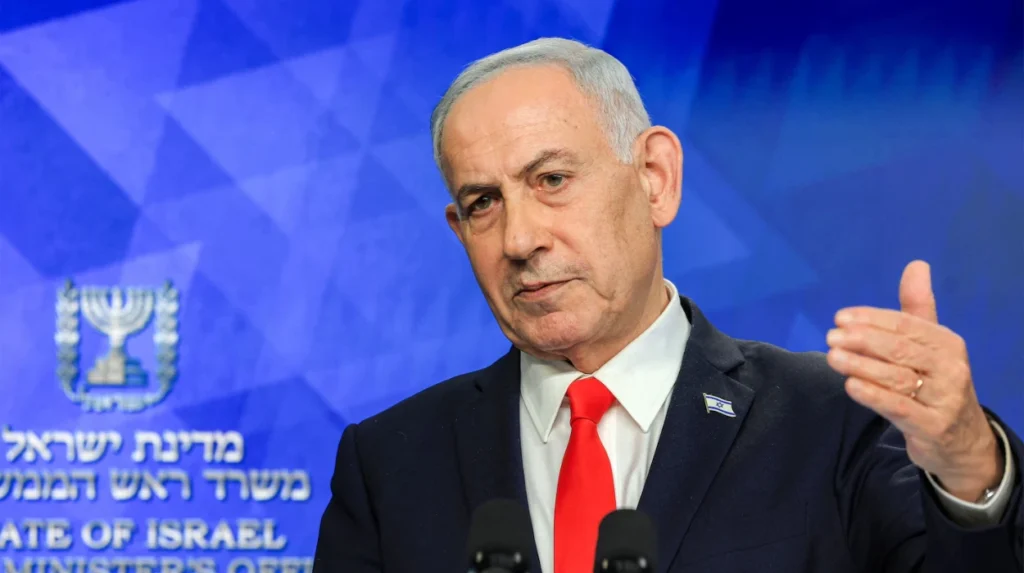
The Israeli Prime Minister Benjamin Netanyahu has clearly refused any requests from Iran to withdraw Israeli troops from the lands of Lebanon, directly colliding with the agreement’s terms. On June 15, 2026, Netanyahu stated that
“Israel will not retreat from occupied lands in Lebanon,”
meaning that Israel will still maintain military presence in Lebanon occupying around 570 square kilometers (220 square miles) of land. Israel is not planning to withdraw its troops from neighboring Lebanon, as stated by the prime minister’s office.
Netanyahu’s attitude proved to be an indication of looming problems with the peace treaty, as Netanyahu made it clear that he did not plan to pull back his troops from nearby Lebanon, which is a vital condition set forth by Iran for the treaty to be considered legally binding. The day before, on June 13, Israeli army attacked Hezbollah positions in Beirut. This can be regarded as an indication that Israel’s actions were carefully timed to put military pressure prior to signing the treaty.
The U.S.-Iran Memorandum of Understanding: Provisions at Risk
The 14-point Memorandum of Understanding signed on June 14, 2026, contains explicit provisions that Israeli actions are now violating. The agreement mandates an immediate and permanent suspension of military operations on all fronts, including Lebanon. Iran’s Security Council confirmed that
“the war and military operations on all fronts, including Lebanon, will end immediately and permanently”.
The MOU further stipulates the reopening of the highly strategic Strait of Hormuz, where Iran allows toll-free transit of commercial ships for 60 days. It has been reported by President Trump that the U.S. is ending its naval embargo of Iran’s ports and the Strait of Hormuz will be reopened post-agreement. There is clarity regarding the Lebanon provisions in the agreement, as it states that there must be an end to Israeli troops from Lebanon. However, U.S. intelligence reports indicate that these provisions are already being sabotaged.
The Washington Post reported that
“U.S. intelligence agencies have warned the Trump administration that Israeli Prime Minister Benjamin Netanyahu is likely to take steps that would undermine the president’s efforts to reach a lasting peace agreement with Iran”.
Washington’s Growing Concern Over Israel’s Actions
The intelligence warning reflects deepening concerns within the Trump administration about Israel’s commitment to the agreement. U.S. officials have stated that
“continuing to occupy part of Lebanon is a recipe for disaster”.
The intelligence assessment concludes that
“without a full Israeli withdrawal, the likelihood of resumed hostilities between IDF and Hezbollah is all but certain”.
This prognosis suggests the agreement faces catastrophic failure if Israel maintains its current posture.
Trump himself has shown his displeasure with the way Netanyahu is going about things. For instance, on June 16, Trump said that it is
“back to dropping bombs if he doesn’t like Iran deal”
at the same time as he was criticizing Netanyahu for Israel’s bombardment of Lebanon. Previously, on June 14, Trump warned both Israel and Iran from “blowing it” because of the fragile nature of the deal. According to reports in the Wall Street Journal, Trump came to know of the intelligence warning of Israeli intentions to undermine the deal on June 19.
Analyst Perspectives on the Deal’s Fragility
Commentators outside of the administration have also commented on the fragility of the agreement. Doug Band, a former adviser to President Ronald Reagan and a policy analyst at the Cato Institute, stated that the agreement is
“teetering on the brink of failure unless the U.S. imposes ‘genuine pressure’ on Israel to halt its operations in Lebanon.”
Ryan Bohl, a Middle East analyst, offered a different perspective on Israel’s motivations. He stated that Israel’s objective is “less about triggering a direct US military campaign” and more about “preventing Washington from delivering sanctions relief” to Iran.
This assessment indicates that the plan of Netanyahu is aimed at exerting maximum pressure on Iran without coming into conflict with America. The experts believe that Israel may take the advantage of Lebanon to sabotage the US-Iranian agreement for peaceful settlement, which entails stopping military activities in Lebanon.
The Intelligence Assessment’s Core Findings
The Washington Post’s June 19 report provided the most detailed account of U.S. intelligence conclusions. Current and former U.S. officials familiar with intelligence assessments stated that
“U.S. spy agencies believe Israeli attacks in Lebanon could jeopardize a tentative peace deal between the U.S. and Iran”.
The intelligence community has determined that Prime Minister Netanyahu is likely to maintain military action against Hezbollah despite a ceasefire deal.
The assessment further reveals that
“Israel will probably pursue measures that will obstruct any efforts for negotiations between Iran and the United States on the subject of Iran’s nuclear program”.
This indicates the fact that not only are Israeli operations tactical in nature but strategic as well and aim at subverting the entire process of negotiation and diplomacy.
“Israel seems intent on continuing its military operations against Hezbollah in Lebanon”,
according to the U.S. government officials.
The Collision Course Between Trump and Netanyahu
The intelligence warning has exposed a growing rift between President Trump and Prime Minister Netanyahu. Reuters reported on June 16 that
“Netanyahu and Trump are on a collision course as the U.S. and Iran agree to halt war”.
The New York Times characterized the situation similarly, noting that Netanyahu’s stance on Lebanon “foreshadowing potential trouble for the peace deal”.
The inherent conflict comes from different priorities. Trump has been portraying the Iran deal as an accomplishment on foreign policy, one which will bring stability to the region and limit the United States’ military engagements. Netanyahu, on the other hand, seems reluctant to enter into a deal that will hinder Israel’s military capacity to engage with Hezbollah.
The Washington Post reported that
“with strained relations between Israel and the Trump administration, U.S. spy agencies believe Israeli attacks in Lebanon could jeopardize a tentative peace deal”.
Critical Uncertainties
The path forward remains uncertain, with several critical variables determining whether the agreement survives. The first is whether Trump will apply sufficient pressure on Netanyahu to force Israeli withdrawal from Lebanese territory. The second is whether Iran will tolerate continued Israeli operations before taking the “harsh response” it has warned about.
Thirdly, there is the likelihood of retaliation by Hezbollah due to continuous Israeli aggression, resulting in the very resumption of war that the agreement was supposed to avoid. The intelligence community has pointed out that the continuous Israeli occupation of Lebanon has created a situation in which the resumption of war is practically unavoidable. The success of the agreement hinges solely upon the withdrawal by Israel from occupied territories, a stance which Netanyahu rejects outright. The lack of solution to this core contradiction has made the peace deal with Iran extremely vulnerable to collapse within days of its signing.