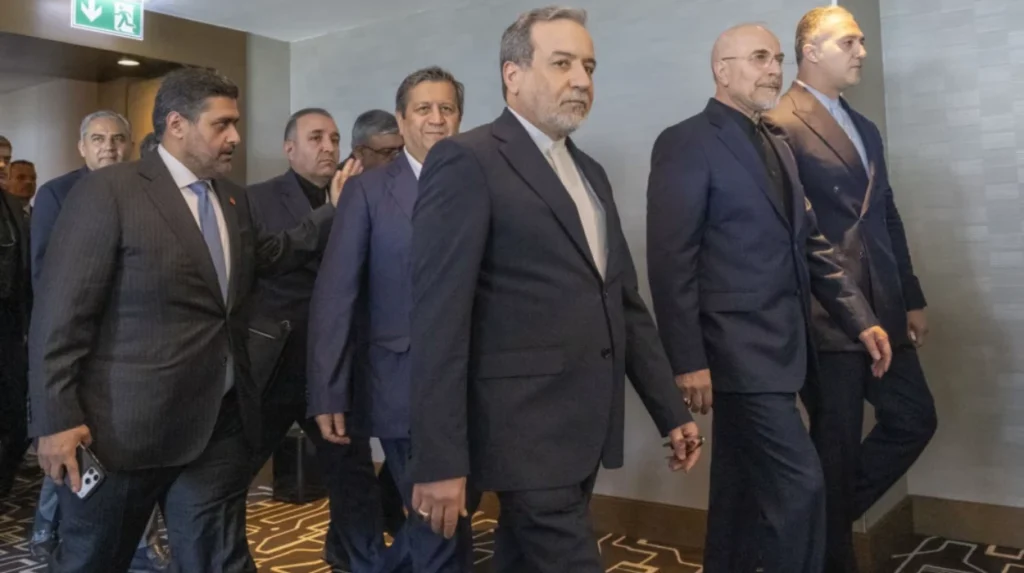
The initial series of peace negotiations held between the U.S. and Iran concluded early Monday morning in Switzerland after making “encouraging progress,” despite the possibility of failure during the summit due to the intimidating remarks made by President Donald Trump a few hours earlier. The talks were held at the Bürgenstock resort overlooking Lake Lucerne and yielded an actual 60-day peace agreement plan which will put an end to the long-running war between both countries, based on a mediators’ joint statement on Monday.
The negotiations were put under threat of a spectacular blow after the Iranian negotiators stormed out of the discussion hall and declined to return once the military threats by Trump had become public knowledge. The Iranians stayed out of the discussion hall for around 80 minutes, putting the whole conference at risk from the beginning itself, since no technical negotiations could take place. In spite of the above mentioned confrontation, however, both parties managed to come back to the discussion table, as the American officials later stated that the Iranians had never really left the Bürgenstock grounds.
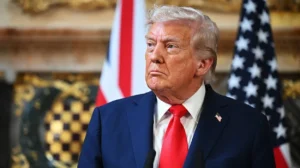
President Trump’s Truth Social post demanded that Iran
“immediately stop their highly paid PROXIES in Lebanon from causing trouble,”
threatening to hit Iran
“very hard again, just like we did last week, only harder”
if the demand was not met.
The President escalated his threats further by telling Iranian officials personally that “you won’t have a country” if they closed the Strait of Hormuz again, and stating he would take over the vital waterway and charge a toll to shipping vessels. These ultimatums came against the backdrop of Iran’s decision to close the Strait for nearly 4 days, citing Israeli and U.S. violations of the interim peace deal signed on June 15.
The 60-Day Roadmap: Concrete Framework for Final Peace Agreement
It was noted by the mediators that the United States and Iran had mutually agreed to put in place an effective mechanism to negotiate a final agreement within 60 days. From the communiqué, both countries pledged to form a high-level political committee to oversee the process of mediation, with the chief negotiators having to periodically update this committee. It is worth noting that this kind of structure has not been put in place before during previous negotiations.
The roadmap includes four dedicated working groups that will focus on nuclear issues, sanctions, monitoring, and dispute resolution. These technical teams will handle the most contentious aspects of the agreement while the political oversight committee manages broader strategic questions. The mediators emphasized that the discussions ended in a “positive and constructive atmosphere,” despite the earlier disruption caused by Trump’s threats.
The agreement’s vital aspect is the establishment of the “de-confliction cell,” jointly with Lebanon, to make sure that there will be no more military strikes conducted by either Israel or Hezbollah. In fact, the de-confliction cell is one of the biggest achievements because it helps to solve the regional conflict which was the key factor triggering the rise in tensions between the United States and Iran. Another important issue is the line of communication established to avoid incidents and misunderstandings with the commercial ships passing through the Strait of Hormuz.
Iran’s chief negotiator Mohammad Bagher Ghalibaf, who serves as Speaker of the Iranian Parliament, responded sharply to Trump’s threats with a statement that resonated across Tehran’s political establishment. Ghalibaf wrote on social media that Washington should “watch their words carefully,” adding that
“They better be careful with their statements, our armed forces are ready to respond in another way. No matter what they say, we will act”.
This statement underscored Iran’s determination to maintain its negotiating position despite American pressure, signaling that Tehran would not capitulate to threats even while pursuing peace.
Iran Secures Critical Economic Concessions as Nuclear Talks Resume
Iranian Foreign Minister Abbas Araqchi announced that Tehran had secured significant economic concessions as part of the preliminary agreement, marking a major victory for Iran’s negotiating team. According to Araqchi,
“Restrictions on oil and petrochemical exports have been waived, the blockade lifted, some frozen assets released, and a major reconstruction and development plan for Iran launched”.
These concessions represent tangible progress toward addressing Iran’s primary economic grievances that have fueled tensions with the United States for years.
The waiver on exports of oil and petrochemicals is especially important considering the role of the Strait of Hormuz in being the world’s most important oil transit point. According to figures from TankerTrackers, Iran has since June 15 exported around 36 million barrels of oil. This huge jump in export levels was achieved after almost four months of closure of the Strait that created, according to the mediators, the greatest energy crisis in history.
Prices of Brent crude fell by over $1 to $79.44 per barrel after the joint declaration was issued, signifying that the market was sure of an agreement that will ensure the stability of world energy supplies. Oil prices rose up to $80.38 per barrel prior to the signing of the agreement on June 21.
The significance of the economic compromises made goes beyond just immediate monetary support for Iran. Removing the embargo and unfreezing Iran’s funds solve the main issues related to Iran’s economic sovereignty, while the development plan is a guarantee of foreign involvement in the long-term economic revival of Iran. All these factors play an essential role in achieving sustainable peace and offer Iran benefits that will make future conflict less likely.
Trump’s Island Sale Provocations and Escalating Threat Pattern
The provocative rhetoric used by President Trump during these negotiations exhibited an alarming trend of provocation, which almost derailed the entire peace process. In addition to the threats issued on his Truth Social channel regarding Lebanon, President Trump made other remarks which served to fuel tensions even more. The president reportedly informed the Iranians that they would face total destruction if they shut down the Strait of Hormuz, while at the same time threatening to take control of the strait and levy tolls.
These threats contradicted the diplomatic tone that mediators had worked to establish, creating a stark disconnect between Trump’s public statements and the negotiation process’s underlying objectives. Vice President JD Vance, who served as the chief U.S. negotiator, attempted to downplay the significance of Trump’s provocations during a press conference, stating that President Trump had
“asked us to turn over a new leaf to transform our relationship with the people of Iran”.
Vance further minimized concerns about regional violence by remarking that
“These things are always a little bit messy,”
a statement that drew criticism from observers who viewed it as dismissive of the humanitarian crisis in Lebanon.
The interaction between Trump and JD Vance, both being part of the US delegation, was quite noticeable due to tension that existed between the two. The Iranians did not greet JD Vance, who is said to be one of the delegates in the US negotiating team. This is because of the diplomatic affront which showed the gap between the language used by the President and the diplomacy conducted by his officials.
Special Envoy Steve Witkoff and Presidential Advisor Jared Kushner, who served alongside Vance on the U.S. negotiating team, worked to maintain diplomatic channels despite Trump’s provocations. Their efforts proved crucial in getting Iranian negotiators to return to the table after the initial walkout, demonstrating that professional diplomats could still advance peace objectives even when political leadership undermined their work.
Regional Fallout: Lebanon Ceasefire and Strait of Hormuz Tensions
Lebanon forms the core of the deal due to its significant influence in the escalation of tensions between the United States and Iran. Following the invasion of Lebanon by Israel in March to target Hezbollah members, over one million people have had to abandon their homes, leading to a human tragedy that has been condemned internationally. It is important to note that the discussions took place amid a fragile truce in Lebanon, with Sunday emerging as the calmest day in the country recently without any violent incidents being reported.
People have started to return to their homes in the south of Lebanon, with some of them raising Hezbollah banners while traveling on highways toward their towns that had been destroyed because of the months-long war. It is an initial move toward normality, but at the same time the contradictions between Israel and Hezbollah still exist. Joint “de-confliction cell” that the USA and Iran are going to create with the help of Lebanon will be able to ensure there won’t be any further escalations leading to a bigger regional conflict.
The Strait of Hormuz situation remains volatile despite the agreement’s provisions for improved communication. Shipping data showed that the number of vessels passing through the Strait fell sharply on Sunday after Iran announced it had closed the waterway, with only five ships passing compared to 26 ships on Saturday. This dramatic reduction in shipping traffic demonstrates that the agreement’s implementation faces significant challenges, even after negotiators reached preliminary consensus on key provisions.
Prior to its recent closure, 25 ships sailed through the Strait on Thursday, with 14 of them being oil tankers, whereas 11 ships sailed through the Strait on Friday. The above figures point to the immense significance that the water channel holds in terms of ensuring energy security around the world, since approximately 20 percent of the total oil usage around the world is transported through the Strait each year.
Mediators’ Confidence and Path Forward for Technical Negotiations
Mediators from Qatar and Pakistan expressed confidence in the negotiation process despite the earlier disruption, with both countries maintaining that the talks proceeded in a constructive atmosphere. The joint statement emphasized that Washington and Tehran had agreed to a
“concrete roadmap to reach a final peace deal within 60 days,”
providing a clear timeline for achieving permanent peace. This timeline represents a significant commitment from both sides, as it establishes accountability for delivering on the agreement’s promises.
Technical discussions will continue through the rest of the week at Bürgenstock, with the working group dealing with particularities of the framework’s implementation. That is an indication that both countries, even in the face of provocations by Trump, are dedicated to negotiations process, which may indicate that professional diplomats from both sides understand the significance of reaching an agreement.
The chief negotiators from each country shall make regular reports to the senior oversight committee to ensure that the technical progress made is translated into political progress to move the overall accord forward. Such a reporting system can help to pinpoint any trouble early on before it develops into an actual crisis that could threaten the process like the walkout during the first round of talks.
The mediators’ assessment of “encouraging progress” suggests that both sides have moved beyond initial posturing and begun addressing substantive issues that have fueled conflict for years. This progress, achieved despite significant political obstacles, demonstrates the resilience of diplomatic processes even when political leadership attempts to undermine them through aggressive rhetoric and ultimatums.
Why This Breakthrough Matters Despite Trump’s Threats
The first round of U.S.-Iran peace talks represents a critical juncture in Middle Eastern diplomacy, demonstrating that professional diplomats can still advance peace objectives even when political leadership undermines their efforts through aggressive rhetoric. The 60-day roadmap provides a concrete framework for achieving permanent peace, with specific mechanisms for oversight that address accountability concerns that have plagued previous negotiation attempts.
The economic concessions Iran secured—including oil export waivers, frozen asset releases, and blockade lifting—represent tangible progress toward addressing fundamental Iranian grievances that have fueled tensions with the United States. These concessions provide Iran with incentives to maintain the agreement, reducing the likelihood that future confrontations will emerge from economic desperation.
But continued provocation by Trump creates uncertainty regarding the sustainability of the agreement. This trend by the President is characterized by the use of threats to both invade and take territories, which indicates that in the future negotiations, there is likely to be the same type of disruption that might affect the process. The task of the mediator and diplomat in this case will be to keep the negotiation process moving forward.
The establishment of the Lebanon de-confliction cell and Strait of Hormuz communication line represents substantive progress toward preventing future escalations that could trigger broader regional conflict. These mechanisms address the specific triggers that have repeatedly escalated tensions between the United States and Iran, potentially creating conditions for sustainable peace.
Ultimately, the first round’s success despite Trump’s threats demonstrates that diplomatic processes can withstand political pressure when professional diplomats remain committed to their objectives. The 60-day timeline now provides a critical test of whether this commitment can translate into a comprehensive agreement that permanently ends the war between the United States and Iran.