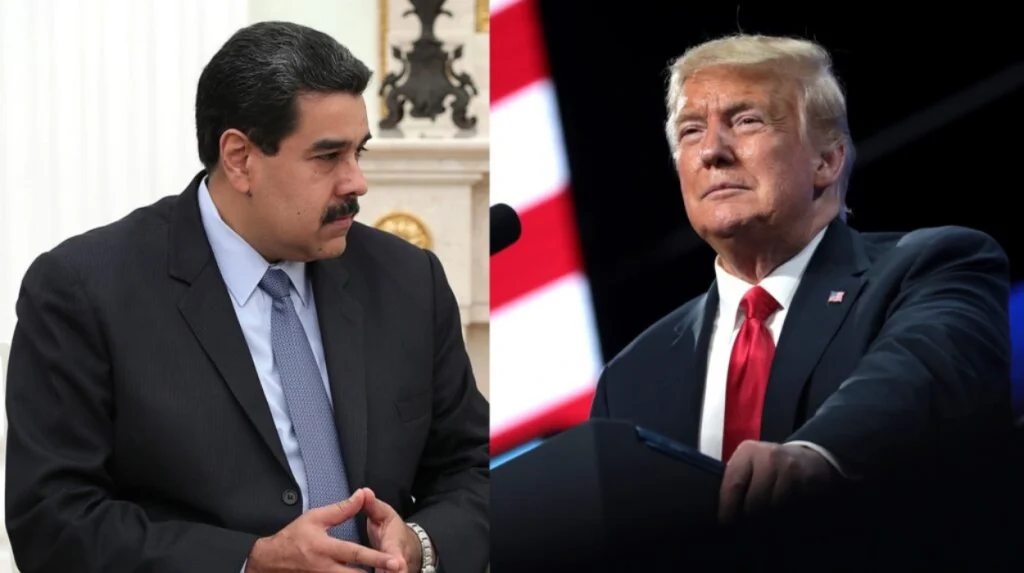
This tough approach to Venezuela by the Trump administration in 2025 has relegated the geopolitics of Latin America in the seeming accent of the Cold War. The renaissance of U.S. interventionism in the name of combating transnational crime and foreign penetrations into the hemisphere has in effect revived the tensions in the region. This reworking of foreign policy by relying on assertiveness in the military arena, and covert actions, is a sign of domestic political calculation, as well as a redefinition of American hegemony in the Hemisphere.
The ouster of the government of Nicolas Maduro is the main objective which is long accused by Washington of narcotics trafficking, corruption, and cooperation with Russia, China, and Iran. However, in addition to the mentioned anti-narcotics objective, analysts also see the posture taken by Trump as a measure to counter the rising multipolarity in the world system. The meeting of security needs and ideological confrontation has made Venezuela the centre of a new Cold War theatre where power and legitimacy rivalry is now as much as the control of territory used to be.
Escalation of U.S. engagement in Venezuela
The no-fly zone in the U.S. Venezuela relations came in mid-2025. President Trump authorized a succession of clandestine Central Intelligence Agency operations against the Maduro regime with an unprecedented military demonstration in the Caribbean Basin. US naval mobilization along the Venezuelan coast with the USS Gerald R. Ford strike group, surveillance drones, and long-range B-52 bombers was the biggest U.S. naval mobilization in Latin America in more than 30 years.
Projected as a component of an anti-narcotics operation, the operations allegedly involved targeting ships belonging to the Tren de Aragua, a criminal group based in Venezuela that the U.S. has labeled a foreign terrorist organization. Although Pentagon briefings stated that the missions will have broken the logistics of the cartels, there has been little independent confirmation of the strikes, which has brought in concerns of how much these missions intersect with those related to regime changes.
Strategic motivations and geopolitical incentives
The strategy designed by Trump concerning Venezuela is based on several levels of motivation. Domestically, it solidifies the law-and-order message of his administration, and gets the attention of conservative voters in places such as Florida and Texas that also have large Venezuelan and Cuban diasporas. The policy aims at combating an intensified Russian and Chinese presence in the hemisphere internationally. China organized almost a hundred military visits to the Latin American countries during 2022-2025, whereas Russia developed its military and energy relations with Caracas and Managua.
According to Professor Regilme of Leiden University, the strategy reflects an attempt to weaken the role of Russia, Iran and China in the region. It is the strategic ethos of the Monroe Doctrine rejuvenated, updated to fit a world that is no longer dictated by ideology but rather by a competition over influence among multiple poles.
Domestic oversight and constitutional tension
Trump’s military posture has raised acute discussion in Washington with regard to its legality. The attempts of the congressional democrats to question the application of executive power have been based on the fact that covert and kinetic operations against non-state actors conducted within the borders of another sovereign state push the limits of the current powers regarding the application of force. The Republicans in the senate have mostly agreed with Trump when he describes the moves as a counterterrorism and narcotics enforcement campaign, which essentially served to protect the administration against a tighter check.
Those opposing it are fearful that calling the campaign an armed conflict against cartels is a dangerous way of eliding the distinction between law enforcement and warfare. According to constitutional thinkers, the redefinition may give precedents of unilateral intervention on well-constructed excuses that will affect not only the international law, but also the domestic barriers on military authority.
Reactions from Latin American governments
The reactions of the region have been ambivalent, but mostly apprehensive. Colombia and Brazil have expressed ambivalent support of U.S. anti-drug activity claiming a common security interest and other states like Mexico, Chile, and Argentina raised a cry of alarm over the militarization of the Caribbean. Venezuela has denounced the strikes terming them aggression, which the country has cast as part of a current campaign by the U.S. to change the regime.
The U.S. actions are neo-imperialistic according to the government of Maduro that has been supported by Russian intelligence operations and Chinese financial support. The story echoes in parts of Latin America fearful of U.S. intervention in the past. The diplomatic alliances are consequently moving: the left-leaning governments are more and more united by the principles of sovereignty, and the conservative administrations are choosing counter-narcotics cooperation as the reason to limit the interaction with Washington.
Implications for Latin American geopolitics
The Venezuela policy of Trump has brought back the power politics terminology of the genus Cold War to Latin America. Washington is sending signals that its hemispheric dominance is not up for a negotiation table by placing military deterrence and unilateral enforcement on a top agenda. The power reaffirmation is reminiscent of the historical patterns of the Bay of Pigs operation and the Contra campaigns under the umbrella of the anti-terrorism and anti-cartel goals of the Reagan era.
Such a pose represents a bigger communication to those in the region: there are costs involved when doing business with Beijing or Moscow. Due to the expansion of partnership relations of Latin American economies, U.S. policymakers are also insisting on solidifying the Western sphere of influence by use of security and economic compulsions. The danger however is to drive away middle ground countries which seek to remain neutral in terms of strategy.
Shifting alliances and regional polarization
The geopolitics of Latin America are getting polar. Countries that were on the same side with Washington prefer greater security cooperation whereas the rest are rhetorically or materially on the same side with Caracas, Beijing, and Moscow. The Organization of American States (OAS) which has always been a venue of consensus is plagued by internal feuds that undermine its diplomatic relevance. These re-alignments complicate the integration of the regions and are a threat of dividing Latin America into two ideological and economic blocks.
The reasoning behind the return of the U.S. presence as a new one-nav naval exercises, intelligence sharing and financial sanctions reminds the reasoning of the sphere of influence that has long been believed to be outdated. Analysts warn that such a split would cause instability in the region, with the political polarization being a domestic, as well as global, event.
The domestic and international calculus
The aggressive foreign policy of Trump is part of an overall struggle to demonstrate power before the midterm election of 2026. By placing Venezuela in the center of national security policy, the administration can associate foreign interventionism to local interests i.e. immigration control, border security, and narcotics enforcement.
Polarization of opinion has occurred within the U.S. political discourse regarding the policy. Its proponents celebrate it as long-overdue retaliation of transnational crime and geopolitical intrusion, whereas its critics view it as an electoral political act that may lead to past errors. The budgetary allocations of the Department of Defense in regard to the Caribbean Stabilization Operations have risen to the maximum since 2003 and this is an indication of the alignment of the institution to the strategy of the White House.
International consequences and escalation risks
The immediate fallout of Trump’s Venezuela policy is an atmosphere of regional uncertainty. The militarization of the Caribbean, combined with the presence of Russian and Chinese advisers in Venezuela, has revived fears of proxy competition. The strategic interplay between external powers mirrors earlier Cold War configurations though the battlefronts today are digital, economic, and informational as much as military.
Humanitarian organizations warn of potential displacement crises should conflict escalate, with estimates suggesting over 8 million Venezuelans could be affected by renewed instability. Economic sanctions have compounded Venezuela’s domestic crisis, while cross-border migration pressures neighboring countries already struggling with inflation and political unrest.
Prospects and emerging trajectories
The evolution of US-Venezuela relations remains fluid. While Trump’s administration has achieved tactical disruption of cartel networks and demonstrated geopolitical resolve, it has not achieved its ultimate objective of regime change. Maduro’s government endures, buoyed by foreign alliances and domestic control of security apparatuses.
Future U.S. administrations will inherit a deeply entangled regional framework shaped by hard power posturing and limited diplomatic avenues. The Biden administration’s anticipated review of the policy will likely determine whether Washington continues the confrontational trajectory or reopens negotiations aimed at humanitarian relief and gradual political transition.
The 2025 escalation underscores a pivotal truth in hemispheric politics: Latin America remains both a testing ground for global rivalries and a mirror reflecting broader shifts in world order. Whether the U.S. strategy in Venezuela becomes a model for renewed dominance or a cautionary tale of overreach will depend on the interplay between power, perception, and the enduring question of sovereignty in the Western Hemisphere.