Fresh turmoil has been sparked by Iran, as the country fired missiles and drones on US military installations in Kuwait and Bahrain. At the same time, an attack was conducted on Kuwait International Airport, with people sustaining injuries as the security situation deteriorated further. As a response, the US targeted and disabled a ship flying a flag of Botswana en route to Kharg Island in Iran with a Hellfire missile. This action has underscored the determination of President Trump’s administration to implement its maritime embargo.
It is a risky new development in the “Operation Epic Fury,” a large-scale military operation, declared by President Donald Trump on February 28, 2026, with the aim to wipe out the Iranian navy and prevent Iran from developing nuclear arms. The development comes particularly alarming, as it occurred shortly after US airstrikes on Iran’s Qeshm Island, despite active negotiations taking place between the two states for peaceful resolution.
IRGC Claims Direct Strikes on US Military Infrastructure
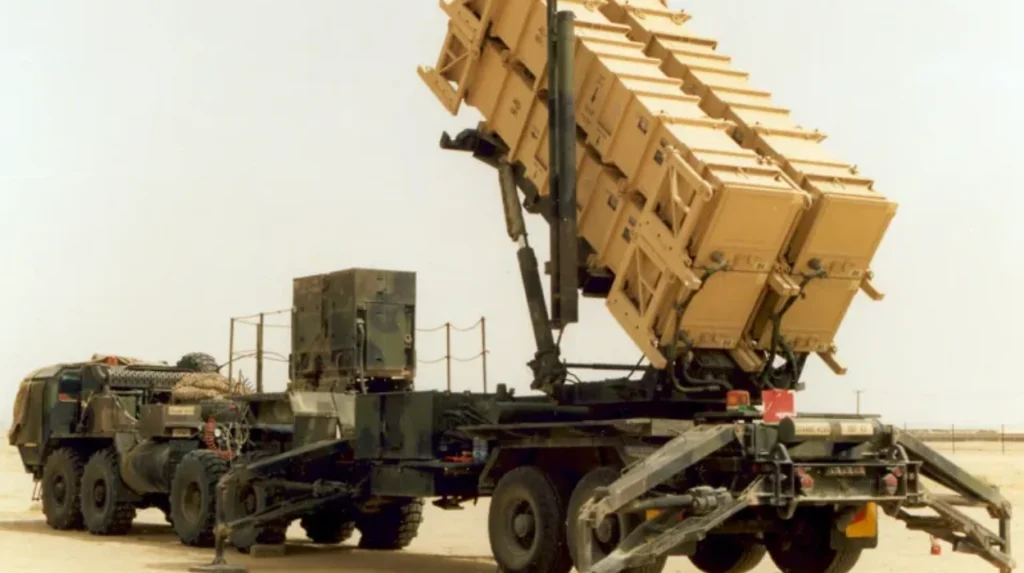
Iran’s Islamic Revolutionary Guard Corps (IRGC) has publicly claimed responsibility for targeting multiple US military installations across the Gulf region, marking one of the most direct assaults on American forces since the conflict began. The IRGC specifically identified Camp Patriot and Camp Buehring in Kuwait, along with Mohammed al-Ahmad and Ali al-Salem naval bases, as primary targets of their missile and drone barrage.
“Iran’s Revolutionary Guard says it has retaliated by launching drones and missiles against Israel and US bases in the region,”
stated a comprehensive report from DW News, confirming the coordinated nature of Iran’s response to US-Israeli strikes.
The fact that IRGC has come out to publicly acknowledge its involvement in such strikes shows an unusual change of heart, indicating that Iran is sure of itself and that it wants to show its prowess to its regional partners and Washington. The strikes occurred on the port of Mina Salman and the command center for the United States Fifth Fleet in Bahrain.
“Huge plumes of black smoke were seen rising from an area near the headquarters of the US Navy’s Fifth Fleet in Manama, Bahrain,”
reported the BBC, providing visual confirmation of the strikes’ impact. The Fifth Fleet’s presence in Bahrain is strategically vital, as it oversees US naval operations throughout the Persian Gulf, Red Sea, and parts of the Indian Ocean.
Kuwait International Airport Under Fire: Civilian Casualties Reported
The offensive did not stop at military bases, as Iran launched its missiles at Kuwait International Airport, causing damage to civilian facilities along with casualties. This represents another negative aspect of the conflict that highlights its expansion to both civilian and military targets in the Gulf.
“US-Iran War Live: Iran fired missiles at Kuwait and Bahrain hours after US conducted strikes on Iran’s Qeshm Island amid ongoing peace talks between Washington and Tehran,”
according to NDTV’s live coverage of the escalating crisis.
The fact that the attacks were happening at the same time with those directed towards other military installations clearly shows that these attacks were part of a coordinated effort aimed at causing maximum chaos within Kuwaiti territory.
According to the Kuwaiti authorities, several rockets and drones launched towards their airspace had been intercepted, showing the capability of Kuwait’s air defense system amidst the massive attacks. Nevertheless, the reality that some of the attacks managed to hit their target demonstrates the sophistication of the Iran attack package.
US Military Deployed Hellfire Missile Against Botswana-Flagged Tanker
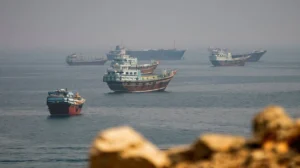
This dramatic incident showed both the precision of the US military force and its resolve to uphold its naval blockade by using a Hellfire missile to destroy the engine room of the Botswana flagged oil tanker M/T Lexie. The ship was an empty one headed for the port of Iran in Kharg Island but had not heeded any warnings or taken heed of any commands given by the US forces to change its direction.
“A U.S. aircraft ultimately disabled the vessel by firing a Hellfire missile into the ship’s engine room, preventing the tanker from reaching…”
the Iranian port, according to official ANA report detailing the incident. This represents a significant escalation in the US maritime enforcement strategy, transitioning from warning shots and boarding operations to direct kinetic action against commercial vessels.
CENTCOM confirmed that the tanker was bound for Iran despite the US-enforced blockade,
“#US disables tanker bound for Iran using Hellfire missile: CENTCOM”
as reported by ABC News4.
The use of the Hellfire missile on the M/T Lexie, whose usual target is ground troops and small craft, is an example of the exactness of the attacks that the US can do and how seriously they take the violations of their restrictions on the sea.
A problem arises from the Botswana flag on the ship and whether the third parties may unwittingly help in the importing of oil by Iran. But CENTCOM’s attack, regardless of which country the vessel represents, shows that there is no difference made between those ships that belong to Iran and those only traveling to Iranian ports.
Kharg Island: Iran’s Critical Oil Export Hub at the Center of Conflict
Kharg Island, where the disabled ship was headed, is Iran’s main oil export point, processing nearly 90% of the crude oil exported by the country until recently when sanctions drastically cut down that number. Such an important place naturally becomes the center of gravity for the survival of the Iranian economy and the attempts made by America to put maximum pressure on the Tehran government.
The proximity of Kharg Island to the scene of the tanker disabling shows that the Americans are committed to not letting any shipment reach Iran despite the unprecedented economic pressure the country is experiencing because of international sanctions.
Regional Shockwaves: Multiple Gulf States Report Explosions
The scale of Iran’s retaliatory strikes extended well beyond Kuwait and Bahrain, with Saudi Arabia reporting that Iran carried out attacks on the United Arab Emirates, Bahrain, Qatar, Jordan, and Kuwait.
“Blasts have been reported in countries across the Gulf as Iran launches retaliatory strikes,”
DW News reported, capturing the regional scope of the assault.
Blasts and sounds of sirens could be heard from the Gulf region where missile defense systems got activated, thus making this scenario look like a surreal world where missiles went missing and defense mechanisms became active across the Arabian Peninsula. The recognition by Saudi Arabia regarding the attacks made to various countries in the Gulf region signifies how vulnerable US allies are despite being backed by US troops.
“Iran always threatened to target US bases in the region if Washington launched attack on its territory,”
DW News noted, emphasizing that Iran’s actions represented the fulfillment of long-stated red lines rather than unexpected escalation. This predictability, however, does not diminish the danger of the situation, as the crossing of these thresholds increases the likelihood of miscalculation and further escalation.
Trump Administration’s Operation Epic Fury: Strategic Objectives and Risks
President Trump’s announcement of “major combat operations” against Iran on February 28, 2026, initiated what the Pentagon has designated Operation Epic Fury, a coordinated US-Israeli campaign targeting Iran’s naval infrastructure and nuclear program.
“President Donald Trump says major combat operations aim to annihilate Iran’s naval sites, and has vowed the regime will never have nuclear weapon,”
DW News reported regarding the administration’s stated objectives.
This operation has gone far beyond targeting only the military objectives of the state and has encompassed the economic interests of Iran, especially its capability to transport oil from the country by sea via Kharg Island. Through an enforced naval embargo and by intercepting any ships trying to dock in the Iranian ports, the US is trying to weaken Iran both economically and militarily through direct attacks.
Yet this approach has many potential risks, especially as concerns Iran’s response to the US attacks. The bombing of Kuwait and Bahrain shows that Iran will be ready to face the full consequences of a military showdown with the United States.
Diplomatic Channels Collapsing Amid Military Escalation
The timing of Iran’s attacks, occurring hours after US strikes on Qeshm Island despite ongoing peace talks between Washington and Tehran, suggests that diplomatic efforts may be collapsing under the weight of military pressures.
“#US-Iran Live Updates: Iran Strikes Kuwait Airport, Several Injured…”
NDTV reported, highlighting the contradiction between diplomatic negotiations and military actions.
The dissonance between military and diplomatic maneuvers raises significant issues regarding the consistency of the strategy employed by the US and the capacity of both sides to de-escalate the situation. It is increasingly evident that the lack of diplomatic progress and growing military engagement could lead to a miscalculation which would have implications that go beyond the Persian Gulf.
The international community finds itself increasingly faced with a dilemma of having to choose between backing American attempts to prevent Iran from achieving its strategic objectives and avoiding a regional conflict which could affect oil supplies on a global scale. The following days are crucial for assessing whether this escalation is just a momentary increase in the tension or the onset of a prolonged conflict.