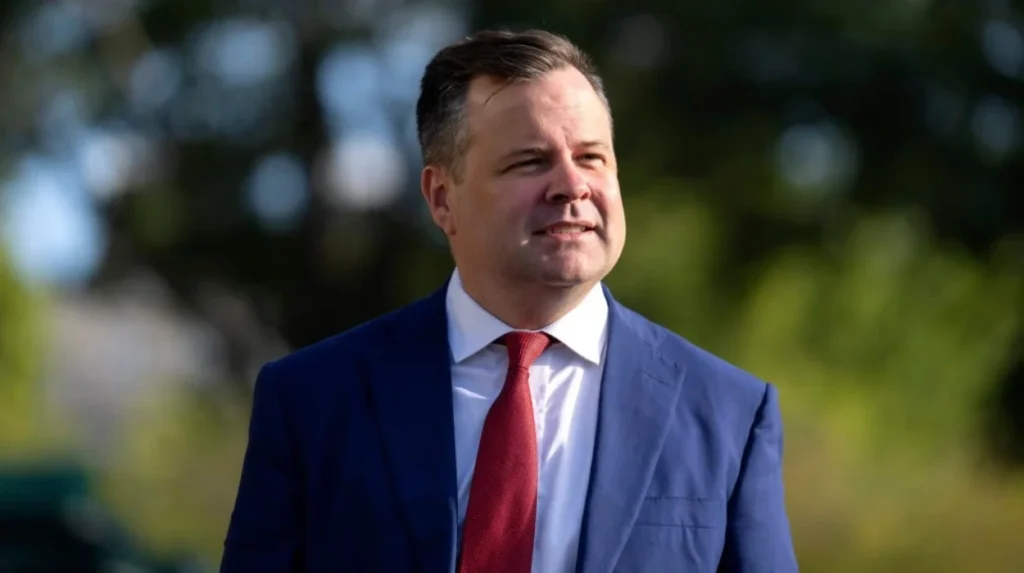
A decision that has caused waves within the political elite of Washington has been made by President Donald Trump, who has decided to name Bill Pulte, a controversial 37-year-old head of the Federal Housing Finance Agency, as the Acting Director of National Intelligence. The decision was prompted by a resignation letter from current Intelligence Chief, Tulsi Gabbard, who stated she will resign from her post in June. One can safely say that this is one of the most unusual appointments in the history of the American intelligence agencies.
The release of this information has raised much speculation in political and intelligence circles. The person chosen by President Trump to be the next head of this important office, Mr. Pulte, leads an organization that very few people know anything about and one whose leaders do not even hold positions in the President’s Cabinet. There are many questions surrounding his selection, specifically about the criteria for such an appointment.
Who Is Bill Pulte? Understanding the Housing Regulator Turned Intelligence Chief
The professional history of Bill Pulte is markedly different from that of most other intelligence community officials. Just at age 37, Pulte offers the private equity expertise and not the knowledge and skills related to intelligence, military or national security. Prior to his present job, Pulte has been an executive at a private equity company, being the founder of Pulte Partners LLC established in 2011 and dealing with housing products. He comes from a well-known homebuilding family whose patriarch was his grandfather William Pulte, who created PulteGroup Corporation.
Pulte’s promotion to the position of director of the FHFA was done through nomination by President-elect Trump in January 2025, heralding the start of his swift rise in the Trump administration. Within just five months of his tenure at the FHFA, Pulte rose to prominence as an important member of Trump’s team, although he is not part of the Trump cabinet. Pulte is mandated to oversee Fannie Mae and Freddie Mac, two mortgage organizations that are owned by the government and are responsible for about 70% of mortgage loans in America.
What Makes Pulte Controversial: A Pattern of Aggressive Political Targeting
The issue of Pulte’s involvement goes back several months prior to his intelligence appointment, and it is linked to a series of aggressive inquiries into Democrats and people who opposed President Trump. The most notable act that Pulte has undertaken was the accusation against Federal Reserve Governor Lisa Cook of mortgage fraud, which, according to him, had led her to produce falsified papers in order to get preferential loan deals.
Pulte, however, has been in the spotlight for months due to his tendency to investigate the mortgages of different democratic political figures and opponents of the Trump regime. The list includes New York Attorney General Letitia James, Senator Adam Schiff, among others. The allegations made by the Governor of the Federal Reserve, Lisa Cook, on mortgage fraud is just an example of what his opponents call political retaliation using regulatory power.
However, the scope of Pulte’s inquiries has not been limited to individual politicians but went further to criticize institutions as well. Pulte had already suggested that a congressional investigation be conducted into the unnecessary expenditures incurred in the renovations of Federal Reserve headquarters. This kind of conduct has prompted many people to wonder whether Pulte is investigating institutions purely for regulation or engaging in political warfare against Trump’s foes.
Congressional Watchdog Launches Investigation Into Pulte’s Actions
The intensity of concerns about Pulte’s conduct prompted formal oversight action. On December 4, 2025, a congressional watchdog launched an inquiry into FHFA Chief Bill Pulte, specifically examining his allegations of mortgage fraud against Trump adversaries. This GAO investigation represents a significant validation of critics’ concerns about Pulte’s use of regulatory power.
The investigation’s scope remains deliberately broad as officials work to understand the full extent of Pulte’s actions. The GAO spokesperson stated that
“the initial step for the GAO is to define the full extent of the investigation and the methodology we will employ”.
This phrasing suggests investigators are still mapping the boundaries of what they suspect may be an extensive pattern of inappropriate conduct.
Pulte became a subject of increased scrutiny by Congress due to reports of him receiving an intelligence appointment. The reason cited is that the nomination of a person undergoing congressional investigation to supervise national intelligence constitutes a violation of basic principles of good governance. This is even more so now, as Pulte’s duties include overseeing the country’s highly confidential intelligence activities.
Tulsi Gabbard’s Resignation Creates Intelligence Leadership Vacuum
Understanding Pulte’s appointment requires context about why the position became available. Tulsi Gabbard, the former Director of National Intelligence, announced her resignation on May 22, 2026, declaring she would leave her role at the end of June. Her departure creates a vacuum at the top of America’s intelligence community just months after her initial appointment.
When Trump originally appointed Gabbard, he described her as
“a proud Republican who can bring her fearless spirit into the intelligence community”.
This statement reflected Trump’s typical approach to appointments—valuing loyalty and political alignment over traditional qualifications. Gabbard’s resignation suggests that even this criteria may not guarantee long-term tenure in Trump’s intelligence leadership.
The rapid turnover in intelligence leadership raises questions about the stability and continuity of America’s intelligence operations. Gabbard’s departure after what appears to be a relatively brief tenure indicates possible internal administration tensions or disagreements over intelligence priorities. Pulte’s appointment as her replacement represents an even more dramatic departure from traditional intelligence community norms than Gabbard’s original selection.
Political Reactions and Administration Frustration
The intelligence community and political establishment have reacted with mixed responses to Pulte’s appointment. Some Trump officials expressed visible frustration with the move, with one source suggesting that Trump announced the appointment
“to get Pulte to shut up about it”.
This interpretation suggests the appointment may function as a political quid pro quo rather than a genuine confidence in Pulte’s intelligence qualifications.
Civil rights advocates had already responded critically to Pulte’s FHFA nomination back in January 2025, raising concerns about his approach to housing regulation and potential civil rights implications. Their skepticism has only intensified with news of his intelligence appointment. Traditional intelligence community professionals remain largely silent publicly, but private concerns about qualifications and security clearances are reportedly widespread.
The New York Times characterized Pulte as
“a housing official who attacks Trump critics, often invokes the home-building business his family founded”.
This characterization captures the fundamental disconnect between Pulte’s background and the intelligence community’s traditional recruitment pool. His tendency to invoke his family’s business legacy rather than intelligence expertise signals a fundamental shift in how Trump views intelligence leadership.
Implications for U.S. Intelligence Community and National Security
Pulte’s appointment raises profound questions about America’s intelligence capabilities and priorities. The Director of National Intelligence oversees 18 intelligence agencies with a combined budget exceeding $80 billion and employs hundreds of thousands of personnel. Leading this complex ecosystem typically requires deep national security experience, security Clearance expertise, and understanding of intelligence operations that Pulte simply does not possess.
The appointment could significantly impact intelligence community morale and effectiveness. Career intelligence professionals who have dedicated their lives to national security may struggle to accept direction from a housing regulator with no intelligence background. This morale impact could translate into reduced cooperation, information withholding, or even resignations among key personnel.
National security implications extend beyond organizational dynamics. Pulte’s history of targeting political opponents raises concerns about whether intelligence resources might be weaponized for domestic political purposes. The intelligence community’s traditional stance of political neutrality could be compromised if Pulte views intelligence operations through a political lens shaped by his FHFA experience.
What This Appointment Says About Trump’s Governance Philosophy
Pulte’s appointment serves as a revealing data point about Trump’s second-term governance philosophy. The decision prioritizes loyalty and political alignment over traditional qualifications, mirroring Trump’s approach throughout his political career. By elevating a controversial housing regulator to intelligence leadership, Trump signals that political reliability matters more than expertise or institutional norms.
This approach reflects a broader pattern of disrupting established government institutions and replacing career professionals with political loyalists. The intelligence community, traditionally insulated from political interference, now faces leadership that emerged from regulatory battles against Democratic politicians rather than intelligence operations.
The appointment also demonstrates Trump’s willingness to use government positions as political tools. Whether motivated by genuine confidence in Pulte or an attempt to neutralize his criticism, the appointment treats the nation’s top intelligence position as a political prize rather than a national security imperative.
Confirmation Process and Future Uncertainty
Pulte’s current status as Acting DNI means he serves without Senate confirmation, raising questions about the long-term plan. The appointment’s temporary nature suggests Trump may be testing political waters before pursuing formal confirmation, or he may accept that Pulte’s controversies make confirmation unlikely.
The coming months will reveal whether this appointment represents a genuine confidence in Pulte’s abilities or a short-term political maneuver. If Trump pursues formal confirmation, Senate Democrats will likely mount fierce opposition given Pulte’s controversies and ongoing GAO investigation. Even if confirmed, Pulte’s effectiveness will depend on whether career intelligence professionals accept his leadership.
The intelligence community’s future under Pulte remains uncertain. His housing regulation background provides no roadmap for managing complex intelligence operations, international intelligence partnerships, or counterterrorism priorities. The appointment’s success or failure will ultimately determine whether Trump’s approach to intelligence leadership represents an innovative new model or a dangerous departure from established norms that have protected national security for decades.