While the agreement, made on April 16, 2026, following two phone calls between the president and Israeli Prime Minister Benjamin Netanyahu and Lebanese authorities, was meant to be a temporary truce of 10 days’ duration, the United States extended the scope of this agreement for three weeks on April 23, which was referred to as a “de-escalation.” However, as June 2, 2026, approaches, it becomes increasingly clear that this interpretation does not correspond to actual events, and hostilities persist in southern Lebanon, resulting in deaths of thousands and further escalation of the situation in the region regarding Iran.
The Fragile Architecture of Trump’s Partial Ceasefire
What is most significant about the weakness in this agreement is the deliberate narrowness of its scope. Unlike peace agreements that attempt to put an end to the ongoing conflict, this agreement focuses on a limited geographical area and specific types of military actions. As stated by the Lebanese Embassy to Washington,
“this agreement would not end the conflict in that country.”
Geographic boundaries are created by the terms: Israel agrees not to launch attacks on Beirut and the southern suburbs controlled by Hezbollah, and in return, Hezbollah agrees to stop launching attacks on Israel. However, in the deal, there is an exception which gives the right to Israel to launch its armed forces into Lebanon for offense “except” in the regions of Beirut and the southern suburbs. Israel also reserves its rights to launch military strikes in Lebanon at “any time” for self-protection.
Lebanese Prime Minister Nawaf Salam publicly welcomed Trump’s announcement of the 10-day truce, expressing hope that the temporary pause would create space for broader diplomatic negotiations.
“The Lebanese government welcomes this temporary truce and hopes it will lead to more lasting solutions,”
Salam stated during a press conference in Beirut. Yet three weeks into the extended ceasefire period, that hope has proven fleeting as ground operations continue in the south.
Southern Lebanon Becomes the Ceasefire’s Breaking Point
The geographical epicenter of this ongoing clash lies in southern Lebanon, where an Israeli offensive took place in March 2026, and where the Israeli military presence is seen by Hezbollah as an occupation that must be resisted. It is this area which represents the breaking point for the ceasefire because the limitations imposed by the ceasefire do not exist here. Indeed, while Israeli attacks in this region occur at reduced levels compared to those prior to April 16, the basic logic of invasion and retaliation continues.
On April 8, only days prior to the announcement of the ceasefire, Israel launched air strikes in various parts of Lebanon which left over 300 dead. This attack, which occurred during the period when the fighting reached its height, revealed just how much violence the partial ceasefire was intended to limit, but did not actually succeed in halting in southern Lebanon. Three weeks after the announcement of the ceasefire, the American government recognized that some violence continued.
Hezbollah’s position on the ceasefire hinges on a critical condition that Israel has not fully met. Hezbollah lawmaker Ibrahim al-Moussawi clarified the group’s stance with precision:
“The group would adhere to ceasefire provided Israeli assaults cease entirely.”
This conditional acceptance means Hezbollah views any Israeli military action in southern Lebanon as a violation that justifies their continued resistance, creating a cycle of mutual accusation and violation.
Hezbollah legislator Hassan Fadlallah reinforced this position, stating that compliance depends entirely on Israel ceasing all military actions against Hezbollah members.
“Our adherence to the ceasefire is contingent on Israel stopping every military operation against our fighters,”
Fadlallah explained. These statements reveal that Hezbollah never accepted the ceasefire as an end to conflict but rather as a temporary pause conditional on Israel’s complete withdrawal from southern Lebanon.
Casualty Figures and Human Cost of Continued Violence
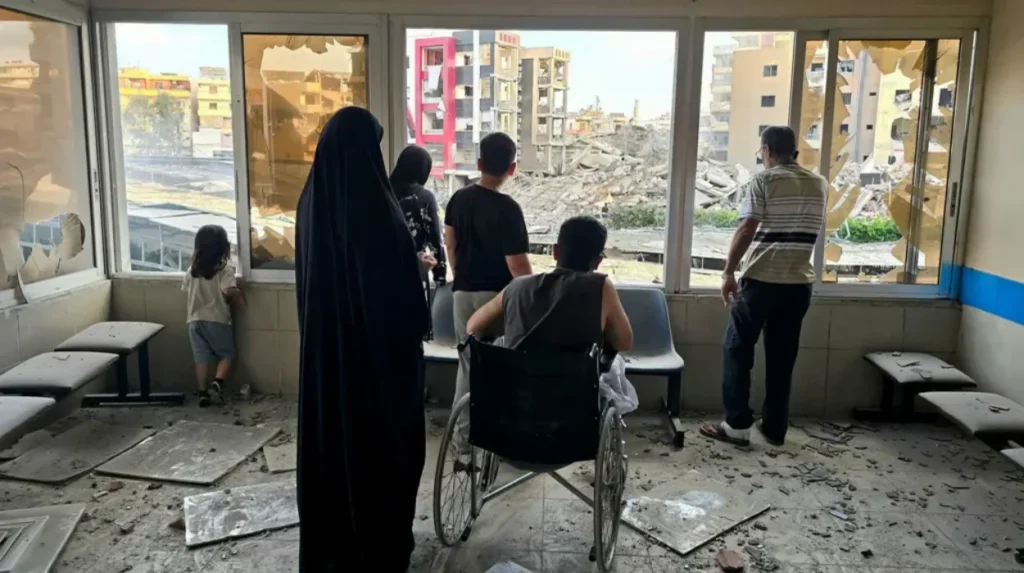
The cost of this war on humanity is catastrophic, with the loss of lives being measured by thousands of fatalities since the beginning of the Israeli offensive in March 2026. Just in one day, the April 8 strikes resulted in more than 300 deaths, which exemplifies the violent nature of this conflict in its early stages. Civilians from southern Lebanon continue to be displaced, injured, and killed because of military actions even during the period of ceasefire.
A lengthy period of over six weeks of fierce warfare before the ceasefire in April 2026 has led to extensive devastation in Lebanese communities. Families of southern Lebanon have experienced deaths of their relatives, destruction of houses and entire quarters. The inability of the partial ceasefire to put an end to violence in such areas means that civilian losses keep mounting even after the implementation of the accord.
Regional consequences of the situation make the humanitarian crisis even more complicated. Firstly, there is tension in the broader war between the United States and Israel against Iran, which may create even bigger problems outside the borders of Lebanon. Secondly, Iran has stated that it will stop negotiating peace with the United States because of the war being held in Lebanon.
Iran’s Role and the Regional Escalation Dynamic
The role that Iran plays in the conflict in Lebanon forms another important aspect that was left out of account during the declaration of the partial ceasefire. Iran’s stance means that the Lebanon ceasefire is a necessary condition for Iran’s continuation of negotiations with the US regarding ending the broader war in the region. Such a situation puts the entire US diplomatic endeavor at risk due to the potential collapse of the ceasefire in Lebanon.
The threat of Iran severing its peace negotiations with Washington over the Lebanon War indicates that the ongoing hostilities are used by Iran to compete strategically against other regional players in terms of their interests in the region. Iran uses Hezbollah as a pawn in its strategic game, giving the militant group the means to resist the agreement. Israeli operations in Lebanon have much more strategic significance than simply fulfilling the demands of the Hezbollah militants.
This regional dimension explains why the partial ceasefire has proven so fragile. The agreement addresses only the immediate tactical conflict between Israel and Hezbollah while ignoring the strategic competition between Iran and Israel that drives the violence. Without resolving this underlying dynamic, any ceasefire remains temporary and vulnerable to violation as both sides pursue their broader strategic objectives.
Diplomatic Failures and the Ceasefire’s Structural Weaknesses
The intrinsic flaw with the ceasefire agreement lies in its structure, which purposefully avoided being too inclusive and requiring true compromise and discussion among the involved parties. The agreement did not originally involve any sign by Hezbollah, making it less stable right from the beginning. It was, rather, an American-mediated agreement between Israel and Lebanon for Hezbollah to accept or reject based on their own conditions.
As pointed out by the State Department of the United States of America, Israel reserves its right to defend itself at any point in time under the ceasefire agreement. The fact that Israel is allowed to defend itself makes the term “ceasefire agreement” an oxymoron, since a ceasefire implies an end to combat, and not simply a break.
The Lebanese government’s commitment to take “meaningful steps” to prevent Hezbollah from attacking Israeli targets represents an unrealistic expectation given Lebanon’s limited control over Hezbollah’s actions. The Lebanese Army lacks the capacity to disarm Hezbollah or prevent its military operations, making this requirement a diplomatic formality rather than an enforceable obligation.
What Comprehensive Peace Requires
The experiences from previous Middle Eastern wars imply that the achievement of real peace entails the resolution of the strategic competition, not the suspension of the military activity. The present ceasefire cannot meet this criterion since it leaves intact all the core aspects of the war between Israel and Hezbollah, such as the invasion and the resistance, but limits its geographical dimension.
In turn, the necessary solution should involve the withdrawal of Israel from southern Lebanon, the assurance on behalf of Hezbollah of non-aggression toward Israeli territory, and the international guarantee regarding the sovereignty of Lebanon. In addition, it would be essential to find an answer to the core strategic rivalry between Iran and Israel. Otherwise, the ceasefire would remain temporary and prone to violations.
The international community’s response must move beyond celebratory statements about ceasefire announcements to genuine engagement with the conflict’s root causes. This includes diplomatic pressure on Israel to withdraw from Lebanese territory, support for Lebanese sovereignty and government authority, and renewed efforts to address the broader regional tensions involving Iran.
As I conclude this analysis after ten years covering Middle East conflicts, the pattern remains clear: partial ceasefires that ignore underlying strategic dynamics fail to produce lasting peace. The current situation in Lebanon represents another iteration of this pattern, and the path forward requires more comprehensive diplomatic engagement than the Trump administration has provided. The families of southern Lebanon who continue to face violence despite the ceasefire deserve nothing less than genuine efforts toward sustainable peace.