The targeting of an American base by Iran represents a new twist in an already very contentious situation, which has been drawing the Gulf even more into the fray militarily speaking. It happened after the US attacks on Iranian missile defence systems, and it has raised worries about how a fragile cease-fire agreement might fall apart due to retaliatory actions by both parties. What makes this situation unique, however, is not just the attacks themselves, but the context within which they have happened – in a very tense environment, in one of the most important shipping channels in the world, and in a war that has been escalating regionally.
The report highlights that this most recent strike was not an individual act but rather an escalatory cycle that included strikes by American forces against Iran, retaliation against such actions, and alerts for the defense of the countries in the Gulf. The information about how Kuwait had also foiled attempts at missile and drone strikes adds to the narrative of how this clash might have expanded from being simply a demonstration of force to encompassing the airspace of other nations with American troops present.
How the confrontation escalated
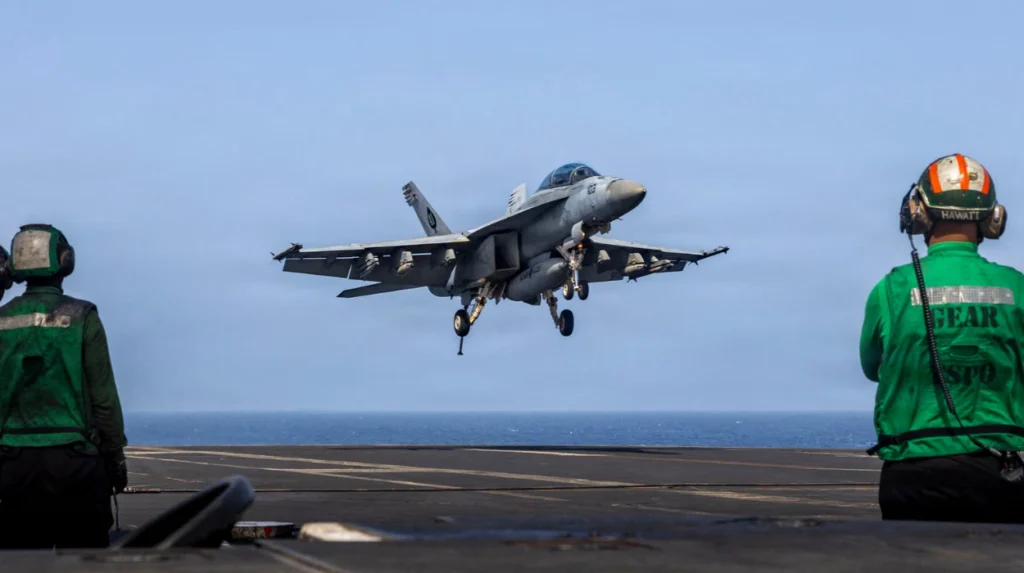
As stated in the articles, the order of events starts with America’s strike against Iranian air defenses as well as military facilities, which was justified by the American government based on Iranian provocation. At the same time, US CENTCOM stated that fighter jets destroyed air defense facilities as well as a ground station and two attack drones threatening maritime interests in the area. It is important to note this point because America seems to be protecting its military interests, rather than waging war by widening the scope of hostilities.
Iran’s response, however, was immediate and unmistakably retaliatory in tone. According to the reports, Tehran said it targeted a US air base in the region in response to fresh American attacks.
“It targeted an American airbase,”
Iranian state-linked messaging conveyed, while also tying the strike to the US military action against Iranian positions.
Although the precise base involved could not be made public in the reporting, the political statement was certainly made. This exchange represents one example among many others throughout the broader conflict in which the respective governments have managed to define their actions as limited and justified while characterizing the enemy as being the escalator. As a result, the overall story of the conflict has been that of two governments that each have legitimate defenses while at the same time continuing military operations.
Kuwait’s alarm and regional spread
The involvement of Kuwait in this event is particularly crucial since it shows how fast things can escalate to become a threat to other nations. According to reports, Kuwait’s air defenses have had to intercept missiles and drones as well as siren alarms being raised in the nation. This shows that the event does not involve only a strike on the American base but a serious regional alarm and response. Since the United States military installations are distributed across several nations, any movement of missiles and drones towards one base will prompt all bases in the Gulf region to become alert.
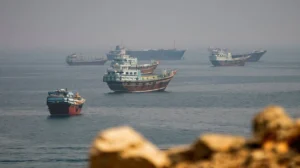
The coverage also highlights the importance of the Strait of Hormuz, which is considered among the most strategic points in the world. Any form of instability at such an important place creates fears for shipping and the transportation of oil. Even before a direct attack on a specific facility, the fact that the air defenses are activated, as well as activity along the strait, serves to illustrate the far-reaching impact that military operations can have.
That is why the incident cannot be read merely as a bilateral confrontation. It is a regional event with implications for Kuwait, the wider Gulf, and the maritime routes that connect Asia, the Middle East, and the global energy market. In that sense, the strike and counterstrike narrative is just one layer of a much larger security equation.
Competing claims and political messaging
Language in this context tells much about the strategy behind the two. According to media, the US strategy involved attacks meant to protect from such dangers as drones and anti-aircraft missiles endangering ships and their crews. This choice of language is vital as it shows that the US took the side of being the defender in this case and the necessity of its action to enforce security.
On the other hand, Iran’s strategy entailed counterattacks to the US attacks. It seemed that the attack made by the US army constituted a breach of ceasefire conditions.
“We responded to the American attack,”
the Iranian side’s position can be understood to mean in the context of the reporting, even though the exact wording varied across outlets. The central message was unmistakable: Iran wanted to portray itself as answering force with force, rather than launching an unprovoked escalation.
The struggle over narrative is essential to the comprehension of this event. In today’s conflicts, the statements made by both sides at the beginning can be as significant as the facts on the ground since they set up the framework within which both the allied and regional nations, as well as the global public opinion, interpret the occurrence. In this situation, the Americans claim that their action was a reaction to necessity while the Iranians say theirs was an act of sovereignty.
What the figures suggest
From what can be inferred from the wider context given through the news report, it is evident that the incident is a part of a far bigger picture of destruction. It was reported earlier that the damage incurred to the American bases due to Iran’s attacks on them would cost almost $800 million in just two weeks of the war. Around $310 million of the total amount would account for the destruction of buildings and infrastructure. Another estimate suggests that Iran had already attacked or demolished 228 American assets.
Such data are important, as they indicate that the current standoff in the Middle East is no mere rhetoric. The standoff, as seen from such tangible losses, has led to significant material damage being caused to the region’s infrastructure assets. In turn, when losses are of such magnitude, both parties involved will be more likely to recognize that the battle is more than just a symbolic one. They can realize that it is already ongoing and has already cost each party a lot.
Another equally important dimension is the naval aspect. According to Reuters, the traffic around the Hormuz Strait had been severely impeded due to attacks that took place there. Such a fact is extremely important for many players outside the immediate sphere of the military conflict – it signals that the situation could have dire implications for international markets, energy supplies, and transportation via the Strait.
Ceasefire pressure and diplomatic risk
Probably the key factor here is that of time. According to the reports, the conflict has occurred amidst a ceasefire between the US and Iran, as well as long negotiations to end the three-month war. This makes every subsequent move a part of an existing delicate negotiation process, which means that the two sides are already balancing on a tightrope in terms of military actions and political gains.
The existing situation makes the ceasefire rather fragile because both sides do not want to show their weaknesses but have to maneuver somehow to avoid the aggravation of the conflict. Therefore, the decision of the Iranians to attack the US military base was probably an attempt to assert themselves, while the US attacks of air defenses and drone forces were an act of demonstrating superiority.
This is the core tension driving the story: both governments appear to believe they are sending limited, controlled messages, but the cumulative effect is escalation. In regions like the Gulf, where US bases sit close to Iranian missile reach and where maritime chokepoints are already sensitive, control can disappear quickly. That is why this incident matters not only for military analysts but also for diplomats, energy markets, and civilian populations across the region.
What happens next
The next phase will likely depend on whether both sides treat this as a contained exchange or as the start of a broader retaliation cycle. If the US chooses further strikes, Iran may respond again, possibly more openly and with greater force. If Iran continues to target US-linked installations or keep pressure on regional airspace, Gulf states may become more deeply involved in defensive operations.
The most immediate risk is miscalculation. Missile and drone threats, especially when they trigger sirens and interceptions, can lead to false assumptions about the scope of an attack. A strike intended as a message can instead be interpreted as a declaration of wider conflict. That is especially dangerous in a theater like the Gulf, where many states share airspace concerns, overlapping military assets, and strategic infrastructure.
For now, the reported incident stands as another reminder that the US-Iran confrontation is no longer confined to declarations or isolated military movements. It is a live regional crisis with measurable damage, active air defence responses, and serious implications for diplomacy, shipping, and security. The claim that Iran targeted an American base after US strikes on Iranian air defences is therefore more than a headline; it is a sign of how quickly the region can move from warning to retaliation and from retaliation to broader instability.