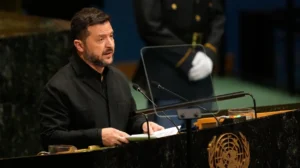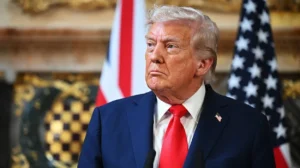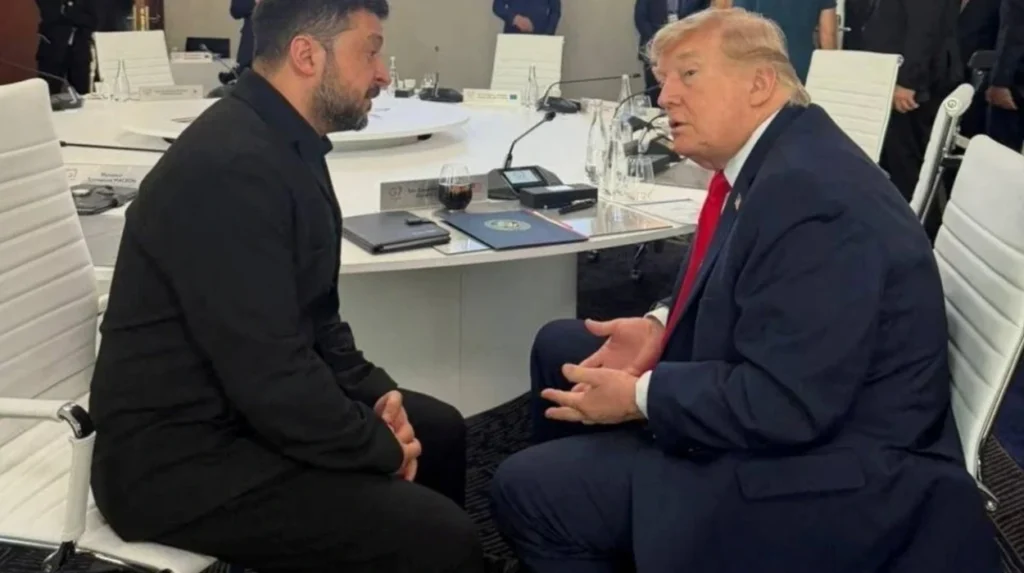
US President Donald Trump used the G7 summit to send a direct message to Moscow: Russia should make a deal. The remark came after what he described as a “very good meeting” with Ukrainian President Volodymyr Zelenskyy, signaling that the war in Ukraine remains central to his foreign policy approach even amid wider summit distractions.
This rhetoric was straightforward, familiar, and very much political. However, there was something in it that carried the diplomatic weight. Namely, by making a discussion, and not threats, the cornerstone of his public speech, Trump aimed at showing the other side that he is ready to come to a deal.
It was also worth noting the timing of Trump’s statements. At the current moment, the G7 meeting is facing numerous crises, from the Middle East to the ongoing war in Ukraine, and Trump clearly stated that it is time to pay more attention to the latter. According to various reports, he stated that he had a fruitful conversation with both Zelenskyy and Putin.
Zelenskyy meeting shapes the tone
It is possible that the meeting between Trump and Zelenskyy was the pivotal moment for these statements. Trump described the meeting as “very good”, and he apparently told the media that he was going to hold another private meeting with Zelenskyy at some later stage, too. This particular statement is important since it implies that the meeting was more than just a symbolic one, but was a part of wider Ukraine talks.
The appearance of Zelenskyy at the G7 Summit was another politically significant event. He came there looking for more backing from his allies and attempting to convince Trump that the situation of Ukraine had improved to such an extent that it was worth supporting. This is not surprising since it is common practice in wars to constantly prove that one’s country deserves support.
In that setting, Trump’s upbeat language about the meeting did not just reflect personal chemistry. It also suggested that Ukraine’s diplomacy at the summit had at least partially succeeded in keeping Trump engaged. His decision to publicly praise the meeting made the encounter more than a courtesy call; it became a signal that Ukraine still has access to the American president and that Trump is willing to frame the war as solvable through negotiation.
What Trump said about Russia
The most quoted line from Trump’s remarks was his call that
“Russia should make a deal.”
That phrase is compact, but it captures the entire thrust of his message. He did not present the war as a conflict that should be managed indefinitely. Instead, he framed it as a problem that Russia, specifically, should resolve through agreement.
Trump also reportedly said,
“I’m gonna do whatever I can,”
underscoring that he sees himself as an active participant in the search for an endgame. The wording matters because it places him in the role of dealmaker rather than passive observer. In Trump’s political style, such statements are often meant to project strength, but in this context, they also reflect an effort to define the United States as a potential broker rather than only a military backer.
Another recurring element in the reporting is Trump’s claim that he had “good conversations” with both Zelenskyy and Putin. That is significant because it implies he is still maintaining lines of communication to both leaders, which he seems to view as an asset. The underlying message is straightforward: if both sides can talk, then there is room for a negotiated settlement.
The war context
The Russia-Ukraine war remains the background against which every such statement is measured. Trump reportedly referred to the massive human cost of the conflict, saying that both sides have lost
“tremendous amounts of people.”
That phrasing is not unusual for Trump, who often uses broad and forceful language when discussing major wars, but it also captures the scale of the suffering that has made the conflict so difficult to resolve.
This is one reason why the G7 discussion holds much more importance than just the latest news story. It is not that Ukraine is another topic at this discussion, it serves as one of the major challenges for the West. With every statement by President Trump regarding this matter, people are not just taking note of what he says, but also how it will shape their future relations in dealing with this conflict.
There is also a strategic issue underlying Trump’s remarks, where, by suggesting that Russia make a deal, he is essentially putting pressure on Moscow to understand that victory in this matter cannot be achieved through continuous military aggression. This does not necessarily mean that a solution will automatically appear, but it does show a preference towards political negotiation over confrontation.
What this means politically
Trump’s posture at the G7 may appeal to voters who want an end to the war and are wary of prolonged foreign entanglements. He often presents himself as a leader who can cut through diplomatic deadlock, and this episode fits that brand. By praising the Zelenskyy meeting while pushing Russia toward a deal, he is trying to occupy both the pro-Ukraine and peace-focused lanes at once.
This strategy can hardly be free of contradictions. Ukraine’s partners want a strong commitment, whereas Russia will not give in just because the world community applies pressure. Hence, when Trump speaks about a deal he wants to reach, what is of importance is what kind of deal he envisages, what sort of compromises he plans to obtain, and how he uses his rhetoric in terms of reaching an agreement. At the moment, there is no enough information to determine what the president’s intention is; however, we know for sure that he keeps this topic on the agenda.
For Zelenskyy, the stakes are immediate. He needs continued American engagement, and he also needs Trump not to drift toward a narrative that treats compromise as Ukraine’s main obligation. A “very good meeting” is helpful politically, but in wartime diplomacy, the substance behind the praise matters more than the praise itself.
Summit implications
G7 makes the narrative more significant since negotiations at summits typically determine the direction of policies going forward. If Trump keeps presenting the conflict in terms of negotiation, it is likely to affect US policy toward Ukraine through its aid, negotiations, and pressure on Moscow in the coming months. News about his meeting with Zelensky indicates that Ukraine has remained a relevant concern rather than a passing one.
The summit also takes place amid an already busy international scene, including with issues around Iran and other foreign policy matters. As reported, Trump stated that after dealing with the Iran issue, his next concern would be the Ukrainian one, implying that there is a priority order where Europe’s war still occupies a key position, albeit in competition with other crises.
Nevertheless, the core of the story is quite transparent. Using his time at the G7 summit, Trump tried to show the world that he could deal not only with Ukraine but also with Russia while trying to persuade Moscow that it needed to make peace in Ukraine. Whether Trump’s message will result in anything else is unclear, but in terms of a political message, it was concise and straight to the point.
Bottom line
Trump’s remarks at the G7 were not just another passing comment on the war. They were an effort to signal that he wants negotiations, that he believes Russia should be the one to act, and that his meeting with Zelenskyy was productive enough to justify further discussion. In simple terms, the message was that the path forward should be a deal, not endless war.
The bigger takeaway is that Trump is trying to position himself as a possible peacemaker while keeping political pressure on both Moscow and Kyiv. That balance may be hard to maintain, but it is now one of the defining features of his public stance on Ukraine.