In a decisive rejection that underscores the growing tension between national health security measures and international sporting obligations, Belgium has refused a United States request to impose an entry ban on travelers from the Democratic Republic of the Congo (DRC) ahead of the 2026 FIFA World Cup.
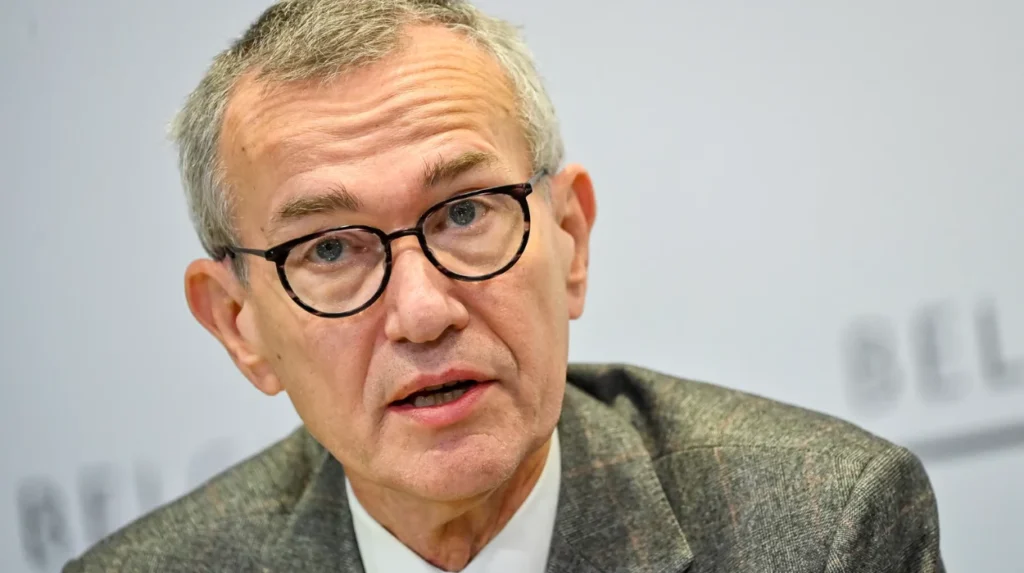
The demand made by Americans through their envoy, Bill White, aimed at ensuring that citizens of Congo were not allowed into Belgium as part of measures to prevent the spread of Ebola within the tournament taking place in America, Canada, and Mexico. According to the Belgian Health Minister Frank Vandenbroucke, the country will stick to the guidelines set forth by the World Health Organization and European Centre for Disease Prevention and Control and will not make extreme demands that many medical professionals deem unnecessary.
This refusal is happening at a very crucial time since the Congolese national football team that has been granted access to the World Cup, after being absent from the World Cup for 52 years, is undergoing their pre-match drills in Belgium amid tight health regulations. This situation has become the focal point of an intricate issue among the White House, FIFA, and other governments while trying to contain an Ebola outbreak that has wreaked havoc in eastern Africa. The health crisis has turned out to be a test on how these international institutions manage the balance between disease containment and global mobility.
The Ebola Outbreak That Triggered Global Restrictions
The Bundibugyo strain of Ebola disease, which was identified as a Public Health Emergency of International Concern (PHEIC) by the WHO, has reportedly affected nearly 600 individuals in the three countries of DRC, Uganda, and South Sudan, according to the latest reports from June 2026. Over 130 deaths have been reported, and the health authorities have highlighted that the epidemic is highly contagious because of the rare nature of the virus and the difficulties faced in containing the virus within the eastern parts of Africa owing to poor health facilities. The WHO has evaluated the risk at a very high national level but a low global level.
This epidemic has brought about challenges within the realm of international responses to it. While the DRC continues to be the focal point in terms of its geographical presence in the eastern parts of the country, there are reports of new cases in Uganda and South Sudan, thus creating an international situation whereby health-related interventions across borders are necessary. In terms of scientific aspects of the situation, the Bundibugyo strain is one of the most uncommon types of Ebola, which makes response and diagnostics different from those related to the commonly found Zaire strain.
United States Takes Aggressive Entry Ban Approach
White House adopts an extremely tough travel restriction strategy that is the strongest among advanced countries that are combating the spread of the disease in response to the Ebola outbreak. In addition, the U.S. currently bans non-citizens who have traveled to the Democratic Republic of Congo (DRC), Uganda, and South Sudan in the last 21 days from accessing entry into the country. This strategy shall be in effect for 30 days, according to officials, targeting people from the affected countries and excluding American citizens and Army soldiers.
Such strict regulations were adopted after the detection of the first American citizen who was infected by the disease in May 2026. This incident raised concerns both at the White House and in the Centers for Disease Control and Prevention. In the opinion of the CDC authorities, the case of the infection of the American citizen showed that the virus can be transmitted outside of the initial areas where it appeared and infect people from other countries who have modern medical infrastructure. It is important to note that the current U.S. policy is based on the necessity to ensure the safety of Americans due to millions of people visiting the country because of the World Cup.
Bill White’s demand addressed to Belgium is the continuation of the general strategy of the government. According to this demand, the United States asks other European countries participating in the competition to follow the same measures in relation to the restriction of the entrance of travelers infected by Ebola as adopted in the United States. Ambassador White’s demand is related to Congolese citizens traveling to Belgium.
Belgium Defends WHO-Aligned Health Protocol
Belgium’s rejection of the American demand rests on a fundamental disagreement about the effectiveness and appropriateness of travel bans as disease containment tools. Health Minister Frank Vandenbroucke articulated Belgium’s position with scientific clarity during his radio interview, emphasizing that the international health community has reached consensus on the proper approach to Ebola management.
“‘The scientific consensus is that action must be taken where the crisis is raging. No one is proposing an entry ban at this time,'”
Vandenbroucke stated, reflecting the position that disease containment requires focused intervention at outbreak sources rather than broad movement restrictions.
The remarks made by the minister show that the Kingdom of Belgium is committed to adhering to advice issued by WHO and ECDC, which have continually called for avoiding travel bans for countries experiencing an outbreak of Ebola virus disease. Rather than adopting such travel restrictions, Belgium has adopted a policy that entails conducting screening of travelers at departure from Ebola-affected countries, and quarantining any individual who exhibits any sign of the disease. In addition, Belgium has identified two hospitals to receive any possible Ebola patients.
“‘We are consulting closely with relevant partners and the European Centre for Disease Prevention and Control,'”
Vandenbroucke added, emphasizing Belgium’s collaborative approach to international health security. The minister’s language suggests that Belgium views the American request as inconsistent with established European and global health frameworks that have guided disease response for decades. This position aligns Belgium with most European nations that have rejected broad travel bans while implementing targeted screening and quarantine measures.
Congo World Cup Team Faces Isolation Requirement
In this respect, the case of the DR Congo national soccer team is one of the most notable illustrations of such tensions. Following their qualification for the world championship after 52 years, the national soccer team had to relocate their pre-World Cup preparations to Belgium due to the recent Ebola crisis and the American travel bans. In such circumstances, the relocation of the soccer team to Belgium guaranteed that the team will be able to train abroad in accordance with American entry regulations that prohibit traveling to the U.S. directly from the DRC.
In particular, according to the White House representatives, the members of the Congolese team and their staff are required to isolate in Belgium for 21 days before they are allowed to travel to the U.S. and participate in the World Cup games to be held in Houston and Atlanta. Such a solution can be regarded as a compromise between the travel restrictions imposed by the American government and the necessity of ensuring FIFA’s ability to conduct its championship in compliance with the initial plan.
The scheduled departure date for the Congo team remains June 11, 2026, with the team flying to Houston after completing the required isolation period. However, officials have warned that if players show symptoms upon arrival, the team could be denied entry to the United States despite completing the isolation requirement. This uncertainty has created significant pressure on the Congolese football association and the team’s medical staff to maintain rigorous health monitoring throughout the isolation period.
International Health Experts Criticize US Strategy
The restrictive travel policy adopted by the U.S. has received heavy criticism from health and policy experts in other nations due to the violation of existing rules regarding how to contain infectious diseases within their source countries, which are based on principles of cooperation across borders. The U.S. has been accused of adopting an excessive and unethical policy of banning travel to and from certain countries as a way of containing the disease, especially in contradiction to the advice from WHO on the matter.
WHO has stated that travel bans do nothing to stop the spread of the disease because Ebola is not transferred through incidental contact but only direct contact with infected individuals. The WHO fears that such policies may make it hard to contain the disease because they interfere with the shipment of supplies, international aid workers, and create an atmosphere that will compel some governments to underreport their cases for fear of being banned.
European health authorities have generally aligned with the World Health Organization’s position, with the European Centre for Disease Prevention and Control recommending that member states focus on screening travelers and maintaining hospital preparedness rather than implementing entry bans. Belgium’s rejection of the U.S. demand reflects this broader European consensus that prioritizes scientifically grounded measures over politically driven restrictions that may lack demonstrated effectiveness.
World Cup Security Concerns Drive US Position
The US travel ban is timed with preparations for the FIFA World Cup 2026 in which millions of people are expected in the North America continent within weeks. US authorities have feared that the huge number of foreign visitors would make the situation conducive for the spread of the virus in case some infected persons enter the US territories from affected regions. The US administration has claimed that these stringent measures are necessary to ensure the safety of Americans from any possible outbreak at the time of the mega event.
It appears that there is some coordination between FIFA and the United States to facilitate the safe entrance of national teams from the affected regions into the United States without breaching the stringent entry measures in place. The coordination aims at balancing competition in the sport and health security concerns. An illustration of such coordination is the isolation of the Congo team in Belgium. This is because of their inability to train in a US-approved place before the match.
The World Cup’s scale and international nature have amplified concerns about disease transmission, with officials arguing that traditional containment measures may not be sufficient for an event attracting visitors from every continent. This perspective has informed the United States’ decision to implement stricter restrictions than other host nations, creating a complex diplomatic environment where international health cooperation must navigate competing priorities of public health security and sporting obligation.