The Trump administration’s decision to impose new tariffs on goods from 60 trading partners marks one of the boldest trade moves of the year and a clear sign that Washington is using forced-labor policy as a tariff weapon. The measure places 10% duties on some countries and 12.5% on others, including major economies such as the European Union and China, while a temporary 10% global tariff expires at the same moment. Framed as an enforcement action against countries accused of allowing imports tied to forced labor, the policy is already drawing scrutiny for its economic reach and legal durability.
This announcement is not simply a statement about labor requirements. This is also an effort to rebuild the tariff system that earlier Trump trade policies failed to maintain legally and which offers itself in a manner that can be considered more legally defensible in US trade law. All of which makes this announcement significant both for trade policy makers and importers, manufacturers, logistics experts and governments who are trying to determine whether this is just a labor issue or the next step in a tariff war.
What The Administration Did
The White House announced new tariffs on 60 trading partners, where the rate could be 10% or 12.5%, depending on the country’s enforcement efforts regarding forced labor. According to Reuters, the tariffs would affect products from 60 trading partners, including the European Union and China. Likewise, BBC noted that the number of trading partners that have been slapped with the new round of tariffs is in the dozens.
This move was announced at a time when a 10% global tariff, which was temporary, has expired. It adds importance to this announcement since it ensures that the tariff wall does not disappear without a proper replacement. The administration, therefore, has substituted one temporary measure with another one; however, this time the move has been justified by accusations that some countries do not take steps to limit forced labor imports.
How The Tariffs Work
The tariff system has two rates: 10% and 12.5%. According to Reuters, the lower rate applies to countries that already have forced-labor bans but are seen as weak in enforcement, while the higher rate applies to countries viewed as lacking such bans altogether. That is a key distinction, because it means the administration is not simply punishing trade volume; it is grading foreign labor policy and tying tariff levels to that assessment.
CNBC reported that the proposal came under Section 301 and was described by the US Trade Representative’s office as a response to countries that had failed to effectively prohibit or enforce bans on goods made with forced labor. The same report said the broader structure could affect many trading allies, including China, the European Union, and Japan. This makes the policy unusually expansive: rather than targeting a few adversaries, it sweeps in both allies and rivals under the same enforcement logic.
The Legal Basis
Section 301 is significant since it gives the administration a more traditional framework for trade law than the use of emergency tariffs was in Trump’s second term. According to Bloomberg, the forced labor investigation is being treated as being more legally justified than the use of emergency powers by Trump, which the Supreme Court declared unconstitutional in February. That is why the administration has been using terms of trade law to describe this move instead of explicitly stating it to be a political instrument of retaliation.
As reported by the New York Times, the investigation is going to check whether these countries have regulations regarding forced labor. Moreover, according to CNBC, the investigation was conducted as a process involving public hearings and public comments before the implementation. This information demonstrates that the announcement of these tariffs has been preceded by the investigation.
Who Is Hit
The list includes some of the United States’ largest commercial partners, which is why the measure matters so much. Reuters said the tariffs include the European Union and China, while CNBC and other outlets reported that partners such as Japan were also affected. A separate report cited countries including Bangladesh, Canada, India, Mexico, and the United Kingdom among those placed in the 10% bracket because they had committed to implementing a forced-labor prohibition.
That structure matters because it shows the administration is not limiting the policy to authoritarian states or obvious labor-rights offenders. It is applying the same tariff logic to allies and trading partners with very different political systems and labor regimes, which underscores how broad the policy really is. For countries in the higher bracket, the 12.5% rate signals Washington’s view that those governments have not yet made credible commitments on the issue.
Economic Stakes
The potential economic effect could be significant since the tariffs are directed at economies that provide a big part of the imports to the US. According to Bloomberg, the tariffs affect economies that account for virtually all of the US imports, and according to CNBC, the policy could be applied to more than 99% of US trade.
While some items can be exempted from this measure or are covered by different rules, the sheer volume of the tariff is enough to affect retail prices, industries’ supply chains, and shipping agreements. The US government has also announced certain exemptions like products regulated by the USMCA agreement and some specific energy goods like oil and gas. In consequence, there is an additional complexity to the tariff system, in which different sectors face different tariffs. Thus, the policy can create a lot of uncertainty among businesses since they have to understand what items have higher tariffs, what items are exempted, and what other carve-outs can exist for some specific products.
Political Message
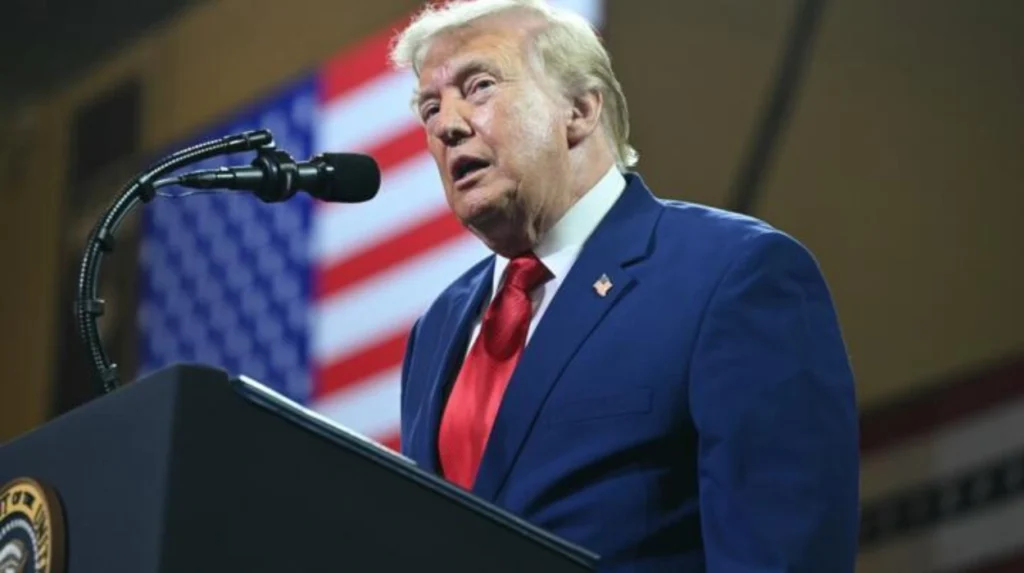
Politically, the tariffs serve multiple purposes at once. They let Trump present himself as tough on labor exploitation, tough on foreign trade, and tough on countries that benefit from access to the US market without meeting Washington’s standards. The administration’s language suggests a moral justification, but the structure of the policy shows a strategic trade calculation aimed at restoring leverage after previous tariff actions were curtailed in court.
Reuters reported that Europe rejected the justification, calling the tariffs unjustified. That reaction is important because it signals the immediate diplomatic tension the policy could create with allies, not just adversaries. If the measure is perceived abroad as a disguised protectionist tool, the forced-labor framing may not protect it from criticism even if it helps the administration defend it legally at home.
How Critics See It
Critics argue that the new tariffs may be less about labor enforcement and more about creating a durable replacement for the tariff agenda that courts previously dismantled. PIIE said the tariffs are unlikely to survive a court challenge, while other analysts said the policy could be read as an attempt to rebuild Trump’s broader tariff wall in a different legal form. That criticism goes to the heart of the debate: are these tariffs genuinely about labor abuses, or are labor abuses being used as the most defensible route to achieve a wider trade goal ?
The administration’s defenders would say the answer is both. They can argue that forced labor is a legitimate trade concern and that countries failing to police it should face consequences. But the sweeping reach of the policy, the timing of the announcement, and the inclusion of both allies and rivals all make the measure look like more than a narrow enforcement action.
The critical point now is whether the tariffs will pass legal scrutiny, and if so, what happens with the responses from other countries, diplomatic or otherwise. If the legal process bears fruit for those challenging the policy, it will be more than a matter of defending the rationale of the tariffs, but the process through which the tariffs were imposed. In either case, the tariffs might mark a new template by which the US can launch wide-ranging trade attacks based on labor and compliance issues rather than on reciprocal tariff-based rhetoric. The business community must now figure out how to comply and factor in costs. The government must decide whether to deal, retaliate, or legally challenge the policy.