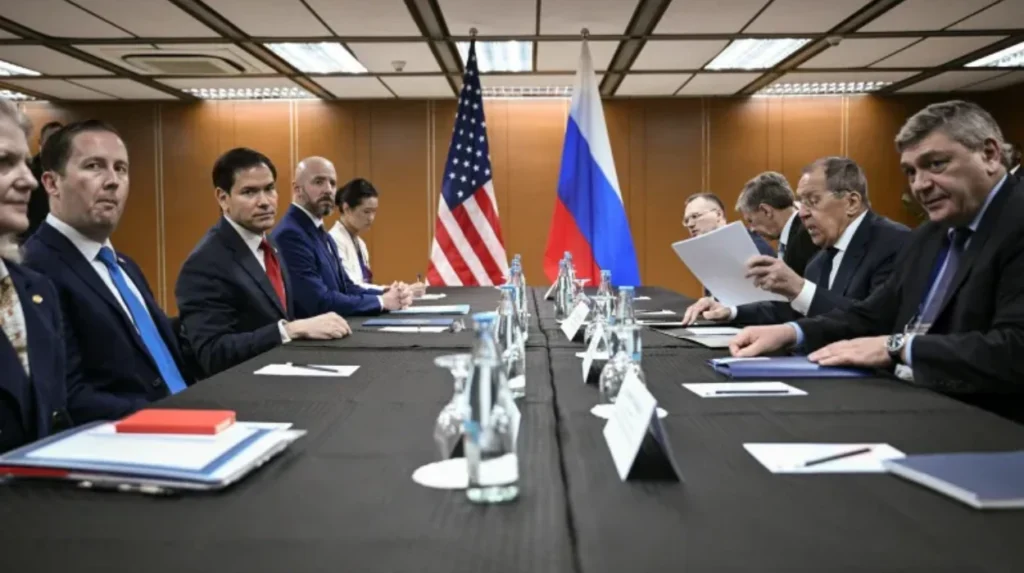
The meeting between US Secretary of State Marco Rubio and Russian Foreign Minister Sergey Lavrov in Manila was short, tightly controlled, and diplomatically significant, even if it produced no visible breakthrough. On the sidelines of ASEAN talks in the Philippines, the two top diplomats discussed the war in Ukraine at a moment when peace efforts remain stalled, battlefield pressure continues, and both Washington and Moscow are trying to shape the narrative around possible negotiations.
A brief but important meeting
Rubio and Lavrov held talks on Thursday in Manila, amid the meeting of ASEAN foreign ministers, and the Russian media noted that the discussion took place within 30 minutes. It is important to take into account the brief nature of the talks since it indicates that the parties were not going into any negotiations but merely expressing their positions in a particularly critical situation for both the course of the war and the general state of affairs in the US-Russia relations. However, despite the short duration of the talks, their significance comes from the fact that it was the top diplomats of two countries involved in an extended conflict who were holding talks.
The location also mattered. ASEAN meetings in Manila gave both officials a neutral multilateral setting, away from the sharper political theater of Washington, Moscow, Kyiv, or European capitals. In diplomacy, that kind of environment often allows conversations that would be harder to stage elsewhere.
What each side said
Russia’s account of the meeting was more expansive than Washington’s. The Russian Foreign Ministry said Lavrov “reaffirmed readiness” for a political and diplomatic settlement of the war in Ukraine, while also maintaining Moscow’s hardline position on Western military support to Kyiv.
The ministry also said Lavrov told Rubio that continued military aid to Ukraine was “unacceptable”, which reflects a familiar Russian argument: that Western weapons prolong the war and undercut any chance of forcing Kyiv toward a settlement on Moscow’s terms.
The US State Department, by contrast, provided only a sparse summary, saying Rubio and Lavrov
“discussed the US-Russia relationship and the need to end the Russia-Ukraine war”.
This wording is critical since it demonstrates the fact that the war continued to be the key issue, but at the same time, it does not support the stance of the Russians nor reveal any further negotiating position. The discrepancy between the public positions in such diplomacy is quite common. Russia seemed keen to demonstrate that something had been achieved and their stance was clearly stated, while on the US side, things were kept cool probably not to raise expectations from nothing.
The Ukraine context
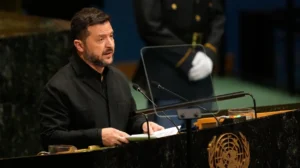
The meeting came amidst the backdrop of the ongoing war that has lasted for several years without a solution despite repeated attempts of diplomacy, changes in the warfront and global pressure. According to the president of Ukraine, Volodymyr Zelenskyy, he has talked to the US ambassadors with the aim of reviving the negotiations that will bring an end to the ongoing war. It is important to note the president’s remarks since it shows that the country is not waiting idly for someone else to take charge of their future. Instead, Ukraine is trying to maintain engagement with the rest of the world.
At the same time, Russia continues to insist on terms that remain unacceptable to Ukraine and most of its Western partners, especially the demand that Kyiv cede territory. That gap is one reason why the diplomacy has stalled despite repeated public statements about readiness for talks.
The Manila meeting therefore should be seen less as a negotiating breakthrough and more as an indicator that both sides still consider direct contact useful. In wars like this, even limited dialogue can matter because it keeps alive the possibility of future negotiation, prisoner swaps, ceasefire testing, or crisis management.
Rubio’s diplomatic signal
Rubio’s posture appears to have been pragmatic rather than optimistic. Before or around the meeting, he indicated that Washington wanted to play a “constructive role” in ending the conflict, a phrase that suggests openness to engagement without committing the US to any specific peace formula or concession.
This language fits within the larger context of an American way of doing things where diplomacy does not mean submission to Russian demands, but rather a process for determining if negotiations will bring about an end. This language is also consistent with the recognition that the war will have regional and global implications, from energy security to food chain supplies and beyond, with implications on the cohesion of NATO as well as wider strategic competition. According to reports, Rubio emphasized that while the war has made overall relations with Russia more difficult, the US still seeks to look at those areas of possible cooperation. This is an interesting and carefully balanced statement in that it recognizes the antagonism caused by the war without cutting off communication. Such language is important in that it helps set the tone of the discussion in the meeting.
Lavrov’s position
Lavrov’s public posture was equally calculated. Before the meeting, he said it would be “useful in any case” and suggested that a face-to-face exchange would allow both sides to ask questions and get answers. That framing portrays dialogue itself as the achievement, even if the substance remains deeply contested.
According to the Russian version, after the meeting, Lavrov made a point about Moscow’s readiness to keep the political process going while continuing to reject further military assistance from the West to Ukraine. It is the perfect combination of Russian diplomatic strategy in the ongoing war – a readiness for negotiations on condition of making it impossible for Ukraine to use any strategic option left to it.
Meanwhile, the Russian side tried to make the point at the meeting that it is not the Russian side, but the West which is preventing peace by arming Ukraine. Although whether the claim will be convincing internationally is debatable, it still plays a crucial part in Russian public diplomacy. Thus, in a way, Lavrov spoke not only to Rubio, but to an entire international audience, which was watching how Russia tries to spin the situation.
Why ASEAN mattered
The fact that this meeting took place on the sidelines of the ASEAN ministerial meetings has provided it with geopolitical context. It is important to understand that Southeast Asia is becoming more and more a place where great powers try to test their influence, and regional countries are trying not to be pushed into hard choices. This type of context can benefit both the US and Russia. The former can demonstrate its continued involvement in Asia amid other crisis points, and the latter can show that it still has diplomatic channels despite being disliked by many Western countries due to the events in Ukraine.
The Philippines venue also underscored that the war in Ukraine is no longer a distant European issue alone. It is now woven into a broader global security environment that includes Middle East instability, alliance politics, sanctions, arms transfers, and competition for diplomatic legitimacy.
Because the talks happened within a multilateral meeting, they also avoided the optics of a bilateral summit with inflated expectations. The format allowed both sides to keep the exchange serious but contained, which is often how diplomacy proceeds when trust is low and outcomes are uncertain.
What it means next
For the time being, the meeting in Manila can be characterized by the fact that it was a contact meeting, rather than a turning point. This means that there was confirmation of the fact that the USA and Russia are talking at a high level, that Ukraine is still the main topic of the discussion, but no hint of compromise was publicly announced.
The importance of the meeting can be explained in terms of continuity and not in terms of solving the problem. So far, as long as Rubio and Lavrov are meeting, there is a possibility for future negotiations, but the gap between both positions is huge. For Ukraine, it is an additional confirmation of the fact that the ongoing war in the country is not only about fighting on the field but also in the diplomatic chambers. For the USA and Russia, this meeting is just a confirmation of the fact that confrontation and communication are two sides of one coin.