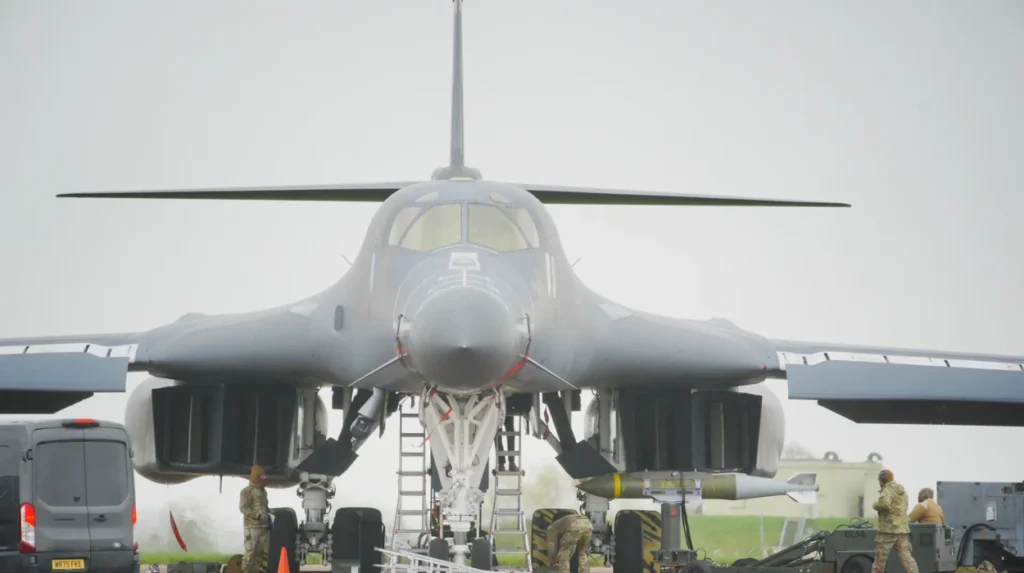
Use of a U.S. B-1 bomber in an attack against targets linked to the Islamic Revolutionary Guard Corps in Iran represents a clear step up in the current conflict. As per reports published by Axios, a U.S. military mission employed the bomber on Tuesday, but the official public announcement made by CENTCOM did not specify the bomber. This difference is important since it shows how the U.S. tries to maintain operational secrecy while conveying messages to the public. What is important is that B-1 bomber is no ordinary bomber and is specifically designed for deep strikes and prolonged combat operations. That is why the usage of the bomber in such a campaign represents a significant increase in involvement of the U.S.
What the strike report says
According to the published accounts, the bomber targeted IRGC-linked positions inside Iran on Tuesday. Some reports said the aircraft departed from a U.S. airbase in the United Kingdom, adding to the sense that the mission was planned as part of a broader regional posture rather than an isolated strike. The broader campaign has been described as a continuing series of U.S. attacks, with one live blog saying American forces had completed the “12th consecutive night” of strikes on Iran. That language suggests a sustained military operation rather than a single, symbolic response.
Why the B-1 matters
The choice of a B-1 bomber is strategically important because it carries a different message than fighter jets or drones. It projects range, payload capacity, and operational seriousness, which makes it especially relevant in a conflict where signaling is as important as damage inflicted. One report described the mission as the first such B-1 operation since fighting resumed, which helps explain why the strike drew so much attention. In practical terms, the deployment suggests that the U.S. is prepared to widen its strike options as the confrontation deepens.
Since the B-1 bomber is long-range in nature, this means that the use of such a weapon platform means that Washington aims to display power without relying solely on a carrier strike group deployed close to Iranian waters. This is important since a bomber platform can be deployed from far-flung areas and yet be able to reach the targets. As opposed to the carrier strike groups, such deployments are obvious signals from the naval point of view since the carrier strike groups show presence in the region, give comfort to allies, and apply pressure through air launch strikes, cruise missile attacks, and maritime defense cover.
U.S. messaging and official silence
CENTCOM’s statement reportedly confirmed the strikes but did not identify the B-1 bomber. That omission is significant because it leaves room for Washington to control escalation messaging while still demonstrating action on the ground. This pattern fits the wider U.S. stance in the current crisis: acknowledge military operations, preserve ambiguity around tactics, and avoid overcommitting publicly to a larger war footing. The result is a mix of reassurance and warning, both aimed at Iran and at regional allies watching the conflict unfold.
Regional context and strike pressure
The strike comes amid an already volatile period in which U.S.-Iran tensions have been hardening into a broader military standoff. Earlier reporting described the conflict as a deadlock, with neither side able to turn a fragile ceasefire into a durable settlement.
This standoff has been characterized by a series of attacks and counterattacks in the region. According to various reports, there have been attacks through missiles and drones against U.S. installations in Bahrain and Kuwait, as well as retaliation for an attack near the Strait of Hormuz. This clearly indicates that the battle field is now not restricted to just one theater of operations. Statements made by both countries have made it clear that escalation is occurring. Statements made by U.S. President Donald Trump have indicated a tough approach on one hand and willingness to negotiate on another, depending on the stage at which the crisis was occurring. From Iran’s end, statements have been mainly about resistance and deterrence, and about the pressure points in the confrontation, such as the Strait of Hormuz.
Human and strategic costs
The military dimension is only part of the story. Reports have said nearly 100 U.S. service personnel were injured in the broader conflict in the past fortnight, while three U.S. soldiers were killed, showing the rising human cost of the confrontation.
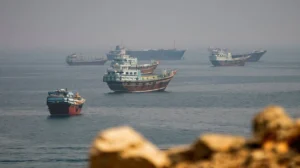
In addition, there are also larger economic ramifications. Commercial shipping in the Strait of Hormuz has been affected, and energy markets have responded to the possibility of long-term instability. This means that the conflict has gone beyond being a crisis between two parties, but also represents a potential shock to global supply lines and the oil market. In sum, with regard to the report of the B-1 attack, coupled with the ongoing attacks, it seems that the United States is escalating its military response to Iran. It may be for reasons of deterrence, coercion, or simply preparing for future missions, but the use of the strategic bomber leaves no doubt about the intent. At the same time, the lack of an official and detailed explanation provides the space for different interpretations. For the allies, it may be a reassurance, for Iran, an indication of how dangerous the conflict has become.