Tehran’s resilience is outlasting Trump’s pressure campaign because the Iranian system is designed to endure disruption rather than collapse under it. What appears externally as sustained pressure is internally absorbed through layered authority, institutional continuity, and adaptive governance. This structural depth has allowed Iran to maintain strategic direction even after leadership losses and repeated military strikes during the 2026 escalation.
The system’s design distributes authority across multiple interconnected bodies, preventing any single point of failure. Political leadership, military command, and clerical oversight operate in parallel, ensuring that operational continuity is preserved even when high-level figures are removed. This diffusion transforms targeted disruption into manageable recalibration rather than systemic breakdown, reinforcing stability during periods of intense external pressure.
Distributed authority beyond individual leadership
Leadership removals have not translated into paralysis because decision-making authority is not centralized. Strategic councils and security institutions maintain overlapping responsibilities, allowing successors to step in without disrupting policy direction. This structure ensures that even high-profile losses do not alter the state’s core trajectory.
Rather than weakening the system, such disruptions often trigger consolidation. Internal networks absorb shocks and reinforce continuity, limiting the strategic value of decapitation-style approaches. The result is a governance model where resilience is built into the architecture of power itself.
Institutional memory and crisis adaptation
Decades of sanctions and conflict have shaped a governance model that prioritizes survival under pressure. Administrative systems and military coordination are structured around the expectation of disruption, not stability. This accumulated experience has created a predictable pattern of response during crises.
Operational continuity during 2026 reflects this institutional memory. Decision-making has remained measured, and responses have been calibrated rather than reactive. The system draws on established crisis-management frameworks that reduce uncertainty and maintain coherence.
Economic and administrative resilience
Economic adaptation has reinforced political stability. Alternative trade channels, informal financial systems, and centralized resource allocation allow the state to function despite external constraints. While economic strain persists, it does not translate into systemic collapse.
Administrative flexibility complements this resilience. Government institutions adjust priorities and sustain essential services even under fiscal pressure. This capacity to maintain baseline functionality strengthens the broader endurance of the state.
Regional leverage reinforces strategic endurance
Iran’s resilience extends beyond domestic structures into a wider regional framework. Its external relationships create additional layers of deterrence, complicating efforts to isolate or pressure it directly. This networked influence transforms localized pressure into a broader strategic challenge.
The ability to operate across multiple theaters ensures that pressure applied in one area generates responses elsewhere. This dynamic expands the scope of conflict, making it difficult for adversaries to achieve decisive outcomes through linear strategies.
Proxy networks and indirect deterrence
Regional partnerships provide a distributed form of deterrence that operates without direct confrontation. These networks enable influence across multiple fronts, raising the cost of escalation for adversaries while preserving strategic flexibility.
Pressure on Iran does not remain confined within its borders. Instead, it produces ripple effects across different regions, complicating operational planning and increasing uncertainty. This interconnected environment reduces the effectiveness of targeted coercion.
Control over strategic chokepoints
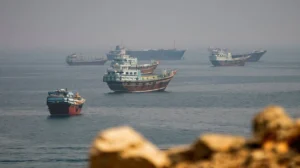
The Strait of Hormuz remains central to Iran’s leverage. Even limited disruption to this corridor affects global energy markets, giving Tehran influence beyond its immediate geography. This capability introduces economic consequences that extend to allies and global stakeholders.
Military presence alone cannot eliminate this risk. The persistent possibility of disruption shapes market behavior and strategic calculations, limiting the effectiveness of pressure-based approaches and reinforcing Iran’s negotiating position.
Flexibility across multiple theaters
Iran’s ability to shift focus across different arenas adds another dimension to its resilience. Pressure in one domain can be offset by activity in another, preventing adversaries from concentrating their efforts effectively.
This flexibility creates a multi-dimensional conflict environment. Opponents must distribute resources across various contingencies, increasing the cost of sustained pressure and favoring a strategy built on endurance.
Limits of Trump’s pressure campaign become visible
The persistence of Iranian capabilities highlights the limitations of a strategy centered on coercion. While pressure has produced tactical outcomes, it has not achieved structural change. Instead, it has exposed the constraints of approaches that rely on intensity without long-term sustainability.
The campaign’s underlying assumption—that internal divisions would deepen under pressure—has not materialized. External threats have instead contributed to temporary cohesion, reducing the likelihood of fragmentation during critical phases of the conflict.
Misreading resilience and internal dynamics
A key miscalculation has been the expectation that pressure would weaken internal stability. In practice, external threats have reinforced narratives of resistance, strengthening alignment among key institutions.
This dynamic is increasingly recognized in policy discussions.
This person has spoken on the topic and summarized the situation by emphasizing that sustained external pressure has not produced systemic collapse but instead reinforced adaptive responses within Iran’s political and strategic framework. The observation reflects a broader analytical shift toward understanding resilience as a central variable in the conflict.
A telling sign of retreat. Top US Major General James Spider Marks admits the Trump administration's war on Iran is turning into another Vietnam. He confirms Iran has the clear ability to withstand the pressure and easily outlast the American military empire. pic.twitter.com/vFlapQ1Yx9
— Furkan Gözükara (@FurkanGozukara) April 14, 2026
The implication is clear: systems conditioned by long-term pressure often respond by hardening rather than fragmenting, altering the expected outcomes of coercive strategies.
Short-term tactics versus long-term strategy
High-intensity measures such as strikes and deadlines create immediate effects but rarely deliver lasting change without a defined strategic endpoint. Repetition of these tactics without a broader framework leads to diminishing returns.
The absence of a sustained pathway to resolution has left the strategy dependent on continued escalation. Each cycle increases costs while reducing the likelihood of decisive outcomes, shifting the conflict toward attrition.
Domestic and allied constraints
Sustaining pressure requires consistent political and economic support. Rising costs, regional instability, and differing priorities among allies introduce constraints that limit long-term commitment.
Over time, these constraints transform pressure into a shared burden. The strategy’s effectiveness declines as both domestic and international support becomes more difficult to maintain.
The 2025 buildup shaped current dynamics
Developments in 2025 created the foundation for the current phase of the conflict. Policy choices emphasized pressure mechanisms while leaving structural issues unresolved, setting the stage for escalation without a clear resolution pathway.
The transition into 2026 occurred within this framework, where coercion had become the dominant tool but lacked complementary diplomatic structures to manage its consequences.
Escalation without resolution
Throughout 2025, tensions increased steadily without producing a stable negotiation framework. Diplomatic efforts were intermittent and often overshadowed by coercive actions.
This environment reduced opportunities for compromise and reinforced adversarial positions, making further escalation more likely once initial pressure failed to produce results.
Reinforcement of defensive strategies
Anticipating continued pressure, Iran invested in strengthening its adaptive capabilities. Infrastructure, networks, and contingency planning were enhanced to absorb future shocks.
These preparations reduced the strategic impact of subsequent actions. Pressure that might have been decisive under different conditions became manageable within an already adapted system.
Fragmented international alignment
Differences among allies became more pronounced during 2025, particularly regarding the balance between pressure and diplomacy. This fragmentation weakened coordination and reduced the effectiveness of collective strategies.
Without unified alignment, pressure campaigns face inherent limitations. Divergent priorities create gaps that reduce overall strategic coherence.
Why resilience continues to outlast pressure?
The interaction between institutional structure, strategic design, and time explains why Tehran’s resilience continues to outlast external pressure. The conflict has shifted from a contest of immediate outcomes to one defined by endurance and adaptation.
External pressure has reinforced internal cohesion, strengthening the institutions responsible for maintaining stability. While underlying tensions persist, they are temporarily subordinated to the broader imperative of resistance.
Strategy built for endurance rather than victory
Iran’s approach emphasizes survival and gradual advantage rather than rapid resolution. By absorbing limited losses while preserving core capabilities, it maintains flexibility over time.
This contrasts with strategies that rely on quick outcomes. As the conflict extends, the advantage shifts toward the side structured for endurance rather than immediate success.
Pressure fatigue and shifting incentives
Sustained pressure generates fatigue among those applying it. Economic costs, political constraints, and competing priorities gradually reduce the willingness to maintain intensity.
As incentives shift, the balance moves toward negotiation. The side that demonstrates greater endurance gains leverage in shaping the terms of any eventual settlement.
Strategic implications for future policy
The persistence of Tehran’s resilience suggests that pressure alone cannot achieve comprehensive objectives. Effective strategies will require integration of coercion with credible diplomatic pathways and longer time horizons.
Understanding systemic resilience is critical. Policies that underestimate it are likely to encounter diminishing returns, particularly in conflicts where endurance defines the strategic landscape.
Tehran’s resilience is outlasting Trump’s pressure campaign not because pressure lacks impact, but because it has been applied against a system designed to absorb and adapt to it. As the conflict continues to evolve, the central question is no longer whether pressure can intensify outcomes, but whether it can be aligned with a strategy capable of converting persistence into a durable and meaningful resolution.