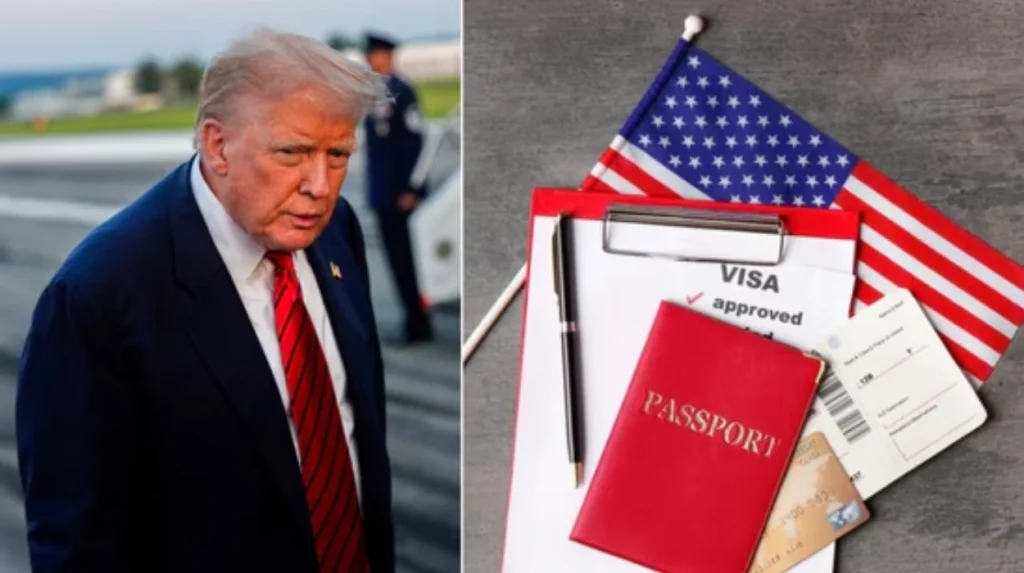
Another major shift in U.S. policy was the introduction of a proposed Department of Homeland Security (DHS) regulation in August 2025, which limits F-1 student visas and J-1 cultural exchange visas to four years, which is in stark contrast to the previous policy.
In 1978, international students were admitted on the basis of the postulate of duration of status, which accorded them the liberty to remain in the United States provided that they remained on full-time status and abided by the provisions of their visas. The 2025 policy proposes to impose a strict time constraint, irrespective of the length of the program.
The DHS claims the change is needed in order to avoid visa overstays and harden immigration control. Authority representatives give examples of cases when foreigners who had not renewed their visas stayed in the U.S. for decades, on extensions that are not strictly controlled. According to the agency, the new rule ensures that all international students are subject to predictable timelines and improved accountability. It also imposes stricter conditions for visa renewals, and adds new constraints on journalists, especially from nations like China, with I visas now limited to 240 days initially, with some nationalities subject to even shorter stays.
Implications For International Students And Higher Education Institutions
For many students, particularly those in doctoral, dual-degree, or research-intensive programs, the four-year cap introduces both logistical and legal complications. Master’s programs extending beyond typical timelines, medical residencies, and STEM-focused research often require more than four years. These students now must undergo formal DHS extensions, increasing uncertainty about whether they will be able to complete their degrees uninterrupted.
The rule also narrows the margin for change in academic direction. Students can no longer transfer programs, institutions, or thesis topics freely without risking visa violations. First-year entrants are similarly constrained, facing upfront limitations that restrict long-term academic planning. The added compliance load may discourage international enrollment altogether, especially from students seeking stability during multi-year educational commitments.
Financial And Demographic Consequences For Universities
American universities, particularly public and research institutions, depend heavily on international enrollment. Foreign students contribute higher tuition fees than domestic counterparts and drive a significant portion of graduate-level research and STEM instruction. In 2023 alone, international students injected over $50 billion into the U.S. economy.
With application volumes down markedly in 2025—at least 35% among reporting institutions—the financial strain is growing. Budget shortfalls have prompted hiring freezes and program closures in some states. University administrators warn that diminished international enrollment also reduces cultural diversity, weakens research outputs, and undermines the global competitiveness of U.S. higher education.
Stakeholder Reactions And Broader Political Context
DHS maintains that the visa policy overhaul enhances national security and improves oversight. Officials reference audit findings where students retained legal presence long after completing—or abandoning—their studies. They assert that regular revalidation every four years will eliminate loopholes and better align with evolving national security frameworks.
DHS officials also point to data suggesting some students used visa status to work unauthorized jobs or remain in the U.S. for reasons unrelated to education. The agency frames the new rule as a balanced effort to welcome legitimate scholars while tightening controls on perceived abuses.
Advocacy Groups And The Higher Education Community
Academic leaders and immigration advocates dispute the DHS’s framing, arguing that the new policy undermines trust and cooperation between universities and federal agencies. Fanta Aw, Executive Director of NAFSA: Association of International Educators, has warned that the fixed time cap “adds unnecessary complexity and bureaucracy for students and institutions alike.”
Miriam Feldblum of the Presidents’ Alliance on Higher Education and Immigration expressed concern that students may unintentionally fall out of status due to slow extension approvals, especially during thesis work or internships. Opponents argue that the plan provides no significant evidence to support a connection between international students and the systemic risk and interferes with decades of institutional freedom regarding academic developments.
Political And Social Dimensions
The Trump visa policy is set in line with the wider initiative to impose restrictions on immigration based on the America First doctrine. The actions paralleled in 2025 would be an intensification of vigilance over H-1B visa workers and an intensification of vigilance over political activism among foreign students. The civil liberties organizations have recorded increased incidents of students being interrogated about their affiliations, especially the Chinese, Iranian, and South Asian.
The suggestion is politically appealing to the audience of Trump, who tends to perceive foreign students in the prism of labor competition. But it has also received criticism by cross party lawmakers who state that it could weaken America’s soft power and technological dominance.
Navigating The Future: Balancing Security, Access, And Academic Freedom
The U.S. must now contend with the challenge of balancing national security imperatives with its long-standing position as a global education hub. While DHS has emphasized the importance of monitoring foreign nationals within its borders, the rigid timeframes risk dissuading high-caliber students from choosing American universities. The U.S. is a pipeline of many of the world’s greatest science and technology innovators who initially entered the country as international students- a pipeline which may be limited by reforms in place today.
The way the rule is applied is beyond the control of universities, particularly after DHS has kept the right to reject extensions on the basis of undefined factors of risk. Legal experts warn that indefinite standards may bring discriminatory trends as well as diminish predictability among students and schools.
Shifts In Global Academic Mobility
Global competitors are evolving as the students re-evaluate their students’ destinations. Canada, Germany and Australia have all intensified their sights to lure foreign talents in 2025, with longer post-study work permits and smoother visa processes. Such nations consider the U.S. change of rule as a chance to make themselves more appealing options.
Early signs show this strategy may be working. Several American university partners in Southeast Asia report redirection of applicants toward Canadian or European institutions. The reputational cost for U.S. higher education may prove harder to recover even if future administrations reverse the policy.
This person has spoken on the topic, emphasizing that the proposed changes reflect growing governmental desire to control immigration flows more tightly, but risk harming sectors reliant on international students and affect diplomatic relations amid global talent competition.
How The United States Harmonizes Competing Priorities Will Shape Global Education
The Trump visa rule summarizes the conflicts between the regulatory control and the realities of global academic engagement. International students are not mere economic assets, but the backbone of the intellectual ecosystem on which American innovation has been built over the decades. Restricting their presence by strict schedules and bureaucracy might offer a temporary solution to the immigration problem at the cost of strategic defeat in the long-term.
With the world superpowers engaging in power politics, capacity to lure and maintain the best academic minds will become a characteristic of determining the outputs of research, cultural diplomacy, and technological leadership. U.S. policymakers no longer face the same issue as to how to secure borders and continue to be an open society that drives progress through education. The ability of America to balance these priorities will decide whether the country will be in the next generation of knowledge leadership globally.