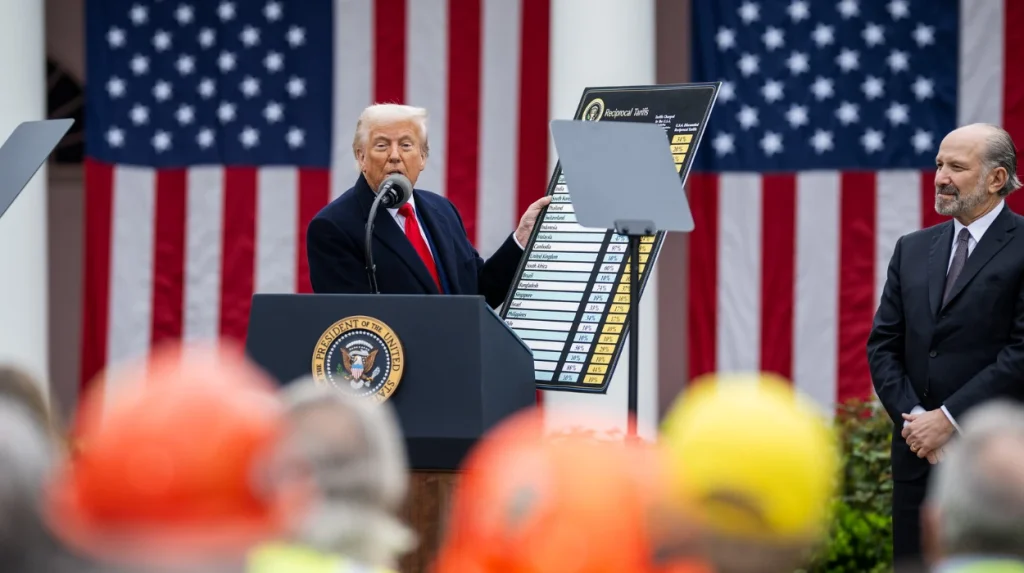
Since returning to the White House, President Donald Trump’s 2025 Asia policy has redefined the contours of U.S. alliances across the Indo-Pacific. Whereas past administrations emphasized shared values and joint security goals, the current approach focuses sharply on financial contributions. Trump’s administration has pressed allies to meet elevated defense spending thresholds—3.5% of GDP or higher—as a condition of continued U.S. military support. This demand was clearly articulated by U.S. Defense Secretary Pete Hegseth during the 2025 Shangri-La Dialogue, where he framed traditional alliance models as outdated and overly dependent on U.S. taxpayers.
Allies such as Japan and South Korea are under pressure to shoulder greater financial and logistical responsibilities. The new model emphasizes not only operational participation but also cost-bearing in the form of defense procurement, base maintenance, and joint technology development. This development signals a structural transition in the alliance system—from mutual obligation to cost justification.
Economic Pressures and Trade Policy Intersections
Trump’s policy simultaneously leverages economic tools, merging trade and security into a single framework. Tariffs and economic penalties now serve as mechanisms to enforce military cooperation. For instance, punitive tariffs have been threatened against Southeast Asian countries that refuse to align closely with U.S. strategic priorities, and new sanctions regimes have been drafted to dissuade hedging toward China.
This fusion of trade and defense has introduced uncertainty into regional calculations. Several U.S. allies have begun to question the long-term viability of an alliance structure that views them primarily through the lens of fiscal burden and commercial compliance, rather than shared security imperatives.
Reactions and Adaptations Among Key Allies
Japan, South Korea, and Australia’s Balancing Act
Japan and South Korea have responded cautiously. Tokyo has incrementally increased its defense budget, reaching 2.3% of GDP in 2025, with debate ongoing in the National Diet over whether to meet the U.S. demand of 3.5%. The citizens of Seoul, through the parliamentary committees, have opposed hasty growth of military budgets citing the need to spend the money on social welfare, and unreliability of Trump promises on long-term security.
One of the most unwavering U.S. allies, Australia, has raised an eyebrow to the transactional nature that the alliance is taking. Prime Minister Anthony Albanese has stated that “alliances cannot be reduced to spreadsheets,” stressing that strategic cooperation must be grounded in mutual trust and regional consensus.
Still, all of them still enhance interoperability with American troops with more naval exercises, the co-development of cyber defense strategies, and more intelligence sharing practices.
Southeast Asian and Indian Responses
A more complicated situation is presented in Southeast Asia and India. The citizens of countries such as Vietnam, Indonesia and the Philippines are well appreciative of the security support provided by the U.S. although they do not take the position of being payers. Most states in Southeast Asia are afraid of being economic collateral to the American-Chinese rivalry. Vietnam has refused to put defense cooperation with incentives in trade or limits in visas operating a flexible relationship of strategic partnership.
India in the meantime carries on with its measured involvement. Although New Delhi has signed some interoperability agreements and is a Quad member, it is not willing to engage into any binding financial sourcing that would be perceived as strategic subordination. As national elections loom, the Indian leaders are wary of their domestic discontent about spending the most on the military as per the international demands.
Implications for Regional Security and Alliance Cohesion
Risks of Alienation and Diverging Interests
With such a move to payment rather than partnership, the Trump administration will undermine the alliances he intends to strengthen. Juxtaposing of numerical spending targets could cause alienation of countries, whose political or economies are unable to accommodate explosive growth of their respective militaries. The variance might lead to fragmented security systems making the unity of the regional deterrence stances to decrease, especially as the aggressiveness of China in the South China Sea and Taiwan Strait takes effect.
Some states have signaled readiness to explore alternative frameworks, including mini-lateral groupings or increased regional security cooperation excluding the U.S. entirely. These developments may not immediately supplant U.S. influence but suggest a long-term trend of hedging strategies that dilute alliance strength.
Sustaining Credibility and Commitment
The Trump administration’s cost-centric approach may satisfy domestic political demands for “fairness,” but it complicates the credibility of U.S. security guarantees. Mixed messaging—such as the Pentagon’s review of troop withdrawals from South Korea or ambiguous support statements for Taiwan—undermines confidence in Washington’s readiness to respond to regional crises.
Credibility, in strategic terms, depends on more than defense budgets. Allies seek assurance that the U.S. will honor commitments, particularly in potential flashpoints involving China. Without consistent diplomatic signaling, the burden-sharing strategy may generate uncertainty rather than stability.
Balancing Revenue Demands with Strategic Interests
The Challenge of Managing Domestic and Alliance Politics
For the Trump administration, the recalibration of Asia policy is partly driven by domestic imperatives. In an era of diminished budget resources on a federal 2025 budget, the administration is in a bid to establish resources on foreign military basing to economic programs at home. This initiative is part of a larger political discourse of focusing on American taxpayers.
Nonetheless, the policy presents difficulties to the alliance diplomacy. Although it gets support among the home electorate, it creates a risk of losing the foreign governments and populations. In allied countries, the populace is always prone to feeling that the alliances are being monetized or conditionalized.
Toward a More Integrated Alliance Model?
Nevertheless, some new models of defence cooperation are taking shape amid traces. The Quad cybersecurity framework, the U.S.-Japan collaboration in developing AI technologies, and the AUKUS plan to build nuclear-powered submarines demonstrate how the old system of formal alliances, along with the practice of sharing the burden of defense expenditures, is being replaced by an alternative form of the integration of capabilities.
These developments indicate that there is a chance of a recalibration. With the expectation of burden-sharing tempered by the growth in the area of defense cooperation and partnership in innovation and strategic communication that can be executed by the allies openly and with clarity, a rebalanced and strong alliance structure might be achievable. Nonetheless, this process will take political tolerance and respect.
A Voice from the Field
This person has spoken on the topic and summarized the situation accordingly: Security analyst Orgetorix observed on social media that the Trump administration’s approach reflects “a fundamental shift in U.S. foreign policy—from viewing allies as partners to requiring them as payers.” He warned that
“this transition risks undermining strategic cohesion unless carefully managed with diplomacy and security clarity.”
Orgetorix’s remarks echo broader concerns among defense analysts that financial emphasis alone cannot sustain long-term regional stability.
Strategic Reorientation and the Indo-Pacific Outlook
The 2025 Asian policy initiated by Trump is a clear break to the previous multilateralism to one resting on transactional realism. Although such a tactic has brought short term financial rewards and has compelled the allies to rethink their defense spending patterns, it has also brought conflict into the relationships within the alliance.
The sustainability of this swing will be determined by the ability to balance the fiscal expectations with strategic assurances of significance on the part of the U.S. Allies are also not intending to abandon regional stability, but they are now demanding to be recognized as equal participants instead of subordinate members. The next year will determine whether the U.S. policymakers can transform this model into that of maintaining the burden-sharing and trust.
The legacy of this shift, in a broader Indo-Pacific, will define not only bilateral alliances, but the way a volatile geopolitical region is deterred, engaged and autonomously perceived.