Pentagon officials have delivered a stark update to Congress, revealing that the financial toll of the U.S. “Iran war” has climbed to nearly $29 billion, a significant escalation from earlier projections. This figure, disclosed during recent testimony, underscores the mounting pressure on American military resources as hostilities persist into their third month.
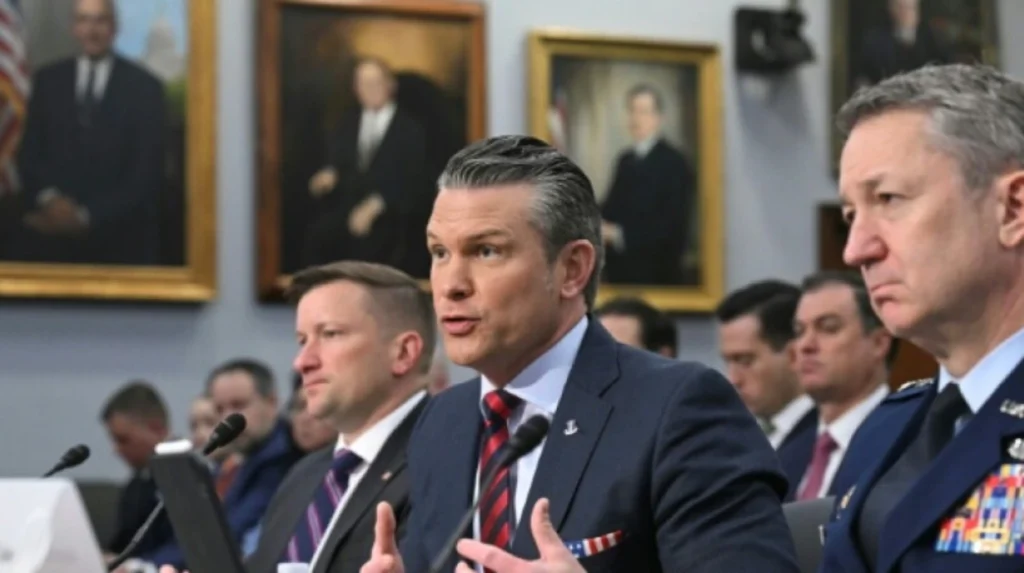
Acting Pentagon Comptroller Jules Hurst, in a candid admission before a House Appropriations subcommittee on May 11-12, 2026, explained the revision, stating
“At the time of testimony… it was $25 billion dollars. But the joint staff team and the comptroller are constantly looking at estimates and now we think it is closer to 29.”
This 16% increase highlights not only the dynamic nature of wartime accounting but also the broader implications for national defense budgeting under President Donald Trump’s administration.
The cost escalation has happened at a critical juncture, considering that the Secretary of Defense, Pete Hegseth, had earlier estimated the operational cost to be $25 billion during his appearance in front of the House Armed Services Committee on April 29.
According to Hurst’s revised estimate, which has been covered by media organizations such as The Wall Street Journal, The New York Times, and Politico, it is based on the real-time audit being conducted by joint staff and comptroller groups to fine-tune the calculation of expenditures. It takes into consideration the prolonged deployment of American troops in the Middle East, where activities have been escalating ever since the outbreak of conflict between the warring parties on February 28, 2026.
Fiscal Strain and Breakdown of Expenditures
Delving into the composition of this $29 billion, the Pentagon’s estimate encompasses a broad spectrum of operational sustainment for U.S. troops entrenched in the volatile region. This includes fuel, logistics, personnel support, and the critical replacement or repair of equipment battered in engagements. The Wall Street Journal detailed how the figure captures “operational expenses to sustain U.S. forces in the Middle East, plus revised costs for repairing and replacing damaged equipment,” marking a $4 billion jump from the April benchmark. Such costs are not static; they evolve with each skirmish, missile interception, and supply chain demand, painting a picture of a conflict that defies neat financial containment.
This revision arrives without a formal supplemental funding request from the White House to Congress, a point of contention amid proposals for a staggering $1.5 trillion Pentagon budget. Hurst’s testimony, echoed in Asharq Al-Awsat and TRT World reports, emphasized the provisional nature of these numbers, with comptrollers “constantly looking at estimates.” In this regard, the cost of the parallel wars by Israel amounts to $17.5 billion, whereas the hemorrhaging being experienced in Iran’s own economy comes to an estimated cost of $270 billion. The cost of repairing bases not factored into the U.S. figure, which is considered unquantifiable at this stage, could turn out to be the proverbial wild card in all of this.
As a journalist with over a decade covering defense spending and Middle East conflicts—from the drawdowns in Iraq to the fiscal fallout of Afghanistan—this escalation feels eerily familiar. Past wars saw initial underestimations balloon into trillion-dollar quagmires, often obscured by optimistic accounting. Here, the Pentagon’s transparency in upward revisions is commendable, yet it signals deeper vulnerabilities. Without congressional intervention, these costs will erode readiness for other global threats, from China’s Pacific maneuvers to Russia’s European posturing. The $29 billion, while daunting, represents just the tip of a fiscal iceberg that could capsize broader strategic priorities.
Timeline of Hostilities and Cost Evolution
The Iran war timeline provides crucial context for these fiscal revelations. Ignited on February 28, 2026, the conflict has seen U.S. forces pivot from deterrence to direct sustainment operations, prompting iterative cost audits. By April 29, Hegseth’s $25 billion figure framed initial congressional briefings, only for May’s hearings to unveil the $29 billion reality. This rapid 16% uptick, as noted in Firstpost and Yahoo News, correlates with intensified Iranian counterstrikes, which have inflicted tangible damage on American assets.
Hurst’s congressional appearance before the House Appropriations subcommittee crystallized the shift, with his bolded quote
“now we think it is closer to 29”
cutting through bureaucratic vagueness. Reports from Muslim Network TV and Pak Observer reinforce that this pertains strictly to U.S. costs, excluding allied or adversary figures. The Pentagon’s joint staff, in tandem with comptrollers, has been recalibrating relentlessly, a process Hurst illuminated during the May 11-12 sessions. This evolution mirrors historical patterns, where early war costs—think Operation Iraqi Freedom’s initial billions—snowball under sustained combat.
President Trump’s reelection and January 2025 inauguration set the stage for a muscular foreign policy, but this Iran war tests its fiscal mettle. With no supplemental package yet—despite whispers of a $200 billion ask—the administration navigates a tightrope. Hegseth’s earlier remarks tied the $25 billion to operational baselines, but the new $29 billion peg demands scrutiny. Lawmakers, already grilling officials on munitions depletion and readiness, now face a budget black hole that could force reallocations from domestic priorities.
Strategic Implications and Political Ramifications
Beyond dollars, the $29 billion milestone carries profound strategic weight. U.S. forces, stretched thin in the Middle East, grapple with munitions strains downplayed in some Pentagon briefings, as Yahoo highlighted. This war, framed as a response to Iranian provocations, has not yielded quick victories, echoing the protracted engagements of yore. Hurst’s testimony, while fiscal in focus, indirectly spotlights operational tolls: damaged equipment replacements signal attritional warfare, where Iran’s asymmetric tactics—drones, missiles, proxies—exact a steady price.
Politically, the revelations amplify bipartisan calls for accountability. House committees, from Armed Services to Appropriations, are dissecting these figures amid Trump’s push for military expansion. The Wall Street Journal’s live coverage noted the testimony’s timing, coinciding with broader war news feeds, amplifying public awareness. Critics argue the lack of supplemental funding risks “cooking the books,” diverting from baseline budgets. Proponents, however, view it as nimble adaptation in a volatile theater.
In my experience reporting from Capitol Hill and embedded with troops, such cost spikes often presage policy pivots. The Iran war’s $29 billion tab could catalyze negotiations or escalations, depending on congressional mood. Trump’s team, with Hegseth at the helm, must balance bravado with belt-tightening. International ripples are evident: Israel’s $17.5 billion outlay strains its economy, while Iran’s $270 billion estimate hints at internal collapse risks. For the U.S., the real cost may lie in opportunity—funds unspent on Iran could bolster Indo-Pacific deterrence.
Broader Economic and Global Context
Zooming out, this Iran war fiscal drama intersects with a $1.5 trillion Pentagon proposal, where $29 billion is a mere sliver yet symbolically seismic. Excluded base repairs, per NYT video segments and Politico, could double the burden, evoking post-9/11 rebuilds. Hurst’s measured “constantly looking at estimates” betrays the fog of war accounting, where provisional numbers harden into precedents.
Globally, the figures contrast starkly: U.S. precision at $29 billion versus Iran’s profligate $270 billion, per TRT World. Allies like Israel shoulder $17.5 billion, underscoring coalition inequities. Domestically, as May 13, 2026, unfolds, taxpayers in places like Pir Jo Goth, Sindh, feel indirect ripples through energy prices and remittances. Trump’s administration, inaugurated amid promises of strength, confronts a test of endurance.
Veteran reporters know wars end not on battlefields alone but in budget battles. This $29 billion marker, woven from Hurst’s testimony and Hegseth’s baselines, demands vigilant oversight. Will Congress unlock supplements? Or force efficiencies? The answers shape not just this conflict but America’s global posture for years ahead.
Future Projections and Unanswered Questions
Looking forward, the Pentagon’s trajectory suggests more upward revisions. With no endpoint to the Iran war, costs could hit $50 billion by summer, factoring repairs and rotations. Hurst’s framework—operational sustainment plus equipment—will expand under pressure. A $200 billion supplemental, floated in whispers, looms as inevitable, testing Trump’s deal-making prowess.