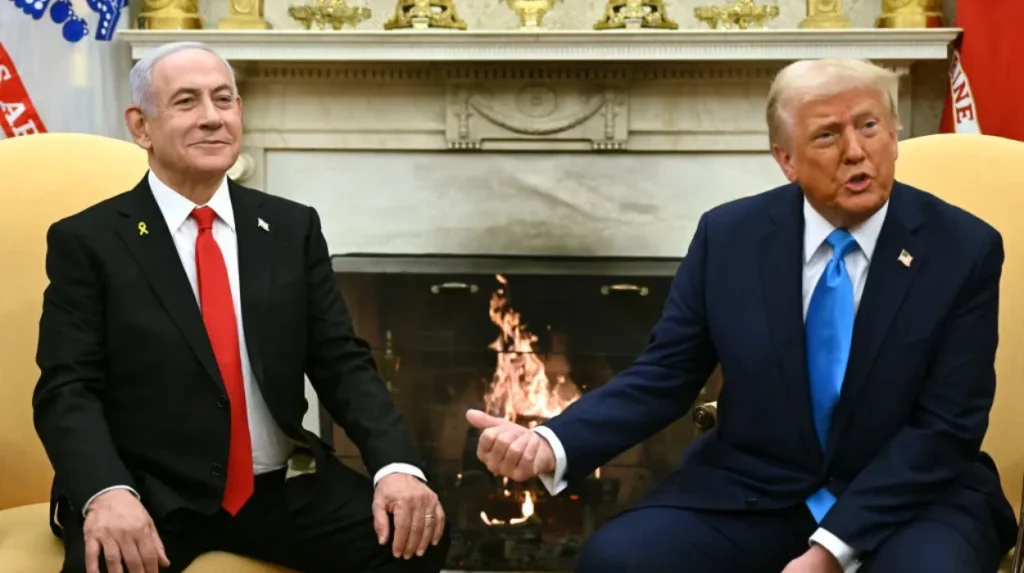
Earlier in 2025, Donald Trump, the former U.S. president, once again moved into the global limelight with a stern and spectacular disruptive policy proposal to the Gaza strip. At the backdrop of long-time violence between Israel and Hamas, Trump proposed a plan whereby the United States would take over in terms of administrative care of Gaza. Picturing the vision as an opportunity to turn the war-torn land into the so-called Riviera of the Middle East, Trump insisted on mass reconstruction, clean-up activities, and a colossal evacuation of people; in other words, transfer of about two million Palestinian to an unknown destination reported as a safe settlement that fits outside Gaza.
This suggestion represents a significant shift of the U.S. decades of diplomacy which is based on two-state desires. International observers were concerned by the vision, which contained no feasible channel of voluntary transfer or reverence of the Palestinian self-determination. Scholars of international law quickly voiced objections that ethnic grounds of mass displacement of civilian representatives might be regarded as ethnic cleansing under international law. Furthermore, the idea of establishing a permanent administrative force of the U.S. in Gaza, devoid of multilateral agreement, raised the tensions, not only in the region, but also between the Western states.
It has also been reported that there is an accompanying plan of U.S. control of unexploded ordnance clearance and reconstruction governance, but these schemes are logistically undefinable and diplomatically undeterred. The critics contend that the policy fails to consider local regional multidimensional dynamics, it underestimates humanitarian risks, and that it is not designed with any sustainable criteria.
Humanitarian Impact and Regional Political Fault Lines
Collapsing Civilian Infrastructure
In 2025, the situation in Gaza will become as poor as it has ever before. Such Israeli, continuing blockades, and destruction of infrastructure has caused severe food, clean water, fuel, and medicine shortages. It is reported that over 130 civilians have starved to death within the last months and the number of hospitals that reject patients because of depletion of supplies keep increasing.
There are dangers of systemic famine according to international aid agencies particularly to the children and the older generation. According to public health experts, there has been an explosion of outbreaks of diseases related to congested facilities and contaminated water. Without protection measures or concrete humanitarian mechanisms in place, Trump intends to pitch a solution that supposedly will not solve these urgent requirements but on the contrary make them even worse.
Polarized Regional Reactions
Israeli Prime Minister Benjamin Netanyahu and members of Israel’s right-wing establishment have expressed support for Trump’s proposal, viewing it as an opportunity to eliminate Hamas’ base of operations while enhancing Israeli territorial security. In contrast, Palestinian officials denounced the policy as a “final dispossession,” rejecting any foreign administration or population removal plan.
One of the most key Arab countries, such as Jordan and Egypt, openly criticized the idea as they were afraid that it would lead to destabilization of the region. Gulf countries that were once on the same page with normalization efforts as a part of Abraham Accords softened their rhetoric. We have seen how diplomats underline that any sustainable peace has to be accompanied by Palestinian agencies and frameworks that are internationally sanctioned.
Geopolitical Volatility and Economic Disruption
Threats to Regional Ceasefires
In mid-2025, after several weeks, a weak 60-day ceasefire was arranged between Israel and Hamas, with Egypt and Qatar playing the main role. But the fact that Trump has initiated a policy has destroyed the fragile trust created in the process of a discussion. Palestinians have begun to consider outside initiatives as more suspicious, and extremist Israeli elements find the U.S. approval as a license to continue its military campaign with an increased effort.
This erosion of confidence risks reigniting broader hostilities. Regional actors such as Turkey, Iran, and Lebanon have reacted with warnings that any unilateral redrawing of Gaza’s future could provoke retaliatory alliances or the reactivation of proxy networks.
Market Instability and Investor Retrenchment
Economic analysts report that Middle Eastern markets have responded with volatility to the announcement. Stock indices in Egypt and Jordan dropped nearly 4% following Trump’s speech, while sovereign bond yields for Lebanon and Iraq widened sharply. Investor sentiment has been further dampened by currency devaluations in countries facing indirect exposure to Gaza’s fallout, such as Tunisia and Morocco.
The U.S. proposal raises red flags for energy security and regional supply chain continuity. Analysts predict risk premiums could rise across the Gulf if political instability persists, particularly if conflict spreads to trade-critical zones such as the Suez Canal. Financial institutions have issued warnings that sustained instability may trigger further capital flight from frontier economies.
Diplomatic Isolation and Multilateral Pushback
International Law and Sovereignty Concerns
Global institutions have responded with measured alarm. Expelling people against their will is unlawful as it goes against the international humanitarian standards and, as the United Nations urged, all the sides within these conflicts had to adhere to the rights of the occupied civilians. The European Union condemned the absence of diplomatic coordination and reiterated its support to a two-state solution on the basis of the 1967 borders.
The African Union and all the ASEAN countries, although they were not as directly involved, shared the concern about unilateralism and setting precedence that could cause chaos elsewhere in the world where ethno-political conflicts exist.
Undermining the U.S. as Mediator
The Gaza plan has created a rift between the United States and its long-time allies and positioned the country in a weaker stance as an impartial negotiator because it has ignored set peace mechanisms to pursue a solution. The French and German officials have made some discreet criticism of a long-term strategic plan by Washington in dealing with the crisis, even as Canadian and Scandinavian leaders have spoken up on the need to revive a multilateral control in dealing with the current crisis.
The implications of diplomatic mistrust might resonate like a domino effect in other geographical areas that the U.S mediators have the most influence, especially in the Sahel and the Indo-Pacific.
Strategic and Political Underpinnings of Trump’s Approach
Domestic Considerations and Political Signaling
The manifestation of the policy by Trump is considered by many as a move to invigorate parts of the domestic constituency in the buildup to the 2026 midterm elections. Trump reinforces his model of aggressive foreign policy by being in sync with the right-wing administration in the manner to support Israel; meanwhile, he keeps a distance to multilateralism that was observed under earlier administrations. The critics state that this strategy is situational rather than strategic or is too good in optics, and may storm off entanglements in the region to score gains electorally.
The discourse that the plan constitutes a development initiative, with its promise of future tourist attractions, employment and urban regeneration has been rejected by developmental economists as it bears no relation to the actuality of conflict zones and their mass displacement.
Risks to Normalization and Peace Processes
The Abraham Accords that resulted in normalization deals between Israel and some of its Arab neighbors are in trouble. These treaties did run on economic reasons and security integration at first but with the Gaza proposal, people are again pressurizing governments in the gulf region to reevaluate normalization amid Palestinian sufferings.
In rebuttal to the policy, some states have shelved their diplomatic activities with Israel with some even turning back major initiatives on the same citing recalibration of its policies in the region.
Civil Society and Expert Critiques
The groups concerned with human rights worldwide have criticized the proposal as being against basic ethical and legal principles. Amnesty International and human right watches have raised the adverse effects of normalizing forced relocation sounding a warning that letting the international community normalize such moves under the pretext of reconstruction is dangerous.
According to medical NGOs operating in Gaza, there is an increasing mental health crisis among displaced family members and children traumatized as a result of bombardment as well as food insecurity. The fact that the system does not provide protections to civil citizens further fuels mistrust of possible crimes against humanity.
Expert Commentary on the Geopolitical Climate
This person has spoken on the topic: Journalist and political analyst Afshin Rattansi remarked that
“Trump’s Gaza policy dramatically ups geopolitical risks, feeding investor jitters and threatening to unravel fragile regional balances amid worsening humanitarian catastrophe.”
Make America Great Again has been bought by AIPAC and Adelson’s dollars and turned into Make Israel Great Again.
— Afshin Rattansi (@afshinrattansi) February 5, 2025
The fact that Donald Trump is risking a total fallout with all of the countries in the Middle East by proposing displacing all of Gaza’s Palestinians, for the sake of… pic.twitter.com/2hcdnNx4wT
His comments reflect a growing consensus among regional experts that the initiative has destabilized both security and economic spheres.
The Trump administration’s Gaza vision reveals the dangers of unilateral policy in a region where legitimacy, legality, and humanitarian safeguards are essential to lasting peace. As regional tensions continue to climb and civilian suffering escalates, the global community faces an inflection point: whether to condone strategic recklessness or to reinforce frameworks grounded in law, diplomacy, and collective responsibility. The stakes, both political and human, may define not just the trajectory of Gaza—but the integrity of international order itself.