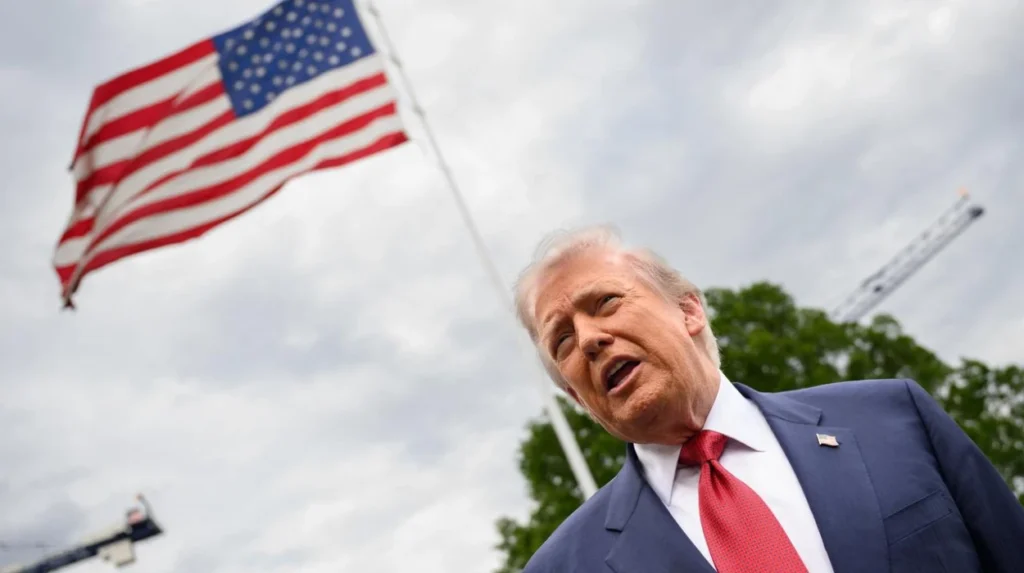
The U.S. President, Donald Trump, has strongly condemned the recent Iranian reply to the U.S.-backed peace proposal. In a post published on his personal website, Truth Social, on May 10, 2026, President Trump called Iran’s stance “TOTALLY UNACCEPTABLE.” This clearly indicates that Washington is highly dissatisfied with the ongoing negotiation process, which is taking place through the mediation of Pakistan and seeks to resolve the Gaza-related crisis and reopen the Strait of Hormuz.
Analysts say Trump’s language is not only a negotiating tactic but also a political signal to both domestic and regional audiences that he will not accept a deal he views as one‑sided or weak on security guarantees.
In his post, where he referred to the “one-page” 14-point plan, the United States made it clear that any long-term deal would have to be based on concrete limitations to Iran’s uranium enrichment process and clear commitments regarding security at sea in the Gulf region. With the rejection of Iran’s counter-offer through public pronouncements instead of privately seeking further information, President Donald Trump has set the stage for heightened diplomacy and the possibility of coercion by the United States.
Content and structure of the U.S. peace proposal
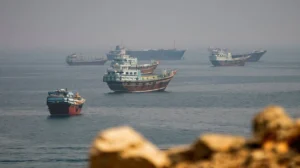
As per the U.S.-proposed draft, which was relayed via Pakistani intermediaries, the proposal is stated to be a memorandum of understanding in the form of 14 main points. Essentially, this proposed document aims to bring about a complete resolution to the conflict related to the Gaza war, involving the military operations that had from time to time pulled Iran-related elements into the picture. According to reports, U.S. authorities have been emphasizing that this draft should bring about the opening up of the Strait of Hormuz and curbing of Iran’s uranium enrichment.
What is crucial about the U.S.‑supported initiative, however, is that the security requirements are coupled with the offer of gradual sanctions relief, implying that economic motivation would have to be linked to certain measurable actions on the part of Iran. The strategy bears some resemblance to prior nuclear negotiations but is distinguished by the accentuated focus on regional deterrence and the urgent need to restore the access to one of the key international channels of trade. By constraining their offer to a one-page, fourteen-point list, U.S. representatives seem to be trying to avoid vague terms and push for decisive action.
Iran’s latest response and its main demands
The answer given by Tehran through the intercession of Pakistan is quite different, focusing entirely on the cessation of fighting across many fronts and safe passage through the Strait of Hormuz. The positions held according to reports from both state and independent sources include the demand for an absolute cessation of the fighting linked to the region of Gaza, compensation for any war-related damages suffered, and for the use of any remaining leverage on the Strait until their concerns are sufficiently taken into account. In relation to the issue of uranium enrichment and inspection, Tehran’s answer implies postponement of negotiations on this matter until after the resolution of the war-related situation.
Comments by Iranian officials highlight the non-negotiable nature of their minimum requirement, which is that
“We will not retreat or give up our rights.”
Such rhetoric has been adopted by Iran as part of the narrative in which the country portrays itself as having survived through many years of intimidation from the West, and that any deal will have to ensure that it regains not only economic respite but also prestige. However, this policy runs into a brick wall when dealing with US demands regarding the nuclear dossier, particularly since Iran has made advances in its uranium enrichment program.
Trump’s public reaction and diplomatic implications
What Trump did differently from previous presidents was to immediately and publicly call this response “TOTALLY UNACCEPTABLE,” when traditionally this type of assessment is made in private during the process of mediation. Trump essentially let everyone know that this offer from the Iranians falls outside any acceptable range for this administration. It has been hinted that the purpose of this tough-talk approach is twofold, both to demonstrate to Iran that the United States will not accept an agreement where Iran maintains an unclear future regarding its nuclear ambitions, but also to its regional partners.
Such language also reminds us of Trump’s previous statements in April when he claimed that he was “not satisfied” with an earlier Iranian peace offer, emphasizing again that he would leave the negotiations table if he saw that Iran was not willing to compromise sufficiently. Critics argue that the tough talk may backfire by escalating tensions even more, making it difficult for Pakistanis or any other mediators to come up with a solution to the problem. Given that the ongoing standoff between the two countries is now in its eleventh week with occasional ceasefire breaches occurring here and there, the time is running out for diplomacy.
Stalling talks and the risk of renewed military action
Although there have been several weeks of shuttle diplomacy spearheaded by Pakistan, the most recent one has left the peace process practically paralyzed. With the backing of the United States, the proposal, the offer by Iran, and the rejection by Trump are a classic example of what happens during the negotiation process, where there is hope followed by the toughening of positions and then the impasse. It is at this point when there is either an attempt to come up with a last-minute solution, or there might be renewed conflict. In this instance, however, the key points of contention have not changed; these include Iran’s refusal to accept limitations regarding its nuclear capacity.
Trump is yet to rule out the possibility of military action should negotiations fail to bear fruit. His prior pronouncements, especially regarding his displeasure with past Iranian offers, have been interpreted in Washington and neighboring capitals as suggesting that there is still a possibility that air strikes might be launched against Iran if it fails to get closer to the United States’ expectations. According to military experts and analysts, a resurgence of open conflict, particularly in the Strait of Hormuz, could cause another rise in the cost of oil and another wave of refugees.
Regional and global reactions so far
The reactions from the players in the Middle East region have been measured regarding the open conflict between the United States and Iran. While Gulf Arab countries, which have quietly favored the U.S. stance towards Iran, have voiced their support for the attempts to clear the Strait of Hormuz and reduce the capabilities of missiles and drones owned by Iran, they have advised caution to prevent a full-blown war in the region. On its part, Israel, which sees Iran as an existential threat, has positively received the U.S. tough stance against Iran, although some Israeli officials have privately warned about the possibility of escalation from different fronts in the region.
Internationally, both European nations and international institutions have warned that Trump’s rejection of the Iranian counter-proposal might jeopardize the hard work done by the negotiators in recent months. While some diplomats have discreetly encouraged the US administration to allow the Pakistani-brokered negotiation more time, citing the fact that Iran’s response in writing is a good indicator of how ready it is for dialogue after years of hostility on both sides, they acknowledge that Iran’s refusal to submit to any substantial restrictions on its nuclear program is still a big hurdle.
What a “satisfactory” response might look like to Trump
Beneath the fiery rhetoric, analysts point out that a satisfactory response to the US President’s demands should have several tangible components. These would include the adoption of measures that will reverse Iran’s efforts to enrich uranium on an industrial scale and will increase the scope of monitoring by the International Atomic Energy Agency. Additionally, the Iranian side should provide written assurances that it and its proxies will refrain from targeting commercial vessels transiting through the Strait of Hormuz or attacking neighboring countries in case of a ceasefire.
Third, such a response would probably have to accept some linkage between sanctions relief and the observance of these security and nuclear‑related commitments, rather than seeking economic relief as a standalone opening‑phase concession. If Iran were to soften its stance on these points, U.S. officials might then be able to present Trump with a revised framework that he could frame as a “strong” deal, even if it still involves some compromises. Until then, his public statements such as “TOTALLY UNACCEPTABLE” serve both as a pressure tactic and as a warning to Tehran that Washington interprets the current offer as falling short of the minimum requirements to secure a durable agreement.
The deeper political logic behind Trump’s move
The move by Trump to dismiss Iran’s counterproposal openly can be best analyzed within the context of a larger political strategy rather than an immediate response to the contents of the proposal. This is because the current government has always been known for its tough stance against Iran, and hence any attempt to accept the proposal would have led to criticisms from both local and regional partners. The use of such clear-cut language by Trump further confirms his reputation as a politician who prefers unpredictability and toughness in his dealings with hostile nations.
On the other hand, however, such an approach also runs the danger of taking the negotiation process down a dead end, especially considering that the Iranian government may take President Trump’s remark regarding their offer as a personal insult instead of a negotiating tactic. It is also worth noting that Iranian officials tend to consider the pressure from Western countries as evidence of imperialist enmity.
Conclusion: diplomacy at a crossroads
As of mid‑May 2026, the peace process brokered by Pakistan stands at a crossroads. The U.S. proposal, Iran’s counter‑offer, and President Donald Trump’s public dismissal of the latter as “TOTALLY UNACCEPTABLE” have crystallized the central dilemma: whether either side is willing to make the concessions necessary to secure a stable, if imperfect, deal. For now, the diplomatic window remains open, but the temperature is rising, and the risk of slipping back into open conflict—especially around the strategically sensitive Strait of Hormuz—has grown more palpable with each passing day. How Iran chooses to respond to Trump’s rebuke, and whether Western capitals can find a formula that balances security, sanctions, and regional stability, will likely determine whether this bout of escalation ends at the negotiating table or on the battlefield.