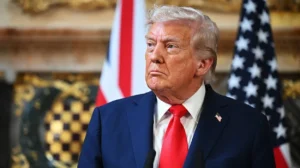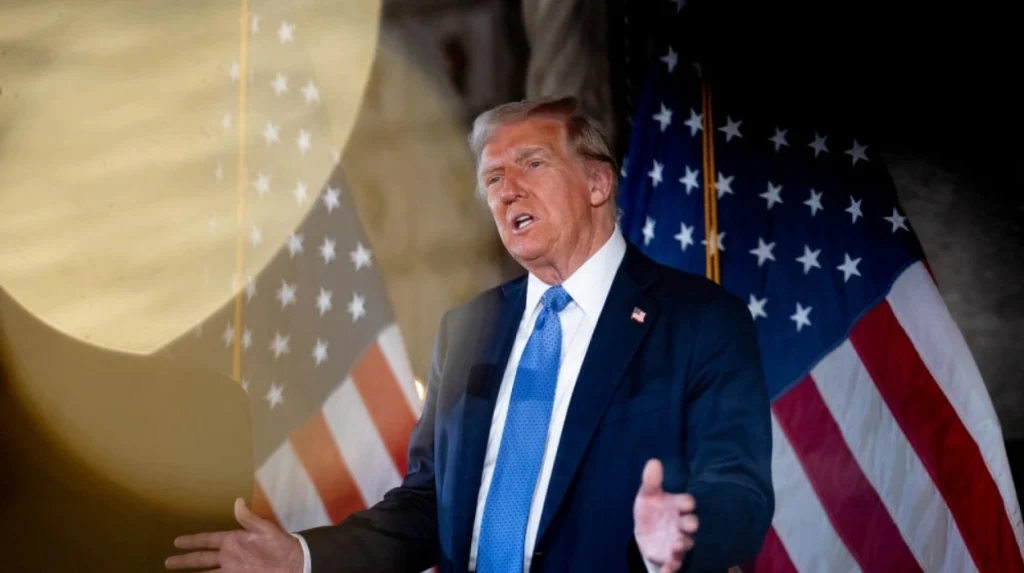
It is in the first half of 2025 that President Donald Trump has overseen a radical change in American foreign policy; a move that follows decades of multilateralism towards a more aggressive American-first approach. The policy is more geared towards national sovereignty, economic protectionism and decision-making which is unilateral compared to international co-operation or consensus based decision making. The aggressive policy adopted by Trump has destroyed established partnerships and reimagined the place of the United States in the world.
The most significant ingredient of this foreign policy change was the permission of targeted strikes against the Iranian nuclear facilities issued by Trump in June of 2025. The reason behind these actions was given as preventive actions that were undertaken with the aim of stopping regional forces and strengthening the American military superiority. At the same time, Trump also levied a 32 percent tariff on imports on Taiwan, which created tensions even with strategic partners. The regime views these actions as restorative measures in the national interest of a competitive global community rather than as provocative.
Disrupting Alliances And Building New Alignments
Pressuring Traditional Partners
The administration led by Trump has adopted a transactional policy towards foreign policy, in which it laid much focus on cost sharing and has been requesting that NATO members increase their defense spending. This has caused tension in the diplomatic front on the alliance and particularly on the countries in Europe that are still experiencing post-energy crisis and recovery after the pandemic. The American withdrawal of the U.S. in some of the multilateral structures, including the World Health Organization and the International Criminal Court, emphasizes the perceptions of the administration that international cooperation either contributes to the direct interests of the U.S. or is dispensable.
Embracing Strategic Adversaries
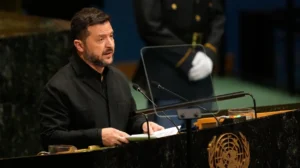
At the same time, Trump’s practices to re-balance the U.S. relations with its old rivals have attracted much attention. His advances towards President Vladimir Putin and an invitation that Ukraine was partially responsible in the 2022 Russian invasion raised eyebrows among the NATO allies. These events can be regarded as a conscious step bypassing the long-held bipartisan consensus that considered Russia a strategic threat.
Trump’s engagement with Russia is seen as a pragmatic attempt to forge cooperative avenues in areas like regional conflict mediation and energy stability. However, critics argue this risks legitimizing aggression and weakening collective Western deterrence efforts.
Economic Pressure As A Core Diplomatic Tool
Tariffs And Trade Revisions
In 2025, tariffs remain a central pillar of Trump’s foreign policy apparatus. The administration has reimposed and expanded duties on Chinese goods, accusing Beijing of unfair practices and intellectual property theft. In doing so, it has revived a trade war that affects global markets and supply chains, escalating tensions at a time when global economic recovery remains fragile.
This approach extends beyond China. Trump has reignited disputes with Canada and Mexico, threatening to withdraw from trade agreements unless favorable revisions are enacted. These moves are framed as efforts to restore American manufacturing and protect domestic employment. However, they have led to retaliatory tariffs and a cooling of bilateral relations.
Internal Debate On Economic Strategy
The domestic reaction to these policies is very divided. The supporters claim that re-establishing the clout over the trade can boost the national industries and restore the traditional anomalies. The critics are raising alarm that the uncertainty of the Trump trade message is attaching undue volatility to consumer and exporter confidence. The ability to sustain the weaponization of tariffs to use as a means of diplomacy is looked into by Congressional Democrats and a few moderate republicans.
Despite the change in the administration, people such as the Secretary of State Marco Rubio within its confines have argued to pursue such aggressive economic policy, especially against China. Rubio is focused on opposing the presence of Beijing in the important high-tech industry as well as the sphere of maritime security and supports the expansion of the story about geopolitical competition.
Military And Geopolitical Assertiveness
Engagements In The Middle East
The June 2025 bombing of Iranian nuclear targets by Trump was a culminating event in his foreign policy of the second presidential term. These strikes were in the form of precautionary measures against the recurring nuclear threat. They were also used as an indication of the American readiness to take independent unilateral and aggressive actions in the protection of its strategic interest.
Other plans in the Middle East, such as the proposal to turn Gaza into a special economic area by relocating its inhabitants by force, have been controversial and rejected by human rights organizations as well as most of the allies of the United States. Although the administration has packaged this as a creative way out of regional conflict, the resolution has gained widespread international criticism.
Reframing American Power Projection
The regime demonstrates the military status as an image of force and deterrence. Trump has also enlivened an incarnation of the peace through power doctrine where observable concerns of military preparedness and activity are regarded as staving off widespread war disaster. It is however a strategy that could lead to miscalculation and settling down into extended regional conflicts.
These moves have also cast the U.S. into further isolation in multilateral peace talks on the international scene. European allies have complained about lack of consultation and with regard to the possible humanitarian consequences of American interventions.
Domestic And Global Reactions
Political Repercussions At Home
Trump’s foreign policy direction has sharpened existing political divides within the U.S. Congress. Democrats criticize the administration for sidelining diplomacy and fostering instability, while many Republican lawmakers remain loyal to the administration’s emphasis on strength and national sovereignty.
Public opinion is mixed. Surveys conducted in July 2025 show declining support among independents concerned about economic fallout and international credibility. However, Trump retains robust backing from his political base, which views his approach as restoring lost national pride and global assertiveness.
Allies Adapt To U.S. Unpredictability
Traditional allies, from Germany to Japan, are adapting to what they perceive as a more unpredictable and inward-focused American partner. Some are enhancing independent security capabilities and exploring new diplomatic groupings to reduce reliance on U.S. leadership. This trend reflects a broader recalibration of global diplomacy in response to Washington’s shifting posture.
Space For Rising Powers
It is believed that the non- commitment of a withdrawing U.S. in international institutions has afforded other actors. The Chinese are still increasing their presence in terms of infrastructure investments and trade acts, especially in Africa and Latin America. Russia, in its turn, tries to strengthen energy and military relationships with the countries that are disappointed in the unpredictability of the U.S.
This geopolitical reordering underscores the lasting impact of Trump’s policies not only on U.S. foreign relations, but also on the overall architecture of international order.
Rewriting Diplomatic Norms In Real Time
This person has spoken on the topic: Analyst @JacSarobahs recently noted that
“Trump’s 2025 foreign policy boldly rewrites decades of diplomatic tradition, combining economic coercion, military assertiveness, and alliance skepticism to reshape American power projection with profound global effects.”
THIS IS WHAT WINNING A 'SILENT WAR' LOOKS LIKE @LauraAboli_X
— Iam Breitbart (@JacSarobahs) July 21, 2025
If you’re wondering whether the tide is turning… it is.
You may not see it on the news, but piece by piece, the globalist house of cards is coming down — and Trump is doing exactly what he said he would: draining… pic.twitter.com/bCJ2uHr7Ga
The 2025 foreign policy of Trump is not only the change of strategy but also reframes the American leadership in the world. It is focused on sovereignty, strategic unpredictability, and bilateral leverage that do not accommodate traditional views of diplomacy. Will the development of disruption into a coherent long term doctrine or will it remain a set of impulsive reactions become the fundamental question facing U.S. foreign relations into the future, as the world reacts to this realignment of forces. The effects will not only define the position of America in the world, but also define stability and flexibility of the international order itself.