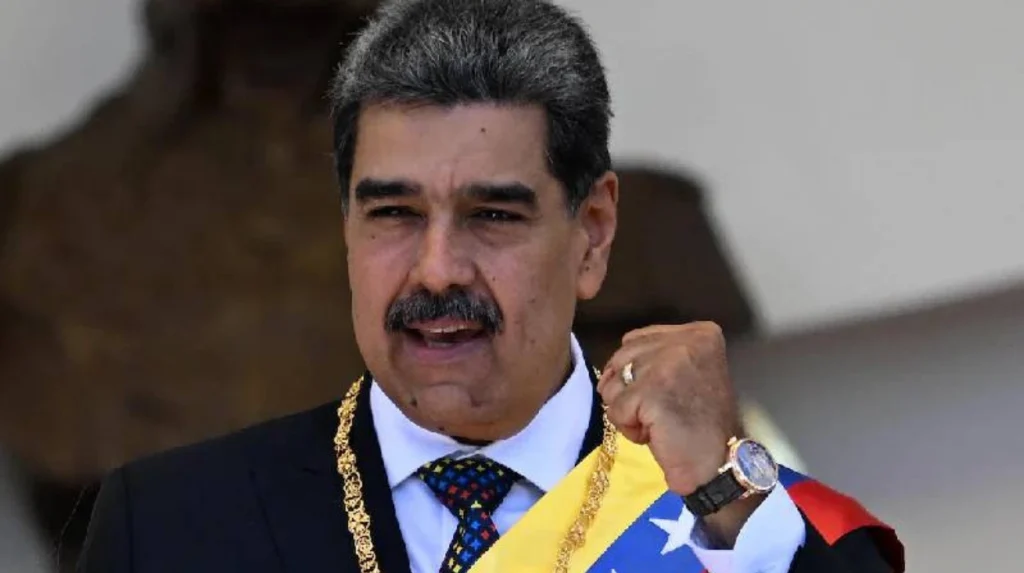
On July 25, 2025, the United States Treasury has announced updated sanctions against the Venezuelan crime group called the Cartel de los Soles according to which this criminal group is officially defined as a Specially Designated Global Terrorist organization. The appointment is part of the age-old argument by Washington that Venezuela President Nicolas Maduro is a head of a criminal narco-terrorist gang that is deep-rooted in the state organs. The broadened sanctions aim at further dislodging Maduro politically and financially as well as entrenching US regional counter-narcotics and security plans.
As per OFAC, the Cartel de los Soles labors hand in hand with organizations like the Sinaloa Cartel of Mexico and the Tren de Aragua that is located in Venezuela. These networks are involved in the trafficking of illicit drugs, trafficking in human beings, extortion, and the distribution of armory at large scales. According to the US government such alliances exist to destabilize the Western Hemisphere by selling illegal drugs into the US and financing strongmen governments with drug revenues. The measure taken by OFAC also encompasses freezing of economic resources of the involved individuals and organizations, together with the barring of the US nationals and institutions to do business with the latter.
Legacy And Continuity Of US Counter Narco-Terror Efforts
The most current initiative is an extension of those that were done during the Trump administration, which had indicted Maduro and others on levels of high officials upon charges of narco-terrorism. The US State department had at that time awarded multi-million dollar prizes on information tipping their arrests. That policy line declared Venezuela a narco-state, a situation in which organized crime activities are conducted with state interference and in security.
The Biden and subsequent administrations maintained these designations while reinforcing transnational enforcement networks. Recent developments include the deportation of around 250 Venezuelan nationals suspected of being affiliated with the Tren de Aragua gang. The deportation occurred as part of a diplomatic agreement that also secured the release of ten detained American citizens, illustrating how law enforcement and diplomacy remain intertwined in this evolving regional conflict.
Financial And Political Implications For The Maduro Regime
Cutting Off Illicit Revenue Channels
Targeting the Cartel de los Soles aims directly at the economic foundation of Maduro’s political survival. The regime is alleged to rely heavily on proceeds from narcotics trafficking to fund military units, maintain internal patronage networks, and circumvent international sanctions that have crippled Venezuela’s formal economy. In labeling the cartel a terrorist organization, the US has increased the legal weight that can be used to coordinate efforts with their counterparts across overseas locations so as to block funds, close and cut off financial channels as well as straining other governments to break all association with the regime-affiliated groups.
Since the GDP of Venezuela is dwindling due to sanctions and hyperinflation, these novel financial restrictions will likely enhance the internal instability of the regime. The move is also aimed at crippling the notion of laundering funds in Venezuela by using neighboring nations and offshore financial networks which have in the past proved to be the lifelines of sanctioned players.
Domestic Political Fallout And External Alliances
The Venezuelan government instantly condemned the designations as a US politically driven plan. Authorities referred to the action as extension of imperial aggression as they denied reports of narco-terrorist activity as a fiction, and a measure to legitimize the policy of regime change.
The sanctions are as the controversy over the re-election of President Maduro in the year 2024 is still undergoing defamation since the election was not held in the most transparent manner. The designation could compound the diplomatic isolation of Venezuela, whose legitimacy is not yet embraced by most members of the world community. Definitely on the other hand it can strengthen the alliance of Caracas with Russia, China and Iran, which have grown more presence in the absence of the Western withdrawal. All these alliances yield political and economic assistance, thus making the sanctions ineffective.
Geopolitical Reverberations And Regional Security Challenges
Sanctions Within a Broader Strategic Framework
The name can be classified under a hemispheric approach to take out transnational criminal networks that span the Americas. Cartel de los Soles through his liaisons with other gangs such as Colombia Clan del Golfo and Peru drug routes is one of the leading drugs peddlers in the transference of cocaine into North America and Europe. The US finds it important to disintegrate these channels to curb domestic opioid crisis and insecurity at the border.
Nevertheless, the criminal-political nexus on which the Venezuelan regime is based presents some special difficulties. Compared to non-state actors, such organizations are able to enjoy the protection of the state, the state intelligence services and the military infrastructure as well, which adds another level of complexity and political sensitivity to any enforcement.
Prospects For Regional Cooperation
Nevertheless, the US is interested in promoting greater cooperation in the region. Other nations like Colombia, Panama and Brazil have stepped up their efforts against narcotics with the aid of the US, by considering the Venezuelan criminal apparatus as having a destabilizing role across borders. A good enforcement of sanctions, exchange of intelligence information, joint arrests are some of the means of disarming the operational capabilities of these groups by the law enforcement agencies of the region.
The understanding that the problem of narco-trafficking is not only a criminal one, it is also a matter of governance and security that entail the threat to the state legitimacy and contribute to authoritarianism, is getting increasing recognition. The sanctions therefore accomplish a twofold purpose; that of lowering organized crime and also of undermining the political regimes that lead to organised crime.
Domestic US Considerations And Policy Narratives
Linking Narcotics Control With Homeland Security
The sanctions are just another safeguard of a domestic discourse that links foreign drug manufacture to domestic crises in the US. Escalating overdoses and surging interception of fentanyl and cocaine on the border are repeated talking points used by policy makers to support a more assertive approach abroad.
Nonetheless, Senator Rick Scott, leading proponent of Latin American hardening, said that the sanctions were a necessary move to protect American families and pushed to go further and name Venezuela a state sponsor of terrorism. This convergence in foreign policy and the national security aspirations means that the nation will still experience bipartisan support in any implementation programs it uses to smash foreign crime syndicates.
Legal Tools And Public Messaging
The designation as a Special Global Terrorist further strengthens the position of these criminal organizations in US law, providing an opportunity to take new deals of interdiction, prosecution and asset confiscation. The outing of these appointments also helps to clarify to the American people and world allies the US position further isolating the Maduro regime.
The government propaganda casts drug trafficking as a menace to living and associates it with enemy regimes, which may be widened to the case of other state-connected criminal networks back in Latin America.
Impact On Venezuela And Regional Dynamics
The implications of labeling the Cartel de los Soles as a terrorist entity go beyond financial pressure. The move increases reputational costs for Maduro’s allies, reduces Venezuela’s access to the global financial system, and may fuel elite defections or encourage internal fractures. However, the regime’s survival has historically depended on its resilience and adaptability amid international pressure.
In the near term, the effectiveness of these sanctions will hinge on enforcement capacity and regional cooperation. Long-term success requires integrating sanctions into a wider framework that includes economic support for neighboring countries, support for democratic opposition forces, and a viable pathway for political transition in Venezuela.
As regional instability continues to be shaped by narco-politics, authoritarian consolidation, and shifting geopolitical allegiances, the international community faces the difficult task of balancing coercive tools like sanctions with strategic diplomacy and humanitarian considerations.