U.S. President Donald Trump has done something he had long sworn not to do: he has militarily intervened in a major international conflict with his extraordinary decision to strike Iran’s nuclear installations, directly joining Israel’s air onslaught on its regional arch adversary.
The dramatic American strike, which is full of unknowns and risks, is the biggest foreign policy gamble of Trump’s two presidencies and targets Terhan’s most heavily guarded nuclear plant deep below.
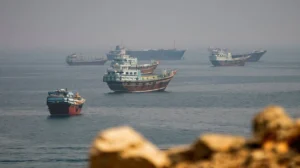
By closing the Strait of Hormuz, the world’s most vital oil route, attacking American military installations and allies in the Middle East, increasing its missile barrage on Israel, and enlisting proxy groups against American and Israeli interests globally, Trump, who insisted on Saturday that Iran must now make peace or face more attacks, could incite Tehran to retaliate, according to analysts.
Trump had wavered between calling for fresh talks to convince Iran to achieve an agreement to dismantle its nuclear program and threatening military action in the run-up to the attack, which he announced late on Saturday.
Could this lead to another Middle East war?
Such actions might lead to a more extensive and drawn-out battle than Trump had anticipated, bringing to mind the “forever wars” that America fought in Afghanistan and Iraq, which he had called foolish and vowed never to be involved in again. The military capabilities of the Iranians are severely diminished and crippled. However, they can react in a variety of asymmetric ways. This will take time to resolve.
Experts predict that military action would eventually force Iran to conclude that nuclear weapons are required for deterrence and that diplomacy is not of interest to Washington. Iran’s vast nuclear expertise cannot be destroyed by military action alone. Although the attacks would hinder Iran’s program, they will also make Tehran more determined to reassemble its delicate nuclear operations.
How might Iran retaliate against the U.S. and Israel?
It is unclear what Iran will do next, but it has hinted that it may strike soft targets of Israel and the United States, both inside and beyond the are,a as part of its retribution. However, Iran could be able to go back to the bargaining table.
However, Iran didn’t seem too interested in making any compromises in the immediate wake of the American strikes. An Iranian state television analyst declared that all American citizens and military personnel in the area would henceforth be considered acceptable targets, while Iran’s Atomic Energy Organisation declared that it would not permit the growth of its “national industry” to be halted.
According to some observers, if Tehran carries out significant retaliation or takes steps to develop a nuclear weapon, Trump, whose administration has previously denied any intention of overthrowing the Iranian government, would be persuaded to pursue “regime change.” Consequently, there would be more dangers.
If Iran’s leadership believed its existence was in danger, it would promptly launch “disproportionate attacks.” However, Tehran will also need to consider the repercussions. Closing the Strait of Hormuz would harm China, one of Iran’s only strong friends, but it would also cause Trump issues due to rising oil costs and possible inflationary effects in the United States.
Trump will also have to deal with resistance from the anti-interventionist faction of his Republican MAGA base, in addition to the tremendous reaction he is already receiving from House Democrats over the Iran assault. Six months into his second term, Trump is now entangled in a significant diplomatic issue, whereas during his first term, he faced none.
Despite his aspirations for a brief and limited U.S. military engagement, the history of such confrontations frequently had unexpected repercussions for American leaders. Trump’s campaign pledge to swiftly end the conflicts in Gaza and Ukraine will undoubtedly put his motto of “peace through strength” to the test more than ever before, particularly given his establishment of a new military front.