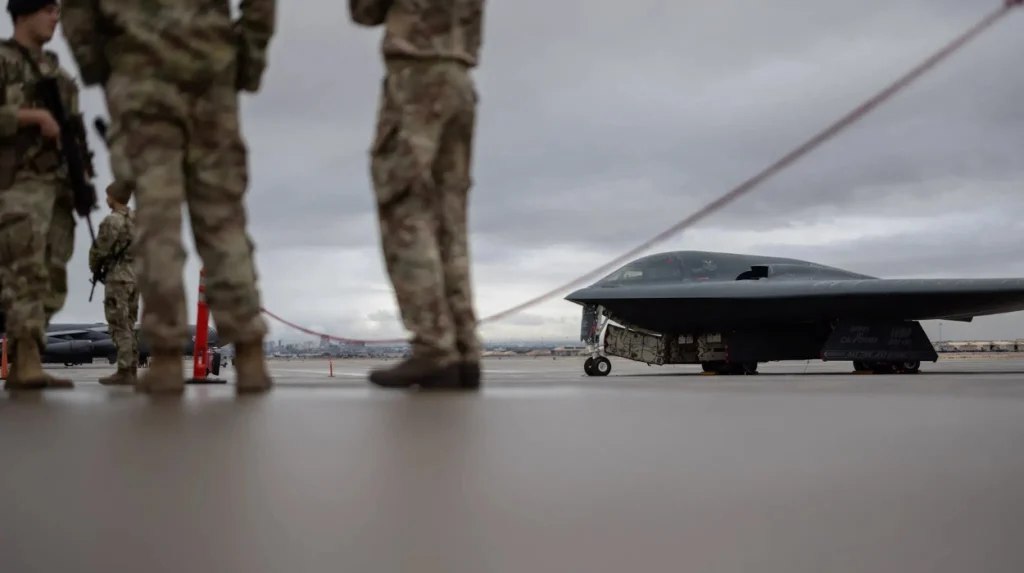
Due to ongoing conflicts in the Middle East, especially in Yemen, the United States risks losing its deterrent weapons against China. This jeopardises the US military’s capacity to uphold the essential deterrence capabilities balance, according to The New York Times.
Top US Army officials are increasingly worried that the Pentagon will soon need to redeploy long-range precision weapons from the Asia-Pacific to the Middle East because of ongoing hostilities and the frequent expenditure of ammunition in combat operations.
This, according to The New York Times is reporting based on congressional sources, is because of the severe pressure placed on the US military as a result of the Middle East wars, particularly the bombing of Yemen, begun by President Donald Trump.
The presence of American warships and aircraft in the Middle East after the October 2023 Israel-Gaza conflict, as well as Houthi militant attacks on ships in the Red Sea, has added to a steep decline in US readiness in the Asia-Pacific region.
The rapid work pace and ongoing assaults are pushing the US military into situations where even the simplest equipment upkeep is challenging.
President Trump’s team members, such as Defense Secretary Pete Hegseth and Deputy Defense Secretary Elbridge Colby, maintain that America needs to put emphasis on shoring up its military presence in Asia to challenge China’s growing military ambitions.
Government officials maintain that America’s military aid to Ukraine for defending itself from Russia, combined with extended military involvement in the Middle East and Afghanistan, has siphoned valuable resources from Asia. If Israel targets Iran’s nuclear enrichment facilities in the next few months and triggers a broader Middle East conflict, the Trump administration would likely increase U.S. military involvement region.
Confrontation escalation between the United States and the Houthis
Pentagon authorities informed allied delegates, legislators, and their assistants in confidential briefings that the U.S. armed forces have attained only limited progress in dismantling the Houthis’ vast reserve of missiles, drones, and launch systems.
A senior Defense Department representative recently told congressional assistants that the Navy and the Indo-Pacific Command were “very worried” about how quickly the military was depleting munitions in Yemen, a congressional representative said.
The Navy’s overall reserves were already significantly below intended objectives before President Joseph R. Biden Jr. initially directed the U.S. armed forces to strike the Houthis a year and a half ago to attempt to stop their attacks on commercial vessels in the Red Sea.
The senior defense representative told congressional aides that the Pentagon was now “risking genuine operational issues” in the event of the outbreak of any confrontation in Asia, a congressional representative said.
In reply to inquiries about whether U.S. military strategies in the Pacific might be affected by a shortage of accessible munitions, a spokesperson for Admiral Paparo seemed to minimise concerns. “The U.S. armed forces offer adaptable deterrence measures to safeguard U.S. national interests across combatant commands,” said the spokesperson, Cmdr. Matthew Comer, “while consistently maintaining a prepared, competent, and deadly force in the Indo-Pacific to ensure national defense and to react to any emergency.”
During a visit to Asia two weeks ago, Mr. Hegseth attempted to reassure partners that the United States remained dedicated to deterring “threats” posed by China in the area.
The long-range weapons employed in the Yemen campaign are Tomahawk cruise missiles fired from ships. They are a form of glide bomb called the AGM-154 Joint Standoff Weapon and the low-observable AGM-158 Joint Air-to-Surface Standoff Missile, according to U.S. officials. Those are exactly the kinds of weapons that U.S. military planners assert would be needed to fend off an air and naval attack by China’s People’s Liberation Army in the South China Sea and the East China Sea and the Pacific.
The armaments are stored in stockpiles at U.S. military installations on Guam; in Okinawa, Japan; and other locations along the western Pacific, the authorities say. The Pentagon has not yet been required to draw from those reserves to combat the Houthis, but it may need to do so shortly, they say.