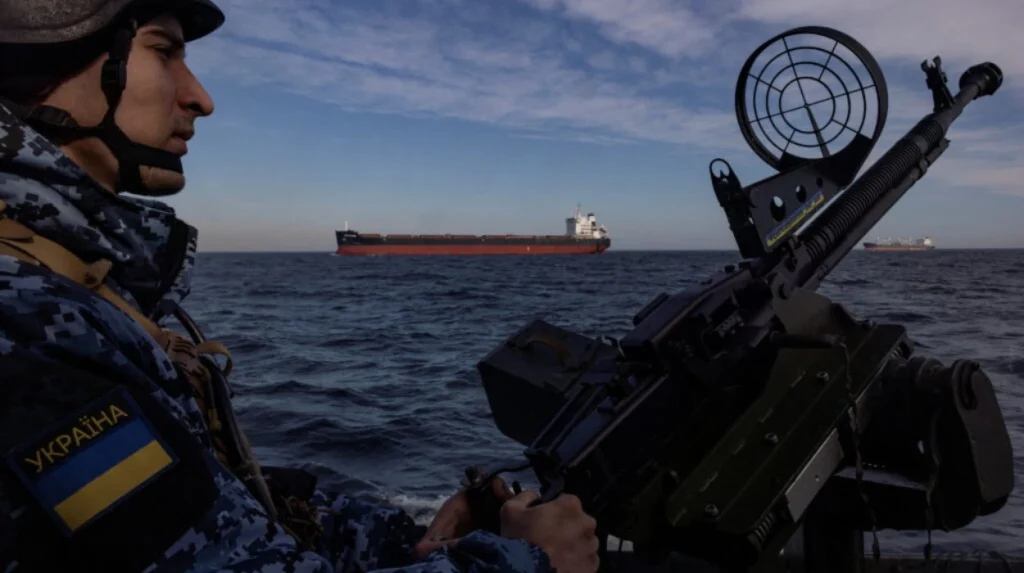
The outcome of several days of US shuttle diplomacy in Riyadh is disappointing. The United States aimed to secure a cease-fire agreement between Ukraine and Russia regarding maritime issues.
While this would be a beneficial step, it is not significant because the Black Sea has experienced minimal kinetic activity for almost two years. Ukraine effectively won naval dominance when its drones forced the Russian Black Sea Fleet out of Crimea and into the eastern part of the sea. The Trump administration pursued this agreement since the Kremlin has indicated it would not consent to the overall cease-fire that Kyiv agreed to two weeks prior. Putin aims to prolong negotiations as he seeks to capture additional Ukrainian territory.
Regrettably, the Trump administration, while trying to convince the Kremlin to agree to a naval cease-fire, made additional concessions. As stated by the White House, these concessions involve US assistance to “restore Russia’s access to the global market for agricultural and fertilizer exports, reduce maritime insurance costs, and improve access to ports and payment systems for these transactions.” These concessions are significant for what should be easy gains for an aggressor who turned down Trump’s proposal for a general cease-fire.
The official statement from Russia explicitly linked the cease-fire’s implementation to the removal of several sanctions. The issue is that significant relief from sanctions would greatly benefit the struggling Russian economy, enabling Putin to sustain the land war he is unwilling to end.
While many critique Trump’s strategies, the outcomes are undeniable. Europe experienced greater peace and security than before or after. Currently, the Trump administration is striving to end the largest conflict in Europe since World War II. Numerous foreign policy specialists claim they would approach it differently, but the real test will come if the war in Ukraine can be resolved in the next few months—a possible, if not probable, scenario. Achieving this would mark a significant foreign policy success. In this light, today’s announcement represents a move toward limiting the conflict and paving the way for lasting peace.
A key difference exists between the US and Russian interpretations of the “Outcomes of the US and Russia Experts Groups on the Black Sea.” Significantly, the Russian version states that Moscow’s compliance with the terms relies on the removal of sanctions targeting specific financial institutions, reestablishing links between those institutions and the Society for Worldwide Interbank Financial Telecommunication (SWIFT) messaging service , opening correspondent accounts, and lifting trade finance restrictions, among other requirements. These conditions are omitted from the statement issued by the White House.
The topic of lifting sanctions was addressed during the Riyadh meetings. However, removing restrictions on Russian financial entities and re-establishing connections for Russian banks with SWIFT is quite complex and necessitates the consensus of international partners. The European Union (EU), the United Kingdom, Japan, Canada, Switzerland, and Australia, among others in the Group of Seven (G7) sanctions coalition, continue to enforce sanctions on Russian banks. This includes Rosselkhozbank (the Russian Agricultural Bank), a key institution from which Russia seeks the lifting of sanctions as part of the negotiations.
If the United States decides to lift sanctions on Russian financial institutions unilaterally, it will pose significant compliance challenges for the global financial system and US banks operating internationally. Additionally, SWIFT severed connections with certain Russian banks as designated by the EU. Being headquartered in Belgium, SWIFT must adhere to EU laws and comply with sanctions regulations.