Haiti’s reception of nearly 200,000 forced deportees in 2026, as reported by the United Nations, lands on a country where gang violence, mass displacement and institutional breakdown have already pushed millions to the brink. The UN’s warning, delivered during an emergency Security Council meeting on 28 August, comes just days after a brutal massacre in Kenscoff that left at least 47 dead and dozens kidnapped, underscoring how returnees are being sent back into a landscape where basic protection can no longer be assumed.
A Return Flow That Outpaces Capacity
While the number of nearly 200,000 individuals forcefully expelled from their homes into Haiti within the first eight months of 2026 is just a number, it is the test on a state which has de facto lost its grip on most of the territory within and around the capital city. As stated by Indrika Ratwatte, acting assistant secretary-general for humanitarian affairs, this number has increased by at least 20,000 compared to the same period in 2025, meaning that there has been an approximate 10% growth in one year. This process takes place amid the fragile background where the violence conducted by gangs has caused displacement of 1.5 million Haitians, or about 10% of the population, where more than 50% of the 12 million citizens need humanitarian assistance.
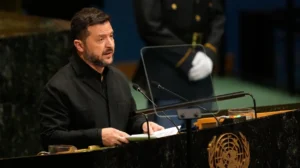
Ratwatte told the Security Council that
“nearly 200,000 people were forcibly returned to Haiti in the first eight months of this year”,
adding that this was
“at least 20,000 more than the same period last year”.
The Kenscoff Massacre: Violence at the Doorstep of the Capital
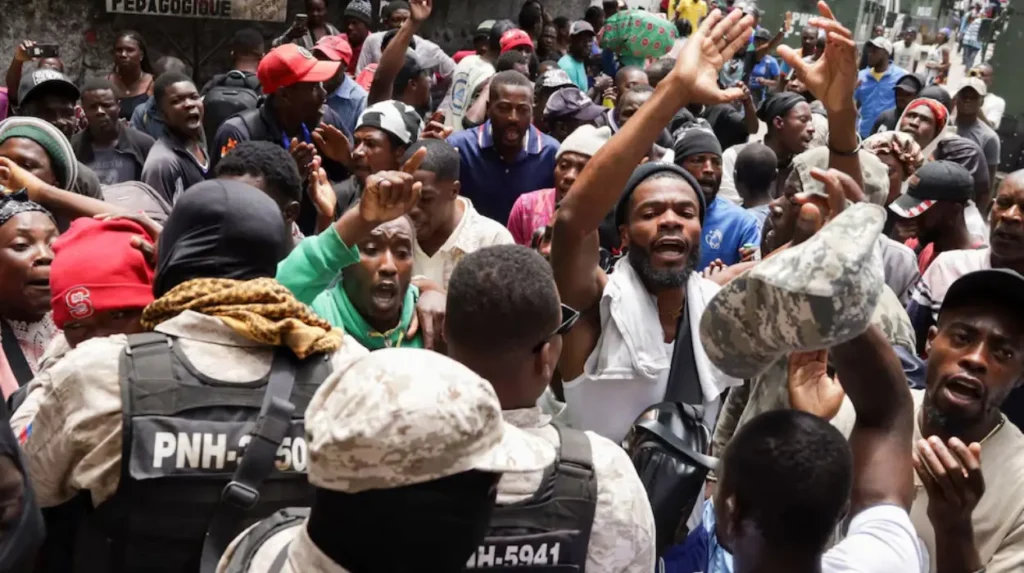
The UN statement was made in light of the massacre in Kenscoff. In the night of 23–24 August, gunmen entered the hilly community situated near Port-au-Prince, burned their homes, murdered them, and abducted others. In the morning, at least 47 people had died, 22 others were wounded, and over 50 were abducted according to UN reports and rights groups. Amongst the victims were internally displaced people who sought refuge in a church thinking the town was safe compared to the capital city. The attack is being blamed on the Viv Ansanm gang alliance that has extended its presence in areas previously considered to be safe. After the incident, over 2,600 people left their home in Kenscoff and joined thousands who have become internally displaced within the country. For those families welcoming back deported members in the airports in Cap-Haïtien and Port-au-Prince, the lesson is clear – there might not be any safe area to go back to.
Who Is Sending Haitians Back — and Why Now
The UN’s “nearly 200,000” figure covers all forced returns to Haiti in 2026, not only U.S. deportations. It includes large-scale expulsions from the Dominican Republic and other neighboring states, which together account for a significant share of the flow. Haitian migrant-support groups estimate that more than 140,000 Haitians were deported from neighboring countries in the first half of 2026 alone, with the Dominican Republic the main sender.
The U.S., however, is now at the center of political controversy. Following its successful legal fight against TPS for approximately 350,000 Haitians, the Trump administration decided to resume deportations to a country where flights were off limits for years due to security considerations. One of the first major deportations to happen on August 20-21 involved 160-162 Haitians with TPS status flying to Cap-Haïtien. Since December 2025, flights of deportees from the U.S. to Haiti have been making stops in Alexandria, Louisiana, and Miami, before reaching their destination in Cap-Haïtien, as evidenced by flight-tracking data used by rights organizations. The trip ends not with a welcome home party but with uncertainty for these people since they enter a country whose public facilities are destroyed, and who is controlled by armed groups on key roads.
“Haiti Is Not Ready”: Warnings from the Ground
On the ground, Haitian organizations that work with returnees describe a system at or beyond capacity. The Group Supporting Refugees and Returnees, which assists deportees and refugees, has repeatedly cautioned that
“Haiti is not ready to receive this number of migrants who were in the TPS program”.
The group points to the 140,000-plus deportations from neighboring countries in the first six months of the year as evidence of a regional trend that Port‑au‑Prince cannot absorb.
These warnings echo longer-standing concerns from international rights organizations. Human Rights First and other activists have argued that Haiti is too dangerous and lacks the resources to handle large influxes of returnees, noting that gang violence, hunger and poverty have already left millions dependent on aid. In their view, the combination of mass returns and escalating violence risks creating new waves of displacement, both internal and outward toward neighboring states.
A Humanitarian System Under Strain
Within Haiti, the humanitarian situation is desperate without even taking into account the extra challenge of deportations. During the second quarter of 2026 alone, there were 1,408 deaths and 656 people injured due to gang violence, as well as 326 cases of sexual assault reported at BINUH, the UN office responsible for Haiti. These numbers are indicative not just of the lethal nature of gangs in the country but also of the impunity with which they act, frequently attacking civilians, extorting companies and restricting access to and from their communities.
The incident at Kenscoff is a classic example: an organized and swift attack on a community where people found refuge from displacement, kidnappings of victims to extort money, and the torching of their houses to terrorize them. Amnesty International, denouncing this massacre, called for urgent justice and protection in view of the fact that in this massacre, dozens of people, including displaced people hiding in the church, were murdered and kidnapped.
Politics, Elections and the Question of Legitimacy
The deportations and the violence are unfolding as Haiti prepares for presidential elections scheduled for December 2026, billed as the first in more than a decade. Yet the scale of gang control, displacement and insecurity raises serious doubts about whether credible voting can take place. A UN-backed Gang Suppression Force was authorized in September 2025, but by August 2026 reporting indicated that neither this force nor national operations had restored the level of security needed for nationwide elections.
In this environment, every policy decision that affects population movements — whether TPS terminations, border crackdowns or deportation flights — carries political weight. For Haitian authorities, already struggling to project legitimacy beyond pockets of the capital, the arrival of thousands of returnees with limited support structures feeds narratives of state failure. For sending countries, particularly the U.S. and the Dominican Republic, the calculus is shaped by domestic politics, migration pressures and security concerns, often with limited regard for conditions on the ground in Haiti.
The Human Face of the Numbers
Within the statistics from the United Nations are the real life stories that show the human costs of the interaction between the policies and the violence. The deported speak of arriving at Cap-Haitien or Port-au-Prince with nothing more than what they are wearing, only to learn that the families have been forced out of their homes, jobs are hard to come by, and travel routes have been cut off by roadblocks manned by armed men. Some have been deported after spending many years away and building a life through TPS; others are being deported right back into communities from which they were running to escape gangs. For those who managed to survive the killings in Kenscoff, the trauma is further exacerbated by the fact that the killing spree there was part of a much larger trend toward gang expansion. As one community leader explained to journalists in the days following the murders:
“The message from the gangs is very clear: nowhere is safe, and anyone who opposes them will pay collectively.”
What the UN Warning Means for Policy
Indeed, it would appear that the UN’s emergency briefing and the alarming figures that came out of it are supposed to act as a signal of policy as much as one of humanitarian need. The point made about the almost 200,000 people being deported back to Haiti within eight months and the corresponding rise in the numbers of murders and displacement is a challenge from UN officials to the sending countries to re-examine the rates and numbers of returns. In essence, the idea seems to be that deportation policies, designed as migration controls, are meeting up against a situation where the receiving country cannot ensure safety and basic means of sustenance for those deported there.
For the Security Council, the question remains whether this leads to any concrete action such as increasing pressure on the armed gangs, increased support for protection mechanisms and receptions, and even limits on returns to areas of danger. At present, what exists are only warnings, emergency briefings, and statistics but no agreed mechanism to halt and alter the flow of people.
A Crossroads for Haiti and Its Neighbors
The arrival of almost 200,000 forcefully repatriated individuals to Haiti in 2026 is much more than news regarding the flows of migrants; it is a litmus test for the nation already riven by gang violence, displacement, and state failure. The massacres in Kenscoff with dozens killed and kidnapped serve as a harsh reminder that violence does not necessarily only happen in the notorious neighborhoods of Port-au-Prince but can happen anywhere. With the continued flow of people and the upcoming election, the big question is whether the region and the world would see Haiti as a place to be repatriated or protected.