President Donald Trump’s announcement that the United States has reached an agreement to secure majority control of more than 65 billion barrels of Venezuela’s proven oil reserves is being framed in Washington as a transformative energy and geopolitical move. In a Truth Social post on Friday, August 28, 2026, Trump declared,
“BREAKING NEWS: The United States of America has just entered into an Agreement with the Country of Venezuela on, THE BIGGEST OIL DEAL IN WORLD HISTORY!”
He added that the arrangement, negotiated by Secretary of State Marco Rubio and Secretary of War Pete Hegseth with Venezuela’s “Highly Respected Interim President” Delcy Rodríguez and private partners, would give the U.S.
“majority U.S. control of more than 65 BILLION BARRELS of proven Oil Reserves in Venezuela, at no cost to the American Taxpayer.”
The White House’s immediate framing is that this will
“MORE THAN DOUBLES American Oil Reserves, greatly increases our Oil Supply, and will substantially lower Gas Prices for all Americans.”
Yet even as the administration touts the scale and consumer benefits, many of the legal, institutional and operational details that would determine whether this US–Venezuela oil deal can be implemented remain opaque or contested.
The numbers behind the announcement
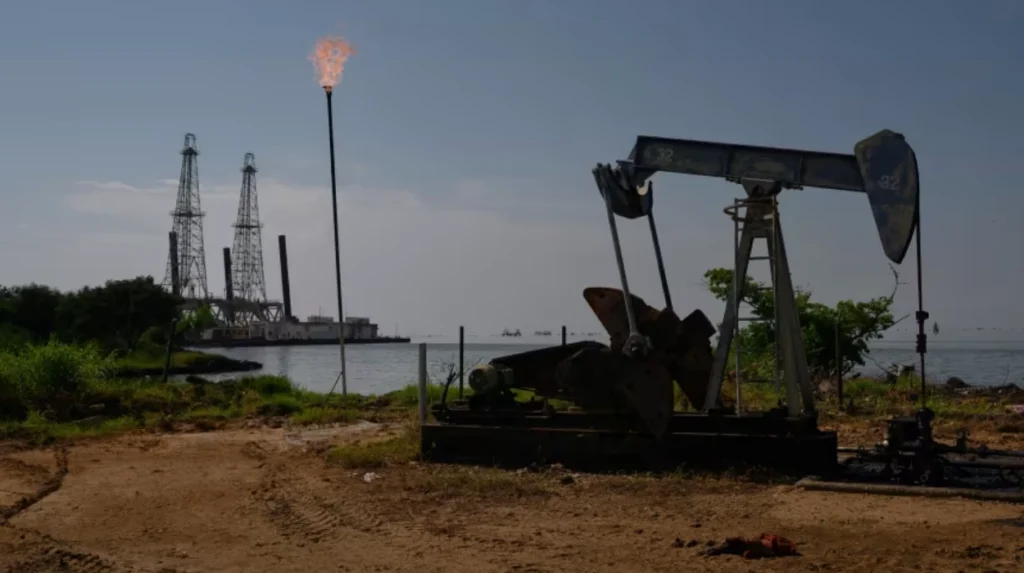
Central to the deal is the size of the reserve base with 65 billion barrels of proven reserves in 17 key oil fields to be exploited through a joint venture between private companies, which a White House official believes could be among the top two private oil companies in terms of reserves in the world. As CNN reports, the deal ensures an effective 55 percent ownership of production in this joint venture for the United States, whereas Venezuela holds the remaining amount along with private players.
As stated by a U.S. official, these fields will have 100-year concession agreements indicating the long-term commitment behind this deal. Meanwhile, on the Venezuelan side, the administration of Rodríguez has its own numbers in the deal. According to the statement released by them, the deal consists of over $100 billion of investment and generates over $209 billion of revenue for the Venezuelan government in the form of taxes.
Rodríguez said the deal will enable
“a significant increase in oil production with the participation of private operators,”
positioning it as a catalyst for reviving a sector that has suffered years of underinvestment, sanctions and mismanagement. She added that the arrangement is intended to help consolidate Venezuela as an “energy-producing power,” using its hydrocarbon wealth for
“national development, job creation, higher worker incomes, and public well-being.”
These figures matter because they attempt to answer two immediate political questions: how the U.S. side justifies the deal to American voters concerned about gasoline prices, and how the Venezuelan side justifies it domestically as a sovereign, development-oriented move rather than a concession of national assets.
Why 65 billion barrels is strategically significant
Venezuela holds the largest amount of proven oil reserves globally, estimated to be more than 300 billion barrels. The 65 billion barrels of oil cited in the oil deal between the United States and Venezuela constitute approximately one-fifth of those reserves, which lie in the reserves deemed strategic by Caracas and its partners. With the U.S. reserves ranging from 40 to 50 billion barrels, depending on the year and estimation method used, an addition of 65 billion barrels to this figure constitutes a significant increase in the reserves held under U.S. control, despite the oil being on Venezuelan soil.
This is the logic behind the consumer price argument by Trump. According to him, putting an appreciable amount of Venezuelan oil reserves under the control of the U.S. should increase the amount of oil supply in the world, ultimately leading to lower prices at the pumps. The administration has consistently mentioned that this deal will benefit the Americans suffering high oil prices due to the ongoing war with Iran that has reached six months without resolution.
The structure: a public–private vehicle with long concessions
Despite the text not being published yet, the available reports have already revealed that the agreement is of a hybrid nature. The U.S. government, represented by the country’s negotiators, is going to collaborate with an unnamed private firm that would form a new private entity to obtain the long-term rights to exploit the 17 fields. The fact that according to the statement of the White House official, the U.S. receives 55% of effective output share indicates that the oil located below does not become a property of the U.S. government but becomes a majority stake of the oil production from these resources after their development. The 100-year concessions reported by a U.S. official show that the agreement is supposed to outlive any one administration and establish a framework for investment, production objectives, and revenue sharing which is valid for a century.
Such long-term nature of the concession is quite unique in modern energy politics and indicates the intention to make the fields serve the interests of the U.S. in its hemispheric energy policy for centuries. The focus of the interim Rodríguez administration on $100+ billion in investment and $209+ billion in tax revenue demonstrates that the fiscal component is crucial for the political promotion of the agreement. By accentuating the jobs, wages of the workers, and social welfare, the interim government wants to show that the US–Venezuela oil agreement is not about the sovereignty losses but about practical use of idle resources.
The political actors and the legitimacy question
A critical fault line in this story is who, precisely, is empowered to sign such an agreement on behalf of Venezuela. Trump’s statement explicitly names Delcy Rodríguez as Venezuela’s “Highly Respected Interim President,” and presents her as a co-equal negotiator alongside Rubio and Hegseth. Rodríguez, in turn, has issued statements welcoming the deal and detailing its economic rationale, saying it
“will have a significant impact on our nation’s revival.”
But several sources indicate that important Venezuelan agencies linked to Nicolás Maduro, such as the oil ministry, PDVSA, and the Energy Department, did not immediately react to requests for comment regarding the news. In addition, some media have pointed out that the press office of the Venezuelan government in Caracas had not confirmed at once the existence of this agreement, raising doubts about whether all state organs acknowledge the right of the Rodríguez administration to enter into an agreement involving a century-long concession of oil from Venezuela.
This is relevant for the execution of the deal. Even if there is some sort of understanding between the U.S. and the members of Rodríguez’s government, the realization of major oil projects is bound to involve the participation of PDVSA in terms of infrastructure, security, regulation, and perhaps even acknowledgment of other countries and international organizations.
International and market implications
The immediate international reaction has been cautious, with much of the early coverage focused on the scale and novelty of the arrangement rather than issuing formal endorsements or condemnations. Analysts are watching several dimensions: how the deal interacts with OPEC production quotas, whether existing contracts with other foreign partners are affected, and how sanctions policy will be adjusted to accommodate a surge in Venezuelan crude under U.S.-aligned control.
Energy markets are likely to parse the announcement for signals about future supply. If investors believe the US–Venezuela oil deal will eventually translate into higher, more reliable Venezuelan output, that could moderate risk premiums on crude prices. However, the lack of detail on timelines, the identity of the private operator, and the domestic Venezuelan legal pathway means that any supply impact is probably medium- to long-term rather than immediate.
For U.S. allies in the hemisphere, the deal raises questions about the future architecture of energy security in the Americas. A century-long U.S. stake in Venezuelan fields could reshape regional dynamics, potentially reducing dependence on other suppliers while also creating new dependencies on the stability of the U.S.–Venezuela arrangement.
Domestic politics: gasoline prices and midterm pressures
Inside the United States, the announcement lands in a politically sensitive environment. Trump is facing increasing pressure as midterms loom and gasoline prices have spiked, partly attributed in media reports to the ongoing war with Iran. Framing the US–Venezuela oil deal as a direct response to high pump prices allows the administration to present a concrete, numbers-driven solution: more reserves, more supply, lower costs at the station.
The emphasis on
“no cost to the American Taxpayer”
is also politically calibrated, aiming to preempt criticism that the government is subsidizing foreign oil projects or assuming financial risk. Instead, the narrative is that private capital will fund the investment, while the U.S. secures a majority share of output through the negotiated structure.
Risks, unknowns and the road ahead
In spite of the aggressive tone used, some uncertainties might arise with regards to this US-Venezuelan oil deal. Firstly, the legitimacy of this deal is not clear since the specific treaty, act or executive order according to which the United States will be given 100-year concessions and 55% share of production in Venezuela has yet to be revealed. Secondly, the name of the private partner was not revealed yet and, therefore, there are doubts as to whether they have the necessary resources and experience. Thirdly, the political situation in Venezuela is rather complicated.
In case the Maduro-affiliated bodies refuse to acknowledge the authority of the Rodríguez administration to sign this deal, the state-owned oil company PDVSA will be unwilling to implement this deal in practice. Fourthly, the time when production increase and revenues will start flowing has not been determined and, therefore, the benefits promised to consumers might come too late. And fifthly, there is a geopolitical uncertainty. This deal that will result in the control of a large part of Venezuelan oil resources by the United States will most probably cause negative reactions from the other superpowers interested in Latin American oil.