Tehran’s agreement to draft formal conditions for reopening the Strait of Hormuz marks a pivotal shift in the six-month U.S.–Iran war, converting a vague threat into a negotiable bargaining chip while exposing the fragile balance between de-escalation and continued confrontation. The move follows sustained pressure from mediators—Qatar, Pakistan, and Oman—who have pressed Iran to clarify what it requires to restore normal shipping through the world’s most critical oil chokepoint, even as Washington doubles down on economic coercion and insists the lanes are already open.
The strategic weight of Hormuz in a six-month war
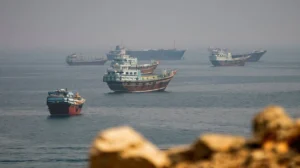
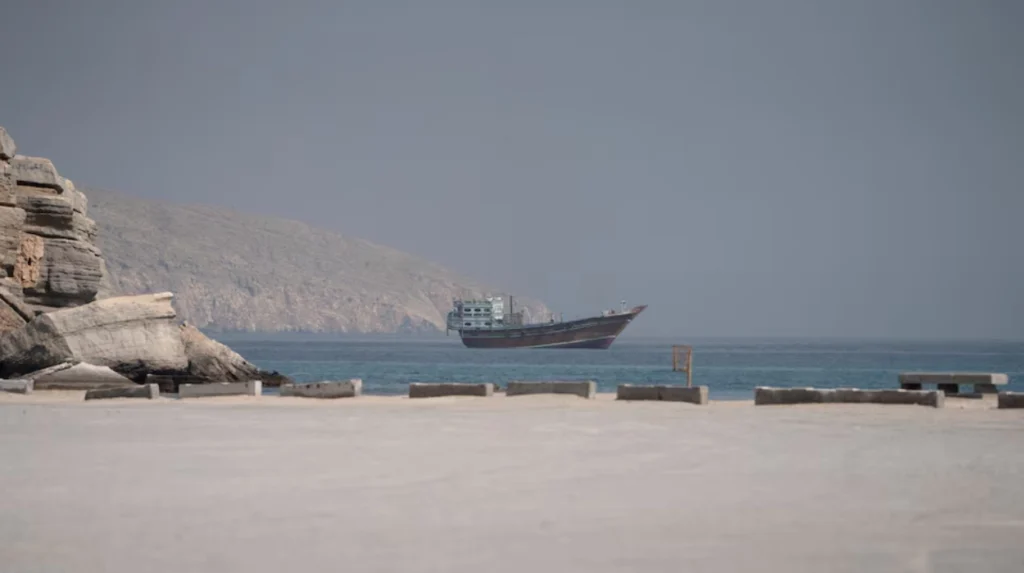
While the Strait of Hormuz is a route for shipping goods, it is the geographical key to Iran’s power. Prior to the war, the 34km wide channel from Iran to Oman was used to transport up to 20% of the world’s oil supply, which clearly explains why any pronouncements regarding transit rules are relevant in the energy sector and politics. As soon as the war broke out, Iran declared that it would attack any ship passing through the channel without their permission, and despite the assertion of the US forces that the mines were removed and all the channels reopened, the transit levels have fallen to 5–15% of their usual level because the shipping companies take into account the risks. There are some statistics of the casualties.
The International Maritime Organization of the UN recorded 70 accidents in the strait during the war, in which 19 people were killed, which is the information that is often used by the mediators as an argument for both sides to normalize the situation in the corridor. For Iran, the Strait of Hormuz is a “geographical nuclear bomb” as called by Al Jazeera correspondents.
Mediators close the gap: Qatar, Pakistan, Oman
There has been increased diplomatic activity involving the strait within the past week. Qatari Prime Minister and Foreign Minister Sheikh Mohammed bin Abdulrahman Al Thani arrived in Tehran on Aug 28 and underscored
“the importance of respecting freedom of navigation in the Strait of Hormuz in accordance with international law,”
indicating the role played by Doha as an intermediary between Tehran and Washington. Delegations from Pakistan and Oman have also arrived in Tehran, with talks by Pakistan allegedly being led by the army chief while those by Oman center on traffic management that can serve as a foundation for the corridor.
The mediators’ ask was straightforward: set out your conditions explicitly. Iran’s Supreme National Security Council Secretary Mohsen Rezaei confirmed that Tehran is preparing that list, acknowledging that
“mediators had asked Tehran for its conditions to open the Strait of Hormuz and … Iran was preparing a list … [conditions] include ending the war in the region.”
That admission transforms Hormuz from a perpetual threat into a conditional instrument, one that could be switched on if core demands are met.
What Iran wants: conditions, red lines, and the MOU dispute
The conditions of Iran, based on the statements of their representatives and sources, can be grouped into three categories: cessation of hostilities, relief from economic sanctions and control over shipping arrangements. The main condition, according to Rezaei, is “the end of war in the region,” not only because the status of the strait is part of a bigger picture of the confrontation but also as the basis of all the other demands of Iran.
Previous conditions, which were transmitted to Washington through mediators, included the lifting of the U.S. naval blockade of Iran’s port, elimination of sanctions and compensation – all these conditions implied the need for the United States to repeal the major aspects of their campaign. Another important aspect is control over shipping. Iran insists on the return to the agreement on the ceasefire and conditions for shipping signed in June, but this memorandum fell apart due to different understandings of Iran’s rights regarding control over vessels.
The Iran–Oman corridor: a temporary fix with permanent questions
Alongside the conditions list, Iran and Oman have advanced a concrete proposal for a jointly managed shipping lane. Under the tentative framework, inbound traffic to the Persian Gulf would pass entirely through Iranian waters, while outbound traffic would pass partly through Iranian waters and partly through Oman’s territorial waters. Iranian Deputy Foreign Minister Kazem Gharibabadi described this as a temporary arrangement, adding that a permanent maritime traffic plan would be discussed within 30–60 days.
Crucially, Iran has drawn a hard line on military traffic. Gharibabadi stated that
“if the understanding becomes binding, no military vessel will be permitted to pass through the Strait of Hormuz. No military vessel at all.”
This exclusion aims to reduce the risk of confrontations between Iranian forces and U.S. or allied warships, but it also raises questions about how the U.S. Navy will respond to a de facto ban on military transits through a waterway it considers international.
Revenue sharing and technical details remain in flux. Iran’s Revolutionary Guards said the two countries had agreed in principle on administering traffic and sharing revenues, though a senior Iranian source later said details were still being worked out, with points of contention including exact coordinates for transit, demining operations, and transit fees. Rezaei added that ships would transit through a “designated central channel” if the U.S. meets Iran’s conditions, suggesting a controlled corridor rather than free passage.
U.S. posture: economic pressure, open-lane claims, and political timing
The tactics employed by Washington have been the avoidance of direct negotiations as well as the use of economic means. U.S. President Donald Trump stated that the U.S. is “not in a hurry” to negotiate with Tehran because time is on their side when sanctions are biting hard and ports are being blockaded. In response to Iran’s story, the head of U.S. Central Command, Admiral Brad Cooper, has denied the presence of Iranian mines and has gone further to affirm that “international shipping lanes are open and momentum is building,” while emphasizing that U.S. forces have assisted in 1,500 commercial vessels which have been carrying approximately 750 million barrels of crude oil pass through the strait in recent months. There is an obvious divergence between the message delivered by the U.S. and the market realities. Data obtained through ship-tracking indicates that there has been a drop in activities compared to those that existed before the war broke out, with only seven commodity vessels passing through the waters on Aug 28, compared to 17 the previous day and to the 10-day average of 15, according to preliminary data from Kpler.
The numbers behind the bottleneck
The strait’s significance is not merely rhetorical but rather tangible. Even before the war started, one in five barrels of the planet’s oil went through Hormuz, and this means that any disruption there is immediately visible in prices and insurance fees. The war has not just decreased the amounts of oil but also raised the cost of operation because of the premiums set by the insurance companies and the re-routing of shipments. The figures provided by the IMO – 70 incidents and 19 deaths of seafarers – add a human dimension to the numbers and make mediators aware of the price of each day lost in negotiations. For Iran, the math of leverage is simple: any partial blockage of the strait or the threat of it gives an enemy country reason to think twice about escalation and its possible consequences.
What the conditions list could change—and what it cannot
The act of drafting conditions is itself a signal. It tells mediators that Iran is willing to trade the strait’s status for concessions, and it gives diplomats a concrete document to circulate, amend, and use as a basis for back-channel deals. If the list includes verifiable steps—such as a phased sanctions relief package tied to traffic thresholds—it could create a ladder for de-escalation that both sides can climb without appearing to capitulate.
But there are limits. A conditions list cannot resolve the underlying conflict; it can only manage one of its most dangerous symptoms. If Washington rejects core demands—such as ending the war or lifting sanctions—the list becomes a public record of Iran’s price, potentially hardening positions rather than softening them. Similarly, if the Iran–Oman corridor excludes military vessels, the U.S. Navy may refuse to recognize the arrangement, leading to parallel systems and the risk of incidents at sea.
The regional calculus: Oman’s role, Gulf sensitivities, and global stakes
The presence of Oman is crucial due to the fact that it controls the southern coast of the strait and has traditionally had connections with both Iran and the U.S. A joint passage would mean that Oman will have an official participation in traffic regulation and sharing revenue, which might stabilize the corridor through shared management. However, the Gulf nations are wary of anything that would appear to recognize the authority of Iran over the international shipping industry, an issue the mediators need to be careful about. In global terms, there are larger interests at stake here than just oil. The strait becomes the case study of whether a regional war can be confined to technical details and back-room diplomacy, or whether it is going to overflow into the energy market, insurance, and maritime security.
Scenarios: from temporary corridor to permanent plan
There are three such cases. First, a temporary corridor becomes reality in line with the Iran-Oman formula, there is some return of commercial ships, and the 30-60 day period needed to work out a more comprehensive arrangement becomes the negotiating channel which will ensure the stability of the strait while negotiations overall are stalled. Second, the United States does not accept the ban on military vessels and presses for an unlimited right to transit, thus bringing parallel operations and increased chances of incident that would undo any progress made. Third, Iran’s list of conditions becomes the basis for a broader agreement on lifting of sanctions in exchange for verification of the shipping revival, and a fragile but working balance emerges until the next crisis happens. In all of these scenarios, the key question is how well the mediators will be able to turn Iran’s readiness to formulate its conditions into a series of reciprocal actions acceptable for Tehran and Washington.
Why this moment matters
The decision to formalize the terms follows six months of fighting that has already transformed the security structure of the Middle East. This means that Iran recognizes the advantage that lies in turning the ambiguous into something negotiable, and that the mediators believe they have been able to extract from it enough specificity to create a channel that can lower the risks without solving the war. Success will depend, of course, on what is in the list, on the reaction from the U.S., and on the capacity of Oman and Qatar to keep both technical and political negotiations coordinated. In any case, the strait remains a choke point and a bargaining chip, an intersection of geography and geopolitics with immediate consequences for energy, insurance and human lives. Coming weeks – in particular the first 30 to 60 days, which are to produce a definitive agreement – will put to the test whether a provisional solution can be turned into a sustainable arrangement.