The latest report that a senior U.S. military officer asked analysts for “new creative and unconventional ways to pressure and punish Iran” is more than a curious internal email. It reflects a widening strategic uncertainty inside the U.S. war effort against Tehran, where repeated strikes, coercive diplomacy and sanctions are all being tested at once, yet none appears to have delivered a decisive outcome.
Considering how the request is worded, according to people who understand the message, implies that what CENTCOM is seeking isn’t just tactical changes but new tools that can be incorporated into the overall Iran pressure plan. This is significant because the Trump administration has increasingly used a combination of military action, economic pressure, and public diplomacy signals, without quite knowing what the ultimate goal is.
A Request That Signals Strain
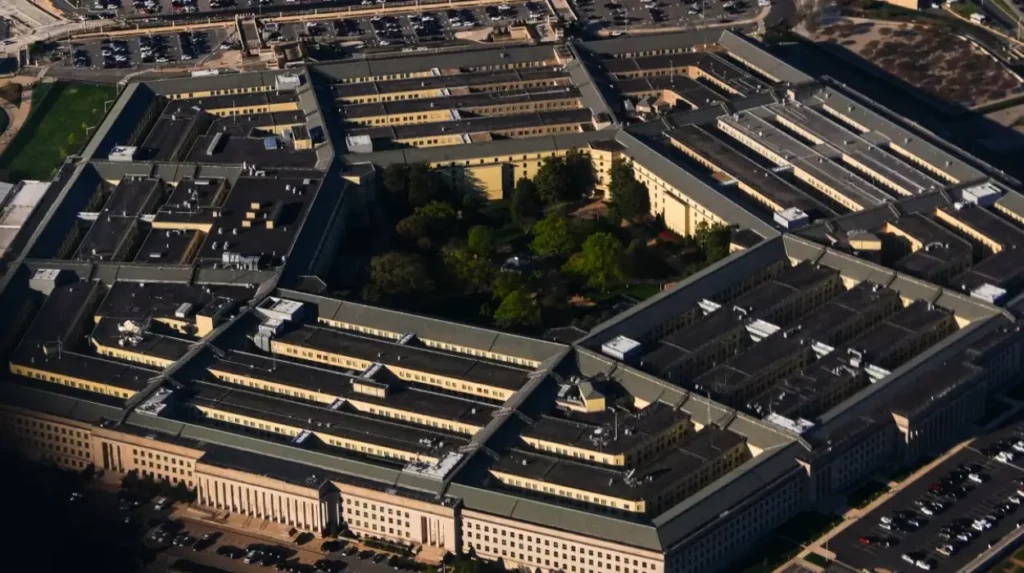
According to the report, the email came from an officer in U.S. Central Command’s intelligence branch and was sent Wednesday to a broad group of military analysts. The message reportedly said,
“We are looking for new creative and unconventional ways to pressure and punish Iran,”
a line that immediately stands out for its tone and intent.
A second source confirmed that a senior military officer had similarly requested input last week, adding further weight to the idea that this was not an isolated brainstorming session but an indication of an ongoing internal quest for options. The point here is not just that the military wants suggestions. It is not uncommon for a military to solicit its thoughts and opinions. The point is more about the terminology and the context. The terms “pressure and punish” are surprisingly stark for an internal intelligence message, especially coming at a time when the administration appears to be oscillating between escalation and de-escalation of its Iran policy.
CENTCOM, for its part, appears to be trying to normalize the request. Capt. Timothy Hawkins, the command’s spokesman, said the organization has
“a long history of thinking and working in innovative ways”
and that Admiral Cooper reaches out across ranks to maximize performance. In other words, the command is presenting the email as routine institutional creativity rather than a sign of desperation. But the public defense itself underlines the sensitivity of the matter.
Inside Trump’s Iran War
It should be noted that the document has been issued against the backdrop of a conflict that has brought military strikes, threats of additional strikes, and an effort to bring Iran back to negotiations. According to one source, the White House has been considering additional military options in connection with Iran, among others within Situation Room meetings. Another source reported that at times the president has become frustrated with conflicting recommendations of his senior advisors on how to act in this case.
This is important since the president’s strategy of interaction with Iran has never been purely military in nature. As per 2017, the policy of the United States towards Iran consisted of four objectives, namely countering Iran’s destabilization activities, imposing sanctions, addressing missiles developments, and denying Iran a pathway to a nuclear weapon. At the same time, the administration planned to cooperate with allies, deny financing to the IRGC, and isolate Iran internationally due to violations of human rights and detention procedures.
CENTCOM’s own earlier posture also helps explain the current email. In a previous command statement, the military stressed that while the wider “maximum pressure” campaign was driven by diplomacy and economics, CENTCOM’s role was deterrence — preventing Iran from acting directly or indirectly against U.S. forces and partners. That distinction is important. It suggests that military leaders have long understood their mission as support for pressure, not a standalone solution. The new request for unconventional ideas indicates that the support function may no longer feel sufficient.
Pressure Without Clarity
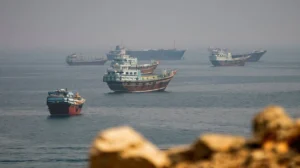
One of the biggest takeaways from the reporting is that the U.S. appears to be testing a pressure strategy without a clearly articulated theory of victory. A Reuters report said the U.S. military had launched fresh strikes against Iran and that CENTCOM struck more than 80 targets at one point, including more than 60 small boats linked to the IRGC, in an effort to degrade Iran’s ability to threaten commercial shipping. Another report said U.S. officials had considered a heavier bombing campaign lasting one to two weeks to take out missile capabilities.
However, there are also signs of reluctance. It appears that President Donald Trump stopped a larger strike campaign due to concerns over the availability of interceptors, restrictions on airpower use, and the risk of civilian deaths. This is important since it shows that the toolkit of coercion available to the administration goes beyond diplomacy alone and has operational and political limitations. Military options could be costly, but might not be enough to elicit the necessary political concessions from Washington’s perspective. This is the importance of the new email: it shows that the US strategists are still looking for opportunities to step up the pressure without being automatically dragged into full-scale warfare in the region.
What Washington Wants
The administration’s public and private goals toward Iran have remained fairly consistent across successive iterations of the policy. Washington wants to curb missile development, disrupt support for regional proxies, stop attacks on shipping and deny Iran a nuclear weapon. In the current conflict, those goals seem to have become more immediate and more militarized, especially around Iran’s missile capability and maritime disruption in the Strait of Hormuz.
On the other hand, reports indicate that Trump has not made a full commitment to any particular model. Some sources indicate that the president was considering further strikes against Iran. Another report claims that he put a halt to his attack in order to consider new diplomatic efforts. Moreover, yet another report states that his allies in the region might be able to reach a basic outline of a deal, meaning that the diplomacy effort is still taking place concurrently with the use of coercive actions.
Such combination of both pressure and signaling leaves some ambiguity as to how to proceed with the military operations. If political leaders do not fully commit themselves to one of the two courses of action, commanders will have to find “creative” ways to increase pressure on Iran until they receive some kind of an instruction from their superiors. This is precisely why the email is newsworthy in addition to the wording used. This implies that military might attempt to help create certain strategic options that are not yet chosen by the White House.
Iran’s Likely Reading
Iranian officials are highly unlikely to see it as nothing more than innocuous brainstorming. It is well known that Iranian authorities generally take any such move as clear indication that the Americans are trying to increase coercive pressure without exceeding the level of total war. And if the Americans are indeed looking for “unconventional” means, then Iran would definitely consider all those means as likely to be used against its shipping routes, energy supply lines, ports, missiles, and other critical infrastructure facilities.
The reason why it is so important is that Tehran has proven many times that it can adjust itself under pressure. The earlier assessments pointed out that Tehran always changes its tactics after an attack by the Americans. And if it remains true, then extra pressure might cause not capitulation, but retaliation, asymmetric in nature, especially in maritime routes, proxy theaters, and economic channels.
The reporting also reflects a familiar problem in U.S.-Iran policy: Washington wants to create pain without triggering a regional escalation it may not be ready to manage. That balancing act has defined the “maximum pressure” approach for years, and the current war seems to be stretching it further.
Why This Matters Now
The appeal for ideas is crucial in the context of strategic fatigue being experienced at a time when the administration still requires momentum. In the case where strikes from the military are not giving a decisive win, sanctions could end up being too long while diplomacy could be too risky. The U.S. ends up in a precarious situation whereby it is forced to come up with creative approaches; however, there is risk of escalating the conflict through each move. From that perspective, the email becomes the strongest indication yet that the U.S.’s Iran pressure tactics have begun to enter an experimental stage. The U.S. is not just using threats on Iran, but also actively seeking creative approaches on how to escalate the pressure and maintain leverage. It is a different ball game whether or not this process will yield any positive outcomes in the near future. At this point, the whole scenario is not really about one email, but the bigger picture; that the U.S. still does not know how to compel Iran without making the war bigger.