Donald Trump’s latest remarks on Ukraine’s Patriot missile ambitions amount to a clear political and military reversal. After signaling earlier this month that Washington would let Kyiv manufacture Patriot interceptors, the U.S. president has now said the United States has “not agreed to that”, putting the brakes on a proposal that Ukrainian officials had framed as a major breakthrough.
This backtrack is important because the Patriot missile is not any other weapon that is on Ukraine’s shopping list; it is the only Western-made air defense system that has been found to be most effective against Russian ballistic missiles. In an ongoing war where missiles and drones have become a norm to attack the city, infrastructure, and command centers, the difference between an assurance and a factory-produced system will be critical for both sides.
What Trump first promised
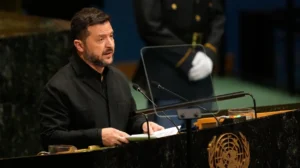
Trump’s earlier message came during his meeting with Ukrainian President Volodymyr Zelenskyy at the NATO summit in Ankara on July 8. Sitting beside Zelenskyy, Trump said,
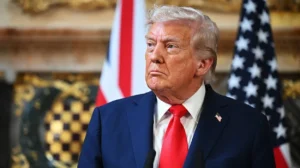
“We’re going to give a license to you to make Patriots,”
and added,
“This way, you can’t complain that we’re not giving ’em enough.”
The move was seen as politically significant in Kyiv, as it implied that in addition to the provision of military support, there is a potential path to manufacturing. According to Zelenskyy, the American president agreed to consider the possibility of licensing, and it became part of the Ukrainian air defense strategy. Nevertheless, even back then, the declaration had more of a promise nature than practical steps. As reported by experts in defense industry publications, Lockheed Martin and RTX were not officially notified of any final agreement, and several important conditions such as the type of interceptor that Ukraine would manufacture had yet to be negotiated.
Why the reversal matters
The significance of the Patriots in Ukraine is impossible to overestimate. The missile attacks carried out by Russia via its ballistic missiles have turned into one of the most dangerous elements of the air campaign of Moscow, and the Ukrainian defensive capabilities have found themselves behind in terms of the growing pace and scale of the strikes. Patriots are the only system capable of intercepting such missiles, which is why Ukraine has continuously appealed to the American authorities regarding sending more batteries and interceptors and, finally, the licensing of their production. In that way, Trump’s decision not only complicates the implementation of the industrial plan but also creates another strategic deficiency in the Ukrainian air defenses. As long as the license is not acquired, Ukraine will continue being dependent on its current stocks and slow deliveries of the foreign equipment while Russia will go on producing and launching its missiles.
The new Trump line
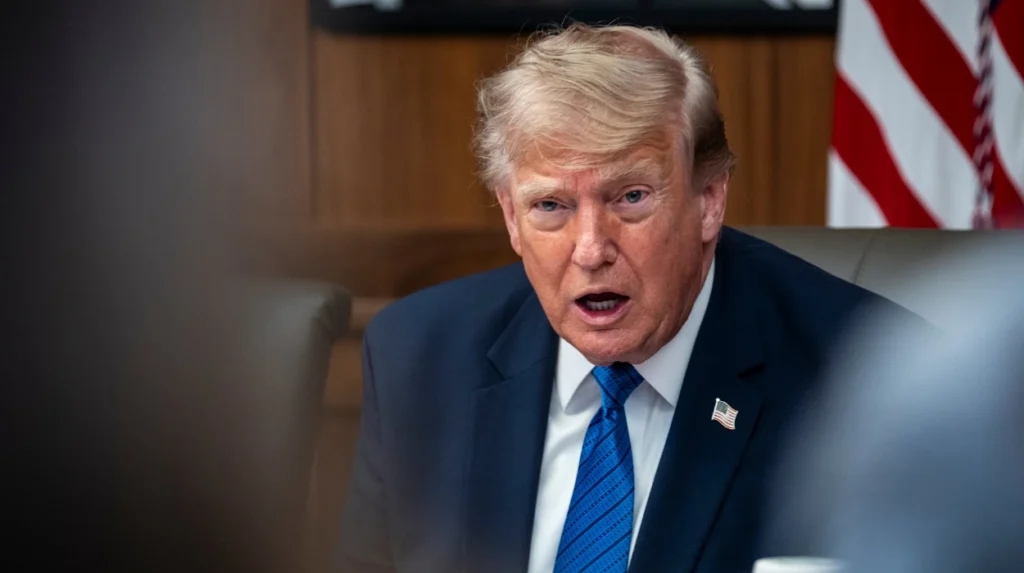
Trump’s July 31 comments sharply undercut the earlier pledge. Speaking during a Cabinet meeting at Camp David, he said,
“We have not agreed to that. We’re talking about it, but it’s a hard thing to give away that kind of technology.”
He went further, warning that defense technology must be handled with extreme caution. Trump said,
“We have to be very careful about letting somebody build them,”
adding,
“I don’t think this would ever happen, but you know those people that you give that technology, they can someday turn on you. You know, that is possible.”
In another account of the same remarks, Trump also said the United States had to be careful about allowing anyone to manufacture Patriots and called the issue a “big step.” The shift is striking not because Trump completely rejected future cooperation, but because he downgraded a public commitment into an open-ended discussion with no timeline and no firm approval.
Zelenskyy’s push
For Zelensky, manufacturing Patriots is an aspect of the broader attempt to bridge the air-defense deficit of Ukraine through a more lasting industrial solution. Indeed, he has reached out directly to the Americans, requesting more Patriots and a license for producing them in Ukraine, writing to the White House and Congress late in May following a Russian attack on Kyiv. In that appeal, he stated that Ukraine was dependent almost entirely on America for protecting from ballistic missiles and other attacks by Russia. Following the talks with Trump in early July, Zelensky indicated that the Ukrainian delegation believed that the U.S. President had accepted the idea of a license. However, even on that very day, Ukraine’s officials were talking about their future plans rather than signing any documents, while Trump’s recent statements point to this problem being open-ended.
Zelenskyy also kept up the pressure publicly. On July 31, he said in a post on X that the license to produce Patriots in Ukraine “remains the top priority” for his government. That language reflects both the urgency of the air-defense crisis and Kyiv’s desire to turn political sympathy into actual industrial capacity.
Why production is not quick
Even if Trump had stayed with the original pledge, Ukraine would not have received a usable production line quickly. Defense analysts quoted in multiple reports say a Ukrainian Patriot line would likely take years to become operational, not weeks or months, because the missile is a highly complex system with sensitive components and a tightly controlled supply chain.
Marc DeVore, a defense-industry scholar at the University of St Andrews, said the hardest parts are the engines and guidance systems.
“The two big challenges in producing missiles are the engines and the guidance systems,”
he said, while also noting that the guidance is a closely held secret and many licensed foreign producers still depend on American subcontractors.
Fabian Hoffmann of the Norwegian Institute for Defence Studies made a similar point, saying the bottleneck is not final assembly but localizing the supply chain. In other words, a license may allow Ukraine to say it can make Patriots, but the missing pieces — technical know-how, parts, industrial security, subcontractors and qualified manufacturing lines — remain major obstacles.
The political reading
Some analysts see Trump’s move as a way to look responsive without committing scarce U.S. interceptors. DeVore warned that Washington could effectively check the box politically while leaving the real problem unsolved, saying,
“The Americans can check off a box and say, ‘We’ve solved the problem.’ They may be willing to do a victory lap without actually having resolved the problem.”
General Richard Shirreff of the UK, former deputy supreme allied commander of NATO Europe, made the same point when he said that the promise could just be letting America “off the hook” with respect to the complaint that it was not providing enough support to Ukraine. Additionally, there may simply be too few interceptors available for donation because stocks had been used up during the US-Israeli war against Iran. The latter interpretation is significant since it implies that the move is not just political surrender but also physical shortage on America’s part. If Washington cannot provide enough Patriot missiles at the present time, the promise of the license can be seen as deferring the difficulty until later.
What it says about U.S. policy
Trump’s remarks fit a broader pattern in which support for Ukraine is framed through transaction, scarcity and leverage rather than automatic commitment. He told reporters he had also discussed Patriots, Tomahawks and ending the war itself with Zelenskyy, while stressing that both Zelenskyy and Vladimir Putin would have to make concessions for peace.
That is consistent with Trump’s broader approach: he presents military support as part of a larger bargaining process, not as a fixed alliance obligation. In this case, the Patriot issue sits at the intersection of battlefield urgency, U.S. stockpile limits and Trump’s instinct to keep strategic options open rather than lock in technology transfer.
For Ukraine, that means the problem remains immediate even if the diplomacy drags on. Kyiv still needs interceptors now, not after a licensing process, contractor talks and factory build-out that could stretch far into the future. That is why the latest backtrack is more than a semantic correction; it is a setback in the struggle to defend Ukrainian skies.