Another assault with a drone has befallen Moscow, and the context of such attacks is as important as the nature of the consequences of the strikes. At this particular point in time, Vladimir Putin finds himself under growing threat because of a war that has spread across the territory of Russia’s strategic heartland, showing the weaknesses of the air defense system, the vulnerability of the critical infrastructure, and the political price of the war which has been framed by the Kremlin as contained and controllable. The latest episode of the drone campaign that occurred on Tuesday, fits into the context of the trend that has been becoming increasingly difficult for the Russian officials to ignore as a mere disruption.
What happened in Moscow
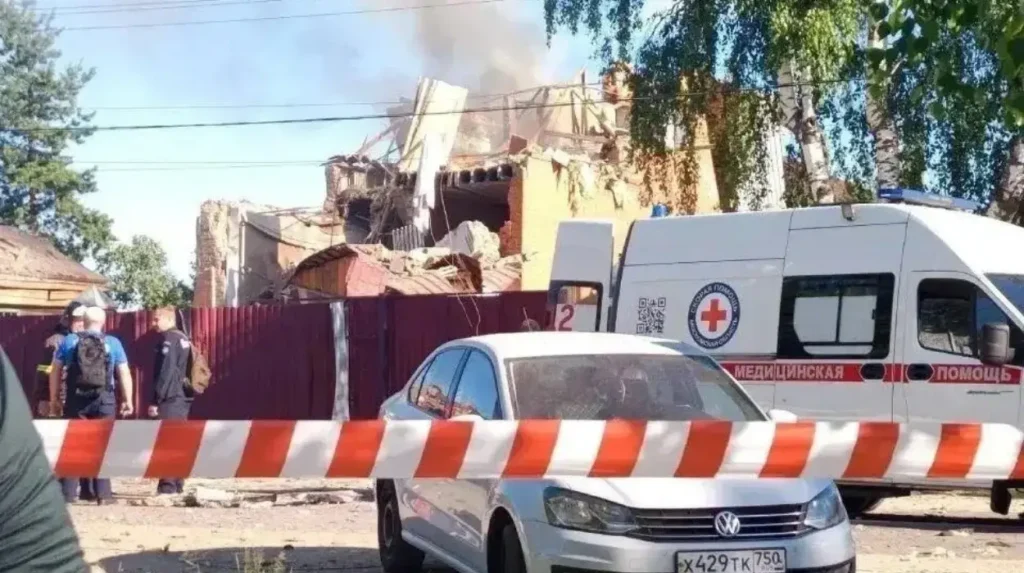
Based on the data given above, Moscow was attacked by drones for a second time, with the Russian government stating that more than 60 drones have been detected over the capital city. Such an indication, if true, shows that there has been an extensive attack overnight, instead of a probing attempt. In addition, it indicates a well-coordinated effort aimed at testing the air-defence capabilities of Russia, as well as putting pressure on the government in the capital city. However, the first official response from the Russian side will be focused on the successful interception and minimization of losses. This has now become the norm in the communication strategy of the Kremlin, as it recognizes the fact that there has been an attack, emphasizes that the air defence was operating, and minimizes the threat.
Why this matters politically
The implications of the strike on Moscow, however, run much deeper than tactics for Putin. It is hard to maintain an image based on power and control when your own capital is being bombed and put into emergency state of alert. These kinds of strikes become especially politically damaging against the backdrop of other stresses the Russians are experiencing as a result of the war effort. According to international media coverage in the news you have provided, there are fuel shortages, stress on energy resources, and overall signs of wear on Russia’s war economy. This is significant because it makes military challenges at the battlefront translate into political challenges at home.
Putin can absorb a single attack. What becomes more difficult is absorbing a pattern. A repeated drone campaign creates a sense that Russian airspace is no longer secure, that key infrastructure can be reached, and that the war is not staying where the Kremlin would prefer it to stay.
Ukraine’s strategy of deep strikes
The latest Moscow attack should be understood as part of a wider Ukrainian campaign aimed at hitting Russian targets far from the front line. The reporting you provided indicates that Ukraine has intensified strikes on Russian oil and energy infrastructure, with drones reaching fuel sites and logistics hubs across Russia. That suggests a deliberate strategy: force Russia to spend more on defence, complicate its internal supply chains, and create visible disruption inside the country.
With attacks on the capital and vital infrastructure, Ukraine shows that the areas behind the front lines are no longer safe zones. There is a strategic value in this, but there is also a psychological one. They show the Russian people that the conflict, which they have been observing mostly on the news channels of their own country, is affecting them now. An attack on the Russian capital fits into the wider Ukrainian story: despite being a great military power, Russia can still be beaten by asymmetric means of warfare. Drones are comparatively cheap when compared to air defence systems.
Fuel shortages and energy strain
One of the most important elements in this story is the connection between drone attacks and Russia’s fuel situation. The information provided points to Putin himself acknowledging fuel shortages and describing the extent to which Ukraine’s deep-strike campaign has disrupted Russia’s energy infrastructure. That is an important admission because it confirms, at least indirectly, that the strikes are producing real internal pressure.
As pointed out in earlier reports included in your prompt, fuel shortages have already been observed near Moscow as well, including rationing on fuel at certain service stations. If such practices are going to continue or spread to other regions, then the problem becomes not just one of practical inconvenience but a symbol of trouble for a state that tries to portray itself as resilient. The lack of fuel means problems both economically and politically. Economically, because it will affect transport and logistics in the region. And politically, as it will increase public dissatisfaction with the government and prove that Russia is affected by the war.
The Kremlin’s messaging challenge
The Russian state’s usual response to such incidents is to emphasize interception numbers, downplay damage, and avoid any suggestion of vulnerability. That approach may work in the short term, but it has limits. If Moscow is attacked again and again, the official line becomes less persuasive no matter how confidently it is delivered.
The Russians are also sure to continue presenting the event as an example of successful air defense. It is likely to be added that damage was done not by direct hits but from debris. This is important for maintaining the image of control over events. However, it cannot hide the actual fact that drones are getting into the Moscow skies anyway. Another issue here is that of communications. For the Russian government, it was always convenient to present the war in terms of distance. As long as the events took place far away from Moscow, the government could pretend that the war was manageable. However, once the drones start creating problems in Moscow, such an approach becomes less viable.
Broader war context
This attack comes during a phase of the war in which Ukraine’s long-range capability is becoming increasingly central. The reporting you provided points to a wider pattern of escalating strikes on Russian energy sites throughout June. That timeline suggests not an isolated surprise, but a sustained campaign aimed at shaping Russia’s strategic environment.
At the same time, analysts quoted or referenced in the material you shared see these attacks as part of the growing pressure on Putin from multiple directions: battlefield stalemate, economic strain, public frustration, and now visible insecurity in the capital. In other words, the drone attack matters not just because it happened, but because it adds to a cumulative burden on the Kremlin.
Ukraine’s deep strikes also fit a broader war logic. If direct gains on the front are slow or costly, then targeting Russia’s internal systems can be a way to change the balance without a conventional breakthrough. Energy infrastructure, logistics networks, and urban targets like Moscow become part of the battlefield.
What the figures suggest
Of particular interest here is the number of 60 drones that were intercepted flying over Moscow. Without even carrying out an independent assessment of the damage, the sheer numbers indicate planning, coordination, and determination behind the attack. One drone can be disregarded easily; 60 drones flying into the airspace above the capital cannot be ignored. Prior to this incident, there were instances of attacks that were mentioned by the reporters where the region of Moscow had witnessed large-scale attacks. The importance of this point lies in the fact that this is not just an isolated incident but part of a larger ongoing contest.
The broader figures also matter in another way: they create a record of adaptation. If Ukraine is able to sustain such operations over time, Russia must either expand its defences, accept recurring breaches, or divert substantial resources away from other parts of the war effort. Each option carries a cost.
Implications for Putin
For Putin, the immediate challenge is practical, but the deeper challenge is political. He must reassure the public, preserve elite confidence, and avoid the appearance that the war is slipping out of his control. That is a difficult balance when drones are reaching Moscow and when the state itself appears to be acknowledging strain in fuel and energy systems.
The strike also highlights another rather uncomfortable point for the Kremlin – namely, that the war is increasingly becoming part of Russia’s reality. It changes the mentality of the people. A war that initially seemed remote is now starting to evoke feelings of disruption and potential danger among ordinary Russians living in the immediate vicinity of Moscow. The future impact will depend on how often such strikes will continue to occur. If they happen frequently, then the problem will move beyond defense and into endurance.