The declaration of Donald Trump about holding talks between Iran and the US in Doha has brought in more ambiguity at a time when there was a very serious diplomatic situation going on, with Tehran promptly dismissing US President’s allegation about having requested the meeting. The argument goes beyond the schedule; it is more to do with the attempt by both sides to get control of the narrative and how their respective public perceives the news.
The core of the narrative revolves around the fact that Donald Trump claimed that there had been a request for a meeting from Iran in Qatar and that the two parties would meet in Doha on Tuesday. Such a claim had been made openly and confidently, making it seem like progress was being made in the diplomatic world. However, the Iranian reaction was quick and definite, as they rejected any claim that talks had been planned on their part at any level.
Doha as a Diplomatic Stage
Doha has long served as a discreet venue for sensitive regional diplomacy, and its role in this episode is no accident. Qatar is often trusted as a mediator or host because it maintains working channels with multiple actors in the Middle East. In this case, the city became the focal point of competing claims about whether a real meeting was imminent or whether the U.S. was signaling a political expectation that Iran was not prepared to confirm publicly.
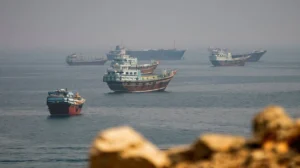
The importance of Doha becomes greater when viewed against the backdrop of strained relations between Iran and the United States, along with the current instability in the region of the Strait of Hormuz. There have been reports that should the talks take place, they might not be considered genuine political talks as they have been conducted before, but more like technical or follow-up talks to manage the crisis and keep communications open.
Conflicting Public Claims
The claim made by Trump that Iran had sought the meeting forms an important part of the American narrative on this story. This makes Washington come off as the respondent rather than the one who started it all, while at the same time suggesting that Iran is trying to engage in conversation on the terms of the Americans.
Iran, however, has pushed back hard against that interpretation. Tehran’s foreign ministry spokesman Esmaeil Baghaei said there would be no negotiation meeting with the U.S. side “at any level in the coming days.” That line is important because it denies not only a specific meeting time but the broader premise of direct negotiations. In effect, Iran is trying to separate the idea of technical contacts from the politics of formal dialogue.
This is where the story becomes more than a simple disagreement over logistics. Public denial allows Iran to avoid looking like it is yielding to pressure, while Trump’s announcement serves to portray diplomatic traction. Each side is speaking to two audiences at once: the other side and its own political base.
The U.S. Political Message
From Washington’s perspective, the Doha announcement fits a broader pattern of using public diplomacy to demonstrate momentum. Trump’s social media post suggested confidence, urgency, and control. By saying Iran had requested the meeting, he also shifted the initiative away from the United States and placed Tehran in the position of needing engagement.
The travel by Steve Witkoff and Jared Kushner adds another layer of significance to that message. As the special envoy on behalf of Trump for the Middle East, Witkoff symbolizes the machinery of official diplomacy. On the other hand, the involvement of Kushner implies political weight behind the process and his connections to the White House. The combined effort of these two individuals means that the administration is seeking to give the impression that the process in Doha is a matter of high-level diplomacy that may have consequences. At the same time, such a message is also risky. Should the meeting fail to take place, or should it be reduced to technical contact only, the message about its scheduled negotiation would appear to be exaggerated.
Iran’s Careful Denial
The reaction from Iran is just as pragmatic. In avoiding a concession of scheduling direct negotiations, Iran ensures that it will not come under fire at home and will avoid validation of Trump’s story line. The phrasing used by the Iranian foreign ministry was carefully selected to state that it would refuse talks “at any level,” which is more definitive than merely stating that the timeline was not clear. Meanwhile, Iran has not shut off all lines of contact with the US altogether, at least according to some reports, which indicate that some sort of indirect talks or technical talks might be in the cards over the next several days. This allows for de-escalation without putting Tehran in the position of conceding a formal negotiation process.
This balancing act shows how both sides are trying to preserve leverage. Trump wants to show that pressure is producing engagement. Iran wants to show that it is not surrendering to pressure while still managing a dangerous situation. The public disagreement is therefore not a side issue; it is part of the negotiation itself.
Wider Regional Stakes
The story cannot be separated from the broader security environment. The reported contacts come after clashes and uncertainty involving the Strait of Hormuz, one of the world’s most important energy and shipping corridors. Any escalation there affects not only the United States and Iran but also Gulf states, global oil markets, and commercial shipping routes.
This is the reason why even small-scale interactions in Doha are important. Technical talks can concentrate on avoiding miscalculations, safe passage through the strait, or whatever agreements have been reached in the background already. Even without reaching an official breakthrough in diplomacy, such interactions may lessen the chance of an accident. In a part of the world in which a small incident can very quickly evolve into a big conflict, that is no small matter.
The complexity of the situation also explains why different outlets have described the Doha contacts in different ways. Some describe them as talks, others as technical meetings, and others as crisis management. The language is not merely stylistic; it reflects uncertainty about how much political substance the meetings will actually contain.
What the Quotes Mean
In breaking news like this, quoted statements often reveal as much about strategy as they do about facts. Trump’s claim that
“IRAN HAS REQUESTED A MEETING”
is not just a factual assertion; it is also a political framing tool. It presents the U.S. as being approached, not pursuing, and that framing matters in international diplomacy.
Likewise, Baghaei’s denial that there would be talks with the American side
“at any level in the coming days”
is not just a rejection of the schedule. It is a controlled public signal aimed at limiting expectations and preserving Iran’s bargaining position. Such statements often have two audiences: the press and the negotiating table.
The language from White House-linked officials about “high-level meetings” and “technical talks” is also revealing. It suggests an attempt to keep the diplomatic process alive while avoiding overcommitment to a full political negotiation. That flexibility may be useful if the immediate priority is crisis management rather than a broader agreement.