Chinese tycoon Guo Wengui, self-exiled to America, was sentenced to spend thirty years in a US jail in a move that concludes an incredible story where he went from being an outspoken critic of Beijing to being charged with running a gigantic scam operation. What makes the sentence in Manhattan significant is not just the enormity of the fraud but also the unique journey of Guo who became an anti-communist voice and managed to build a powerful following amongst the Chinese dissident community.
Miles Guo, whose names include Ho Wan Kwok and Guo, left China almost a decade ago and became a new man in New York by reinventing himself as an exiled billionaire, media figure, and whistleblower against the Chinese communist party. All this was a great advantage for him in terms of a platform, but according to the prosecutors, this public image also enabled him to gather people around himself because they believed that he was doing something political.
The sentence marks one of the most severe outcomes ever imposed in a high-profile fraud prosecution involving an exiled political figure. It also raises a larger question that has followed Guo throughout the case: whether political branding and financial fraud became inseparable in the way he built his empire.
The scale of the fraud
According to the court proceedings and prosecutor’s statements, the case is seen as a large-scale international fraud that targeted hundreds of victims and even more than 1,000 people across the world. It was a huge financial loss. According to some estimates, the fraud exceeded $550 million, while other estimates put it at over $1 billion in terms of losses or transactions involved. In fact, this discrepancy in estimates stems from different counting methods used in regard to different charges and channels of money transfer.
The court ordered Guo to forfeit $889 million, a figure that underscores the scale of the assets prosecutors said were tied to the scheme. That amount is not symbolic. In fraud cases, forfeiture is meant to strip defendants of criminal proceeds and related property, and the size of the order suggests investigators and prosecutors believed Guo’s operation was deeply entrenched and highly profitable.
According to the case record reported by multiple outlets, the fraud ran for years and involved deceptive fundraising through a network of businesses and investment-related ventures. Prosecutors said the operation misled followers who thought they were backing democratic activism, political resistance or independent media. Instead, the money allegedly helped support personal luxury spending and maintain a lavish lifestyle.
How Guo built trust
Guo’s case is unusual because it was not built only on money. It was built on identity, ideology and influence. After leaving China, he presented himself as a courageous dissident exposing corruption inside the Chinese Communist Party. That message resonated with an audience that already distrusted Beijing and wanted a prominent insider to challenge the Chinese state from abroad.
This political story enabled him to attract many followers, and it seems like this has been what made the fraud possible on such a grander scale. Those people who thought they were funding a good cause could have become more likely to pay their money or participate in businesses because of their commitment rather than due to any financial incentive they might get. This was perhaps why the case against Madoff has been perceived so strongly as a betrayal of both investors and the political cause.
The fact that Guo was connected with political circles in America made things even more interesting for the public. He was a staunch supporter of Steve Bannon, who worked as an aide to Trump. Together, they formed a group to fight against the Chinese Communist Party. This association helped Guo gain popularity within the political media of America and portrayed him as someone more than a businessman. Politically, the situation became sensitive since he was treated as a dissident rather than a defendant.
The verdict and sentencing
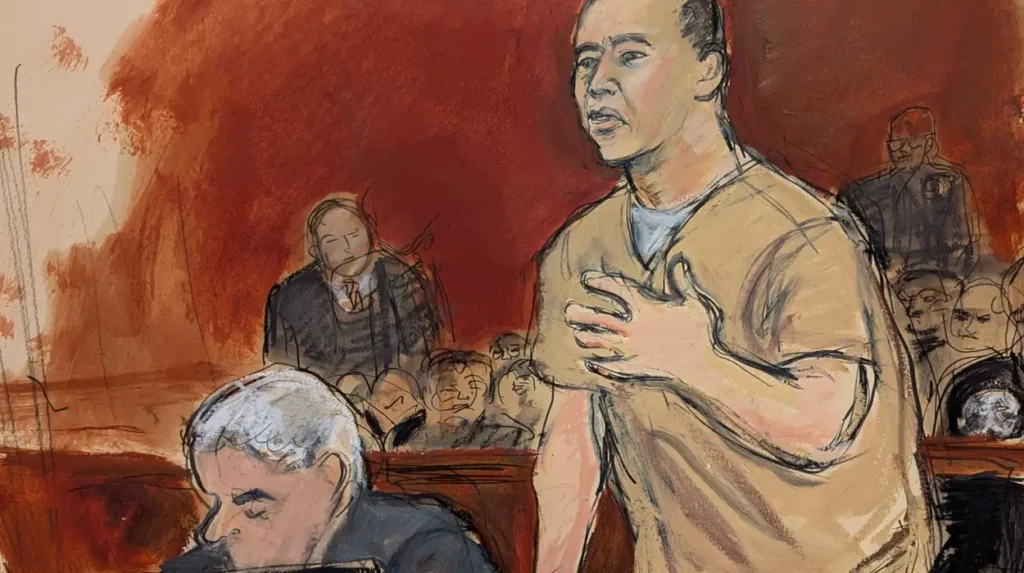
Guo was sentenced to prison following a seven-week trial in federal court in Manhattan in 2024. The jury found him guilty of nine out of 12 charges. The details of the charges he was found guilty of varied across sources, but what remained consistent is that he lost the case. This means that prosecutors convinced the court of the fraudulent behavior in this case. Guo’s sentence was pronounced on June 29, 2026, by Judge Analisa Torres and amounted to one of the most severe white-collar sentences to have been delivered recently. The sentence was 30 years in prison, taking into account not only the amount involved in the fraud case but also the severity of the offense committed. When delivering a sentence for high dollar fraud cases, sentencing courts consider not only the amount involved but also the planning, deceit and betrayal of trust involved.
The judge also ordered substantial financial penalties, including the $889 million forfeiture. Together, the prison term and the asset seizure signal that the court wanted to send a blunt message: political status, media influence and public rhetoric are not shields against accountability when the underlying conduct amounts to fraud.
Prosecutors’ case against him
Prosecutors argued that Guo used the aura of a revolutionary exile to lure followers into a criminal enterprise. Their case, as described in reporting, portrayed him as a man who mixed political messaging with investment schemes, allowing him to benefit from both ideological loyalty and financial speculation. The prosecution’s framing was that the victims were not merely fooled by a bad investment. They were manipulated through a broader campaign of trust-building and false promises.
These crimes included racketeering conspiracy, securities fraud, wire fraud, and money laundering among others. This is important since it indicates that the government considered the scheme as a combination of different financial crimes as opposed to one fraudulent scheme. In other words, it shows that prosecutors viewed the scheme as a set of fraudulent actions as opposed to just one lie by Guo.
The victims were described as being scattered across the world, suggesting the scheme reached far beyond New York or the United States. That international footprint helped elevate the case from a local white-collar prosecution into a global fraud story. It also made the court’s restitution and forfeiture orders even more significant, because the harm was not confined to a single investor group or one national jurisdiction.
The political shadow
Guo’s case carries significant political weight, and this cannot be ignored. Guo is more than an individual charged with various types of crimes – he is also an outspoken critic of the Chinese government with apparent connections to the American right wing. The combination of these factors meant that there was a lot of controversy even prior to the sentence. Some were viewing him as a dissident persecuted by those in power for political reasons, while others saw him as a politically savvy person who was trying to hide criminal actions under the guise of politics. This is bound to be the subject of debate in relation to his sentencing. Already, reports indicate that the possibility of pardoning or deportation on the part of the Trump administration could become an issue.
At the same time, the sentencing stands on its own legal footing. Whatever political meaning supporters attached to Guo, the jury’s verdict and the judge’s sentence were grounded in the evidence presented in court. That evidence persuaded the court that Guo’s operation was criminal in nature and extensive in scale. In the end, the political aura did not prevent the legal collapse.
What the numbers show
The numbers in this case tell a story of both scale and consequence. A 30-year sentence is extraordinarily long for a white-collar defendant. An $889 million forfeiture order signals the court believed the proceeds were massive. And a fraud affecting hundreds or more than 1,000 victims suggests the harm was distributed broadly, not concentrated in a small circle.
The magnitude of the damages is another factor that explains why this case has generated so much interest. Cases of fraud tend to die out without attracting the attention of the general public except when there is a political or celebrity angle or the huge sum of money involved in it. This case is unique in that regard since it has all the three features. It is for this reason that the sentencing has become a news item around the globe. The reported length of the trial that lasted seven weeks further highlights the intricacy of the case.
Why this case matters
The sentence of Guo Wengui is much more than an end for another defendant in his legal process. On the contrary, the case demonstrates the fact that a fraud case could be ideological, activist, and a combination of personal mythology. Moreover, the case emphasizes that a person who has charisma and a strong image in the public domain could use his image to raise funds in a way that would be hardly possible with common business fraud. Finally, the case emphasizes the fact that fraud cases today become a mixture of politics and mass media. Unlike regular businessman, Guo Wengui was a dissident, a star, and an influencer in politics.
For the victims, the central issue is still recovery and accountability. The court’s restitution and forfeiture orders are intended to address that, but large fraud cases rarely restore everything lost. For the public, the case is a cautionary tale about how political passion can be exploited when financial promises are wrapped in moral urgency. In Guo’s case, the image of resistance against Beijing appears to have been turned into a vehicle for large-scale deception.
Guo’s 30-year prison term now stands as the defining judgment on that enterprise. It is not only a punishment, but a legal rejection of the narrative he spent years constructing around himself. The court’s message was clear: no matter how powerful the persona, fraud remains fraud. Guo Wengui sentence has now become shorthand for one of the most striking white-collar and political fraud cases in recent years, and its aftereffects are likely to continue well beyond the courtroom.