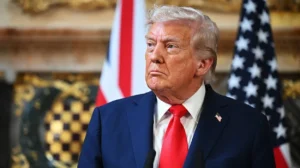
In October 2025, President Donald Trump affirmed that he had given the green light to the Central Intelligence Agency (CIA) to broaden its undercover activities against drug cartels in Venezuela. The order, which is referred to by The New York Times as one of the most aggressive counter-narcotics authorities in the United States history, will permit lethal and non-lethal operations aimed at destabilizing drug smuggling routes that are allegedly secured by the government of President Nicolas Maduro.
The reason Trump justified the move was because it was directly related to the issues of national security particularly, the influx of Venezuelan inmates into the United States and the continued influx of illegal narcotics into the country using the Caribbean routes. The administration has used intelligence that these networks are supported by the state with senior Venezuelan officials accused of cashing in the drug trade amount.
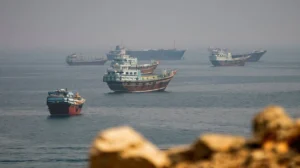
Along with the CIA permission, U.S. naval forces extended their maritime interdictions by increasing the activities in the Caribbean. Pentagon statistics between September and October 2025 show that there were at least 27 victims of attacks on suspected smuggling ships. The changeover is indicative of the increased dependency of Washington on dual strategies that involve undetected intelligence operations along with open military presence in checking the narcotics trade and putting strategic pressure on the Maduro government.
Tactical Dimensions of Covert Action in the Counter-Narcotics Framework
According to sources conversant with the order, the increased power of the CIA includes intelligence collection and assassination operations. They may involve specific attacks on the cartel bosses, sabotage of supply lines, and interference with logistics of narcotics trafficking. According to intelligence analysts, such operations are based on the experience of the CIA in Latin America but on the scale never witnessed since the peak of anti-cartel operations in Colombia 20 years ago.
The order erases the separation between the counter-narcotics and counter-regime approach, as the Venezuelan state apparatuses are allegedly overlapping with the narcotics cartels. Although ground operations have not been publicly recognized, contingency plans in the case of limited land incursion under an impression of plausible deniability have been reported to be prepared, which is also a characteristic of covert warfare.
Integration with Military and Intelligence Assets
The simultaneous build up of the Department of Defense in the Caribbean is more than consistent with CIA intelligence feeds. It is also said that joint coordination centers have been set up in Curacao and Puerto Rico to help in real-time targeting of vessels and facilities. This consolidation shows a more integrated working model, in which the covert activities mirror the military interventions, and the other way around, producing a stratified deterrence approach.
As senior officials suggest, this two-track policy indicates that Washington has realized that old interdiction techniques, which only intercept on the sea, are not very effective. Rather than destroying the networks of trafficking, breaking the chain at its origin point means attacking the structures, funding, and political immunity of the operation.
Integration with Broader Geopolitical Strategy
The covert operations are part of a broader approach to isolate President Nicolas Maduro whose regime Washington accuses of transforming Venezuela into a narco-state. The US has had a 50 million dollar reward on the capture of Maduro, who is believed to be affiliated with the cocaine trafficking networks that take place in West Africa, Colombia and Venezuela.
According to the observers, the Trump administration effectively reconfigures the counter-narcotics policy into a geopolitical tool by allowing lethal covert operations. Such transformation is an expression of a convergence between law enforcement goals and regime-change goals, in which drug trafficking is the legal and moral rationale behind the wider use of strategy.
Regional Military Posturing and Diplomatic Isolation
The CIA order came at a time when the U.S had military forces on the ground and was sharing intelligence data with Colombia and Brazil, which both have been hostile towards Caracas. These agreements enhance Washington in monitoring the routes through the air and sea of Venezuela as well as uniting unanimity of the region with the Maduro government.
The covert campaign has increased the isolation of Venezuela diplomatically. Other states in Latin America such as Panama and Paraguay have also reinstated sanctions on Venezuelan officials because of their associations with narcotics and corruption. In the meantime, the European Union still insists on its stance that the 2024 Venezuelan elections were not legitimate, which supports the narrative that would be more beneficial to the operations of Washington.
Responses and Counter-Measures by Venezuela and Global Actors
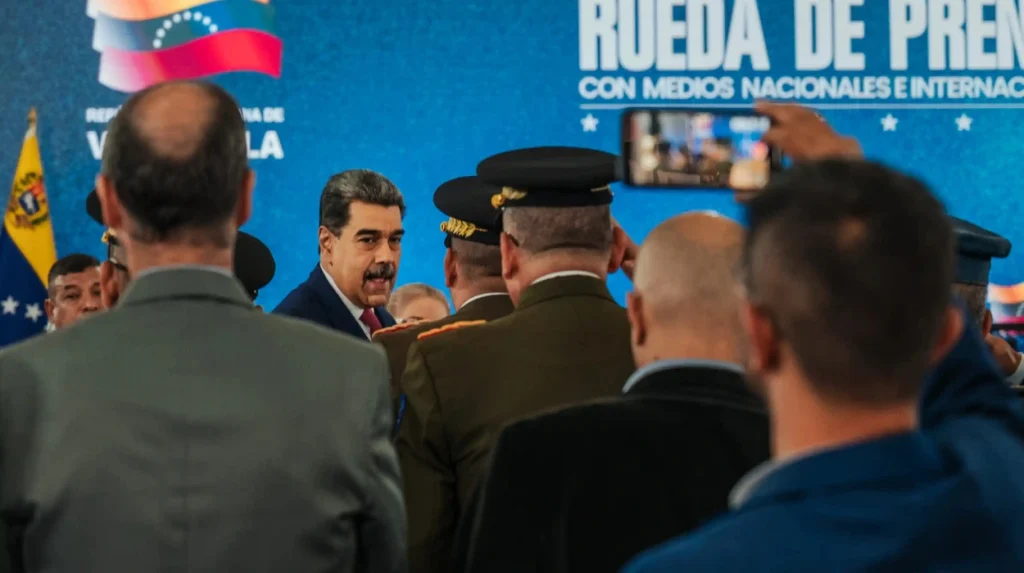
President Maduro condemned the U.S. authorization by describing it as imperialist aggression, comparable to CIA intervention of the Cold War in Latin America. When he was speaking to military officers in Caracas, he gave the promise that Venezuela would protect its sovereignty against any foreign agents, open or secret. Venezuelan armed forces have since gone on high alert in the coastal north and in some of the key interior provinces of the country that are thought to have drug transit routes.
The CIA activities are being framed by the state media in Caracas as part of a wider campaign on destabilizing Venezuela before the 2025 regional elections. The government has also enhanced the ties with Russia and Iran who also criticized the U.S. move as a breach of international law and UN Charter.
Regional and International Reactions
The buildup has raised the eyebrows of the Caribbean and Latin American governments that fear the U.S. military build-up along their borders. Although Colombia and Brazil have given conditional approval, other nations like Mexico, Argentina, warn of unintended consequences that will lead to instability or loss of civilian lives.
NGOs involved in the human rights of the international community have encouraged transparency regarding the CIA involvement in the lethal activities, such as Amnesty international and Human Rights watch. They highlight the fact that there is a threat of unlawful killings and the breach of the sovereignty principle of international law. Nevertheless, the American officials argue that all measures are in line with the national security requirements and the international standards governing the anti-narcotics enforcement.
International Law and Sovereignty Concerns
Surreptitious CIA activities within the territory of a sovereign nation cast the major concerns of legality in international law. Although the U.S. presents such operations as a component of its global counter-narcotics and counterterrorism policy, legal scholars point out such actions by non-cooperation with the host country as violating the UN Charter. This lack of congressional checks and transparency makes postulation of legitimacy even more difficult.
The U.S. has always banked on the silent resources to avoid diplomatic hindrances but when they evolve into killing activities it raises a more ethical concern. According to one analyst at Georgetown University, covert action is a space between war and peace, and it is undeniable but may also destroy accountability.
Balancing Security and Human Rights Imperatives
Critics argue that lethal interdiction actions have a high probability of precedence of extra-judicial force especially in such situations of high political tension as Venezuela. On the contrary, the proponents of the defense believe that the extent of trafficking in narcotics and its direct relation to transnational organized crime requires aggressive action in cases where diplomacy is ineffective. The main issue to the policymakers is whether such covert campaigns will finally enhance or undermine long term stability in the hemisphere.
Future Trajectories and Strategic Implications
U.S. covert action in Venezuela marks a turning point in counter-narcotics strategy, merging intelligence, military, and diplomatic tools under a unified framework. This evolution suggests a future in which traditional borders between counterterrorism, counter-narcotics, and regime-change operations grow increasingly porous.
The Venezuelan case will likely serve as a precedent for similar interventions in other regions where drug trafficking intersects with authoritarian governance. Yet, questions linger over sustainability: can covert power achieve lasting disruption without inflaming regional conflict or undermining international law?
As Washington intensifies its pursuit of “narcostates” in Latin America, the unfolding operations in Venezuela offer both a test and a warning: that the fusion of secrecy and force may yield tactical victories but carry enduring strategic costs in legitimacy and global perception.