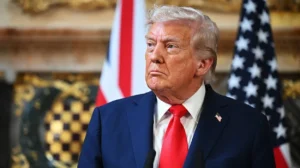
The mythic story about Donald Trump paying off a mortgage belonging to a stranger has been spread over the course of almost thirty years spreading with a consistent pattern whenever the man gains more political attention. This tale states that between the mid-1990s and 1996, some motorists assisted Trump to replace a punctured tire on his limo. As a sign of gratitude, Trump supposedly sent flowers to the wife of the man- with a note indicating that he had covered the mortgage of the couple. The story has been mentioned severally as the testament to the kindness of Trump and his unexpected generosity.
The story has always been refuted by fact-checkers, although it is quite popular. Surveys made by PolitiFact, and The Globe and Mail in the late 1990s discovered no records, or even a trace of money to validate the assertion. The New York office of Trump also refused to know about such an incident. Facts have changed with time with certain versions reporting the good Samaritan as African American with others being anonymous middle class people of the neighborhood making the process of tracing back to the original source very hard.
As of 2025, the legend has continued mainly via social media reposting and nostalgic reenactment, as a reminder of how the longevity of the told story can continue even with no factual basis. Its emotional appeal still defies fact checking, living on the greater mythology of the Trump personality of the larger-than-life businessman and philanthropist.
Factual Basis and Related Anecdotes
There are inherent inconsistencies in the mortgage payoff story. No evidence of a mortgage payment repayment has been recorded that can be attributed to any known charitable giving of Trump and no other person that purports to be the recipient has ever been publicly recognized. The supposed incident also comes before the Trump major real estate revitalization in the late 1990s, also casting doubt on its viability.
Testimonies of former employees of the Trump Organization in 1997 dismissed the statement further, saying that it was not possible to hide such a big financial gesture out of the press or internal documents. This lack of corroboration is very unlike in other verifiable acts of generosity that Trump did do.
Documented Charitable Acts and Verified Contributions
Not every piece of evidence regarding the generosity of Trump is apocryphal. The New York Daily News confirmed that Trump gave a 10,000 dollar donation to a New York bus driver who prevented a suicide attack. He also helped in ferrying a child who required medical attention using his own airplane and pledged 25,000 dollars to a family of a U.S. Marine who is detained in a Mexican penitentiary. These acts do not have the cinematic power of the limo car tale, but they can be fact-checked, and they reveal the intermittent charity of Trump, which he usually offers depending on media attention or his exposure.
This confirms cases to point out the difference between truthfulness and myths. They also depict the amplification of verifiable actions by less amplifying emotionally charged legends, particularly the ones that conform to the expectations of the populace about moral grandeur.
Motivations Behind the Myth
The mortgage payoff story serves as a symbolic account of humility and reciprocity, which is especially lacking in the Trumpan personality. This is due to its stamina which is due to its strategic attractiveness: it turns a billionaire who is brash into a spontaneously useful person. Such stories, true or not, have been noted by political commentators to be effective branding tools.
In his own speeches Jerry Falwell Jr. once referred to Trump as a man of heart, although he did not have any specific evidence to support it. Such myths which offer a moral response to controversy create a stronger impression that Trump is a person who is both wealthy and powerful and at the same time loving ordinary Americans.
The Role of Image Construction
Trump has been a mythmaker in a time when political victory frequently relies on the ability to create a story, which fits into more general categories of American self-invention. Since the log cabin tales of Abraham Lincoln, through the Great Communicator image of Ronald Reagan, the identity of the political is often dependent upon available moral fables. The supposed mortgage payoff by Trump is already in this lineage; it is a parable of kindness not policy but an appeal to the heart.
Such narratives may serve a symbolic purpose even when nullified as they represent values that the audience would desire their leaders to embody. The enduring quality of this myth in particular points out to the cultural thirst to hear the stories that obscure the difference between truth and idealized virtue.
Cultural Resonance and the Role of Mythmaking in Politics
Mythic narratives have always been a part of American political culture as a moral teaching and a means of emotional attachment. Such narratives as the Trump mortgage payoff survive not due to their solidity but because they fulfill the communal desires of decency in authority. They put leadership in the context of personal virtue- an idea that is inside the American civic imagination.
Simplicity is also a force that is reflected in the tale. It is a story of aid, thankfulness, and generosity, that is transformative, and all this in just a few short lines. It also humanizes Trump, dropping him in a universally-relatable cinematic scene, a stranger helping another on the road, a billionaire quietly repaying the debt. This type of compression of the narrative enables myths to be more viral in digital environments, where conciseness can enhance virality.
Myth and Memory in Modern Campaigns
In modern politics, circulation of myths is a crucial factor in building emotional allegiance. The Trump mortgage legend was rebranded in his presidential campaigns, particularly by his supporters who needed moral justification on why they admired him. It was included in a greater myth of Trump as an instinctively decent man, free of political process or bureaucracy.
The information ecosystems are now fractured as a result of political polarization and therefore, such myths are instruments and or trials to the common sense of the populace by 2025. They emphasize the importance of narratives, both true and false, in shaping the ethics of political leaders to a greater extent than facts or policy agendas.
Consequences of Unchecked Myths
The unregulated myths have intricate implications to political communication. On the one hand, they have the potential to raise civic values and stimulate compassion. On the contrary, they may undermine the trust of factual discourse in cases of being false. Himalayas once formed are hard to counter, as debunked, they are readily labeled as bias by the media.
The Trump mortgage narrative is an example of how misinformation can blend with nostalgia and moral yearning to form folklore to live. According to scholars of political communication, this is what they refer to as emotional truth – a phenomena that symbolic resonance is more important than factual truth. In 2025, to counter misinformation the world is facing, these dynamics have increased the pursuit of serious verification and accountable narration.
The fact-checkers have become not only the judges of truth but the guardians of the memory of the people, to make sure that the cultural myths do not become confused with historical record. Their work, however, is not an easy one when viewers want to read comforting stories instead of challenging ones.
Donald Trump’s mortgage payoff legend encapsulates the enduring power of political mythmaking in shaping perceptions of character and morality. Whether entirely false or loosely inspired by real generosity, its persistence reveals how modern publics navigate truth through emotion rather than evidence. The tale’s survival into 2025 suggests that legends of kindness serve a deeper cultural function: they reaffirm society’s hope that power and humanity can coexist. Yet, this same hope challenges journalism, history, and politics to draw sharper distinctions between inspiration and invention between the comforting myth and the verifiable act that sustains it.