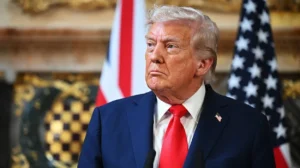
Another wave of strikes on the Gaza Strip that killed at least 20 Palestinians was carried out by Israeli warplanes on October 4, 2025. The operation followed only a few hours after US President Donald Trump had gone on record to encourage Israel to cease its attacks so that diplomatic contacts could stabilize and help to establish a ceasefire structure. The contrasting nature of the American diplomatic approach and the Israeli military intensification describes the weak nature of the international influence against the established security approaches.
The timing was significant. The attacks took place within 48 hours after the Trump administration declared a three-stage roadmap to terminate hostilities, ensure the freeing of Israeli and foreign hostages in the hands of Hamas, and embark on a multilateral reconstruction plan of Gaza. However, Israeli defense officials replied that the military imperatives could not be delayed and that operational objectives targeting the infrastructure of Hamas were a priority and could not be shut out even during diplomatic calls.
Operational Motives Vs Diplomatic Overtures
An Israeli spokesperson justified their actions because of plausible intelligence that Hamas insurgents were about to launch rockets, especially in the north of the Gaza strip. They mentioned that the strikes were in line with national security doctrine as they were termed as preventive defensive operations. However, the ruling compromised the shift in diplomacy and cast uncertainty about how much Israel would conform the timing of military actions to outside political counseling.
The rift raises a time old dilemma in the conflict; that of better coordinating real-time military decisions with long-term diplomatic strategies. Although symbolically strong, the Trump call did not lead to operationally significant pause, which demonstrates the structural constraints of the impact of external forces on the decisions of the sovereign military in the situation of a high tension level.
Human Cost And Contested Narratives
The influence of civilians is under the center of attention internationally. The health ministry in Gaza verified that most of the 20 victims were non-combatants with eight children and four women among them. Overnight, several neighborhoods were leveled to the ground and thousands of people were forced to run away with already overcrowded shelters. The infrastructure of medicine, already under tension due to blockade and past wars, has been pushed to the limit because of constant power outages and emergency supply shortages.
Videos circulated by journalists in the area depicted scenes of lawlessness as first responders tried to access victims who were trapped under the rubble. Hospitals like the Al-Shifa and Indonesian Hospital were not able to accommodate new patients because of a limitation on the capacity. The humanitarian agony, which was heightened by publicity, brought about fresh international calls to restraint.
Israel’s Justification And Legal Scrutiny
Israeli officials insisted that all attempts were made to limit civilian casualties and claimed that Hamas civilian forces would be hiding within the civilian areas, and therefore, this would make it difficult to plan operations. Military representatives once again insisted that proportionality and necessity are reviewed prior to every strike.
However, human rights organisations like Amnesty International and Human Rights Watch sounded alarms. Taking reference to satellite imagery and eyewitness accounts, they cast doubt on the relative scale of attacks and also raised flags of possible breach of international humanitarian law, especially the notion of distinction between civilians and combatants. Research is being pursued and pressure is being exerted to be more transparent and accountable.
Diplomatic Challenges In Balancing Peace And Security
The Gaza initiative by Trump is one of the recent few efforts at de-escalation on a multilateral level. It focuses on concurrent objectives: violence termination, hostages freeing, and international assistance delivery with the oversight of a joint force of United Nations, Egypt and Qatar. The suggestion even partially took hold. Hamas indicated a conditional willingness to the ceasefire aspect citing humanitarian needs and increasing weariness of the people of Gaza.
But when Israel chose to proceed with strikes the tension between strategic diplomatic frameworks and the tactical military priorities was revealed. In Israel, there is internal political pressure and particularly the right-wing coalition partners who limited the space of the government to compromise diplomatically. Meanwhile, the disjointed command hierarchy of Hamas made the obtaining of a unified commitment to ceasefire conditions more difficult.
The Limits Of Top-Down Peace Efforts
According to analysts, the initiative set by Trump, although ambitious, is overly dependent on political forces that have little influence on the realities on the ground. The decentralized activities of Hamas and lack of influence of Palestinian authorities in Gaza undermine the prospects of enforcement. In the meantime, the attitude of the Israeli government to truces negotiated and to unilateral security operations shows a constant distrust of the mediation of the international.
The mismatch between stated political will and the operation in the field is one of the key issues of the Middle East peace process. The October 4 events provide an example of how rapidly changing military calculations may miscarry or postpone even properly planned diplomatic schedules.
International Reactions And Strategic Implications
Response on the international spectrum was immediate. The European Union deplored the deaths of civilians and called again on restraint. Antonio Guterres, Secretary-General at the UN, termed the bombing to be very worrying especially when humanitarian negotiation is still taking place. Traditional mediators, Egypt and Jordan were angered with the timing of Israel and warned that such steps would lead to loss of diplomatic credibility.
The US administration, on the other hand, did not openly condemn. White House spokespersons referred to the incident as regrettable though restated that Israel had the right to self-defense. Such a paltry reaction attracted criticism among the civil society organizations in the US and Europe who claimed that such absence of strong diplomatic denunciation compromised the moral authority of the ceasefire offers.
Domestic Divisions And Evolving US Consensus
In the United States, the repugnant and polarizing elements were seen in political and civic discourse. Although numerous representatives of the various parties shouted their utter support to Israel in the name of its security, increasing pressure was coming up with the question of the long term survival of unconditional support in the face of escalating humanitarian tragedies. Congressional calls of increased oversight on US military aid to Israel resumed with a particular force following the continued deaths of civilians.
This is someone who has already talked about it: Journalist Beckett Unite struck against social media the irony of further bombing despite ceasefire appeals and called the carnage a painful circle of all the difficulties in transforming the diplomatic words into peace on the ground.
Navigating Toward Fragile Peace Or Enduring Conflict
The outbreak of October early 2025 might come to symbolize a turning point or another lost chance in the Israeli-Palestinian conflict that has been running over time. They reveal the manner in which the clash between operational sense of urgency and political strategy may reinforce violence despite the expressed intention to achieve peace. The fact that 20 Palestinians were killed in one day despite calls of calm points out to how unstable and frail the road to peace is.
As both sides weigh their next moves, the international community faces the perennial question of how to balance state security with humanitarian obligations. The continuing disconnect between ceasefire rhetoric and battlefield decisions calls for a recalibration of strategies that not only acknowledge but also address the core asymmetries and grievances fueling the conflict. Whether diplomatic tools can gain traction in the months ahead will depend not only on political will but also on the capacity to center human life in the calculus of security.