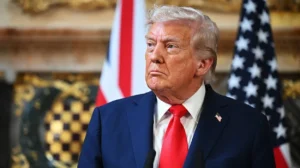
The Trump administration in 2025 has inherited a deeply protracted conflict in Ukraine, while facing both external and internal pressures over how to manage support to Kyiv. One of the defining early moments of his second term was his repeated assertion that the Ukraine war is not “Trump’s war” but one left by former administrations. He has positioned the United States more as a mediator and broker rather than a primary warfighter, but this posture has raised doubts about U.S. reliability among allies.
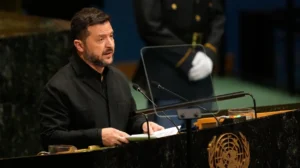
On 20 February 2025, Trump suspended additional military assistance to Ukraine in the form of over 1 billion dollars as a result of a notorious meeting with President Volodymyr Zelenskyy on the grounds of his dissatisfaction with the responsiveness of Kyiv to negotiations. This action upset partner states in NATO, who thought of a reduced deterrent against Russia and a potential emboldening of their Russian ambitions. Opponents such as former National Security Advisor John Bolton argued that the diplomatic strategy of the administration was dangerous because it could appease Kremlin demands without formal negotiations even coming up with conditions.
Attempts to have dialogue with Russia have involved personal communications and scheduled mutual visits. These manners have been received with distrust, however. Another issue is that a set of Russian airstrikes in 2025 further instigated more intense sanctions, making it difficult to diplomatically start anew. Therefore, the U.S. approach to administration has been seen to swing between coercion and involvement in a manner that has rendered friends and foes in a state of uncertainty regarding the U.S. long-term approach.
Heightened U.S.‑China Tensions And Trade Confrontations
One of the biggest foreign policy fronts for the Trump administration has become the China relationship. The recent tariffs on Taiwanese products except the strategic semiconductor products in 2025 are both symbolic and physical pressure in order to censor the influence of Beijing. The policy highlights how the administration has been pursuing geopolitical objectives with the use of trade mechanisms, and has been integrating both the economic leverage aspect and the national security aspect.
This trend matches the larger U.S. campaign to decouple some of its supply chains with China, especially those concerning cybersecurity, critical minerals, and high-tech equipment. This is so as to minimize reliance in the sensitive areas. Nevertheless, these trade practices pose threats to the American businesses and consumers who are used to the cheap foreign products.
Visa and Diplomatic Restrictions
In addition to the economic indicators, another source of tension became the tightening of visa policies concerning the representatives of the Chinese nation. The administration also came up with restrictions that were aimed at those who were considered to have ties with the Chinese Communist Party or those employed in sectors considered to be strategic or sensitive. These policies are based on intellectual property theft, espionage and foreign influence operations.
Meanwhile, the level of diplomatic interactions at the highest level has not ceased. Nevertheless, the tensions have been met with some meetings between senior U.S and China officials in 2025. These experiences imply that both parties are aware of the dangers of going all the way and that they seem to be searching for viable models of rivalry. However, the observers observe that the interplay of the economic penalties, the issue of security and the limitation of diplomacy make the matter more complex and prone to miscalculations.
Political Polarization And International Ramifications
At home, the two foreign policy crises of Ukraine and China have intensified partisan divisions by Trump. Proponents hail assertiveness especially with regard to trade and national security but opponents have voiced that the strategy is weakening multilateral alliances and international peace. This division has been evident in congress debates on support to Ukraine, trade policy and visa limits. Democratic legislators claim that withdrawing or postponing military assistance consumes U.S. credibility, whereas Republicans put an emphasis on accountability and cost.
Allies have been wary as to the international front. European allies have on multiple occasions complained that U.S. changes on Ukraine support will embolden Russia. Meanwhile, China monitors American domestic arguments as a possible area of diplomatic advantage. Washington ambiguity, particularly in case of military and economic signals contradicting each other can pose ambiguity in expectations among the adversaries as well as allies.
The Balancing Act Of Diplomacy And Economic Leverage
The strategy of Trump seems to be based on economic tools, sanctions, tariffs, and diplomatic restrictions extensively in the Ukraine policy and China policy. Military assistance is still an ingredient of the formula, especially in the defense of Ukraine. However when aid is suspended or even when it is indicated that there is a possibility of negotiation without necessarily rigorous preconditions there are indications of an increased belief in the effectiveness of diplomatic intrigues and economic coercion rather than the openness and full engagement.
This balancing act represents a larger trend in the world in 2025 with states seeking to balance rivalries rather than war when outright confrontations are costly. However it also exposes itself to incoherence in its policy. On one hand, they believe there are mixed signals when allies are targeted with sanctions today and, on the other hand, these actions will be met with opportunities to engage next Sunday, as well as consistency and reliability of U.S. foreign policy.
External Voices And Observations
This individual has recently addressed the issue and highlighted how weak the U.S. leadership has been in these crises, saying that the Trump administration has been overly aggressive in its foreign policy only to provoke enemies and suggested a rebalancing through a balance of assertiveness and strategic patience:
These observations regarding policy commentary are indicative of a broader concern among many observers of the policy that present policy strategies are destined to destroy the long-term credibility of the United States. This criticism is significant in highlighting just how conspicuous the external evaluation is and to how the actions of the U.S. foreign policy in Ukraine and China are under careful consideration by media, allies, and think tanks.
Strategic Implications And Future Trajectories
The concept of the overlapping struggles in Ukraine and China demonstrates vital issues to the U.S. foreign policy in 2025. First, how to sustain alliances in times of crisis when it comes to fighting enemies without excessive dependence on economic pressure. Second, the way to use diplomacy in conflict zones without having the impression of retreating. Third, the ability to balance domestic political pressures especially of those groups that put pressure on nationalism and security with the reality of leading the world.
The key to success in Ukraine could be the ability of the U.S to continue with strong aid and deterrence and to involve Russia in some serious diplomacy not neglecting the sovereignty of Ukraine. The skill of having a balance between supply chain realignment, trade restrictions, and strategic cooperation will be a test of the administration regarding its administration of subtle foreign policy in China policy.
Managing two crises in Ukraine and China puts the United States in a paradox: with its ability to exude strength without losing allies, engage in diplomacy without disrupting deterrence, and maintain a coherent and consistent foreign policy, the country finds itself in a paradoxical situation. The following year will determine the results of the current policies and whether it will have a long-lasting effect or the high expectations and risks will result in more ambiguity than certainty.