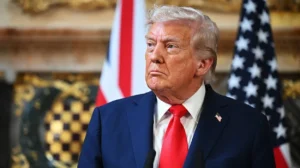
The story of Donald Trump paying off the mortgages of strangers has been discussed for decades, as a part of American political legend. One of the most incessant is that Trump paid the mortgage of a good Samaritan who, many years ago, assisted in repairing his car on the roadside. Repeated several times on social media and in informal dialogue, the story creates an image of an act of generosity in the moment. Nevertheless, fact-checking sources like Snopes and PolitiFact have traditionally rated the story unproven and most likely apocryphal.
The story has no plausible background and eyewitness record. The assertion has not been substantiated by any witnesses, news reports or known recipients. Regardless of this, the myth still flourishes in the online realm and political discourse, usually tailored to emerging popular discourses concerning the personality of Trump. It represents the effect of repetition, particularly on the Internet, in perpetuating legends which lack the support of factual evidence.
Examination Of Notable Mortgage Payment Claims
One of the most common statements was that Donald Trump paid the mortgage off of the family of a murdered New York City police officer. It made news when it was posted on conservative talk shows and blogs. It was subsequently made clear though that the mortgage was actually paid off by the Tunnel to Towers Foundation, which is a long-established charity that helps first responders and their families.
The misunderstanding was caused by the fact that the charity was publicly recognized and it was thought that Trump was contributing money to it. As a matter of fact, no record exists of a personal contribution made by Trump to pay that mortgage and the foundation has not stated otherwise. The incident portrays the ease with which associations and assumptions are distorted to be facts.
Lack Of Supporting Financial Records
Other statements have conjectured that Trump paid off mortgages in the 90s or early 2000s. Such statements usually refer to some unknown beneficiaries and do not contain corroborative detail. It is important to note that Trump filed several tax returns in the 1990s, part of which have been released due to various inquiries, which suggest that he made hefty losses in the same decade. It is unlikely that huge unaccounted cash gifts would be made due to the financial strain.
By the year 2025, Trump is still being investigated by New York prosecutors and the federal government on personal financial practices, real estate values and lending statements. No such studies have revealed any records to support the claims of mortgage payoffs. The lack of evidence in both the public records and the investigative findings is another factor that leads to the loss of the credibility of such claims.
Political Context And Misinformation Dynamics
The mythology of Trump as a generous person is used by politicians in different ways. To fans, it is a way to show his personal compassion and success in the business. To critics, it is a tendency towards exaggeration or manipulation of the opinion of the people. Such stories spread in politically charged settings where there is usually a delay in fact checking.
The news of Trump reportedly paying off his mortgage also recur very often in election years or in situations when housing policy is discussed on the national agenda. The appeal to emotion of a rich person saving a troubled housewife is cross-partisan, but it makes room to mislead.
The Role Of Social Media In Myth Propagation
Social media such as Facebook and X (previously used as Twitter) remain significant sources of these myths. In the absence of consistent ways of checking origin, repetition puts in place conviction. Images of Trump with uniformed officers or everyday citizens will in most cases accompany the posts that refer to the mortgage story, which is confirmation by proximity as opposed to confirmation by evidence.
The fact-checking organizations have called on the caution and the significance of primary sources. However, emotionally loaded narratives are usually not subject to questioning, particularly in cases where they resonate with the ideological notion of users. Such a process has led to an increasing gap in perception and confirmed facts in the mass discourse.
Mortgage Stories In The Broader Housing Policy Debate
Although Trump did not pay personal mortgages, he did affect the mass housing markets during his presidential term. Deregulation policies as well as reforms in the functions of Fannie Mae and Freddie Mac generated varying effects in affordability. Opponents claim that this was a move to favor lenders and investors at the expense of first-time buyers of homes.
The period between 2017 and 2020 witnessed fluctuations in mortgage rates caused by tax reforms and Federal reserve behaviors as well as home prices skyrocketing in some markets. The officials in the Trump administration argued that deregulation stimulated growth and investment. Nevertheless, the housing inequality debates were aggravated by the deteriorating affordability measures of low-income buyers.
New Housing Initiatives In 2025
By mid 2025, housing is a controversial political topic. The Trump transition advisory team has proposed a new policy to allow rent payment histories to count toward mortgage qualifications. The proposal, if enacted, could enable millions of renters to build credit profiles more aligned with homeownership eligibility criteria.
While not related to Trump’s personal financial actions, this policy proposal underscores the importance of separating individual myths from actual governance and policy development. It also reveals how stories of personal generosity can distract from institutional reforms with more widespread effects.
Fact, Fiction, And The Public Understanding Of Leadership
The continued existence of mortgage-related myths regarding Trump demonstrates an even greater difficulty in political communication: decoupling individual stories and history. The tales, continually discredited, still stand due to their appeal to fundamental convictions regarding leadership, character and wealth. They provide what is morally clear in a political environment, which is frequently disorganized and unclear.
But the facts that are true do affect the creation of the democratic engagement and knowledgeable decision-making. With the digital age of mythology of public figures, the onus of judgment is placed on audiences. A healthy democracy does not only need freedom of speech; it also needs media literacy that is able to think critically when looking at viral stories.
Whether Donald Trump himself paid off the random mortgages, no evidence exists of this, evident in credible investigations, public filings and accounts of the beneficiaries. Although the stories have survived in different forms, the stories are an example of how any narratives, whether true or false, can influence reputations and the memory of the masses. With the development of 2025, new policy discussions, and ongoing partisan political polarization, it is necessary to know the difference between symbolic myths and practical actions to be engaged in the civic process.