President Donald Trump has turned the latest Iran diplomacy into an ultimatum, saying Tehran is running out of room to maneuver and calling the current window its “last chance” to strike a deal. In the same breath, he said he had no time constraints on the talks, a framing that mixes urgency with open-ended pressure and is clearly designed to keep leverage on Iran while leaving the door technically open for negotiations.
This is important because it arrives at a time when Iran is making a public statement about its refusal to enter direct negotiations with the US government, despite Oman mediating separate negotiations concerning secure transit through the Strait of Hormuz. This dichotomy forms the basis of the situation that is being analyzed; President Trump is making the statement like one would before diplomatic negotiations, while Iran is seeing the situation from a different perspective.
Hormuz Becomes The Core Issue
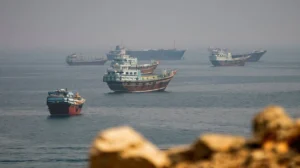
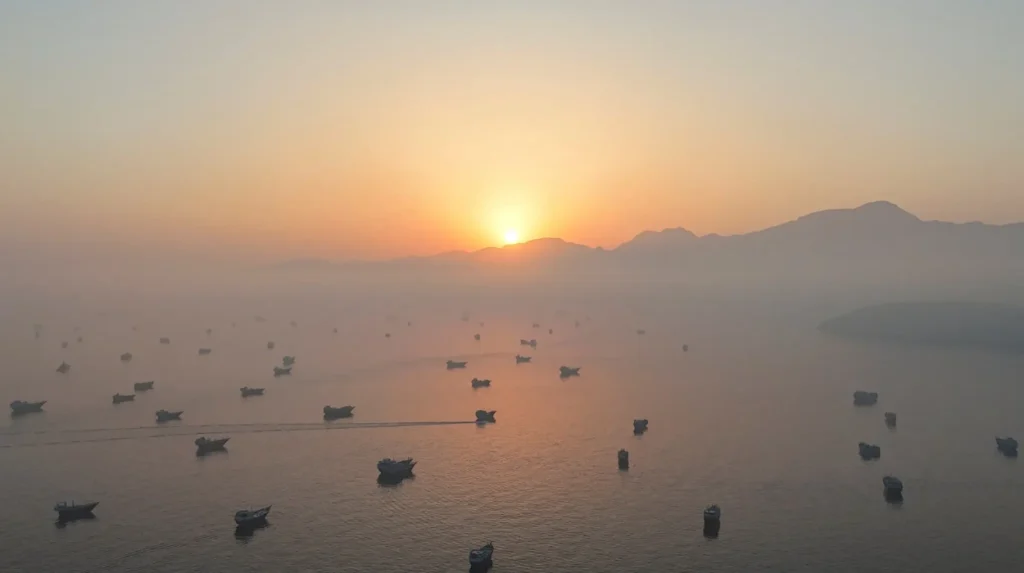
The central element in this discussion is the Strait of Hormuz, a strategic waterway linking the Persian Gulf with the Gulf of Oman and the Arabian Sea. It is one of the world’s key energy chokepoints, and references to the strait in reports covering these negotiations point out that a significant portion of the world’s oil and liquefied natural gas passes through it, hence, any disruption becomes an international rather than a bilateral matter. The present Iranian offer, according to several media sources, is not a permanent agreement but a temporary one. According to the deputy foreign minister of Iran, Kazem Gharibabadi, the offer of Tehran includes a transit corridor where the country will be in complete control of the inbound traffic and a part of the outbound traffic, while Oman will be responsible for managing the opposite traffic.
The Reuters’ report noted that the agreement may last up to three months, emphasizing the temporary nature of the offer made by Tehran. It is significant for understanding that Iran is seeking a temporary formula rather than a solution of a political nature.
It is also consistent with earlier Iranian reporting that Tehran had discussed a 60-day negotiation period and temporary fee waivers for passage through the strait, suggesting a pattern of short-term, conditional maritime management rather than an all-or-nothing reopening.
Iran’s Position Is More Calculated
Tehran’s public language has been carefully calibrated. Foreign Ministry spokesman Esmaeil Baghaei said the talks with Oman were about “safe shipping traffic” and that the two sides had exchanged views on “joint principles and operational mechanisms” for managing the waterway while observing the sovereign rights of both countries as coastal states. He also said the talks were “fruitful” and that some progress had been achieved, but stressed that there had been no change yet in the situation on the ground.
This statement is important as it positions the matter as one of sovereignty and control, rather than concession. In other words, Iran does not present itself as succumbing to pressures, but rather as crafting the terms of navigation. Baghaei added that there were currently no direct negotiations with the United States, which directly contradicts what Trump implied when saying that the talks are ongoing. The Iranians have also contested the notion that the proposition made by Oman was agreeable as it was first presented. According to Gharibabadi, Oman suggested a 50/50 deal, which Iran refused to accept because it did not satisfy the needs of Iran. This refusal shows that Iran does not want equality only, but rather operational dominance over some of the important sections of the route.
Oman As The Mediator
Oman continues to be the main channel of diplomacy. A number of meetings between Tehran and Muscat have been held since June, with negotiations at the level of deputy foreign ministers as well as technical discussions regarding maritime routes. In one of these rounds, the two parties exchanged maps on possible routes, while in another, they talked about “smooth passage,” as well as the possibility of opening a new maritime route via the strait distinct from the current corridors. The Oman diplomatic efforts are vital since Muscat is one of the few regional powers that is trusted by both Iran and the West. Oman, according to some reports, has tried to look into the feasibility of developing a regional structure, which can function on the lines of a fee or consortium-based structure, much like the Strait of Malacca mechanism, in which users fund the management of the corridor.
The fact that talks are being handled through Oman also explains why public messaging has diverged so sharply. Tehran can describe the process as technical and sovereign; Trump can describe it as a high-stakes diplomatic countdown. Both narratives can coexist because the actual negotiations are opaque, fragmented, and heavily mediated.
Trump’s Pressure Tactics
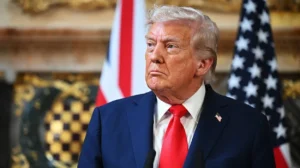
Trump’s comments are not just about diplomacy; they are also about pressure politics. He said Iran had a “last chance” to sign a good document and added,
“I want to give them every last chance before decapitation,”
according to reporting on his Oval Office remarks. He also said negotiations were happening “right now” and claimed they were being carried out at Iran’s request, with backing from Saudi Arabia, the UAE, Qatar and others.
Those statements play several roles. First, they increase the cost of waiting for Tehran. Second, they inform both allies and competitors that the White House is ready for dialogue, but on conditions dictated by Trump. Third, they leave the military approach off the table while using diplomatic rhetoric. This mixture of toughness and diplomacy is characteristic of Trump’s approach, but, in this particular case, it has an additional meaning since the Strait of Hormuz is an economic bottleneck of global importance, not just a symbolic regional point. Moreover, Trump connected those talks to the reopening of the strait and to ending the war, thus combining maritime security, nuclear issues, and ceasefire logic in one package. Such an approach may give some bargaining power, but at the same time, it increases vulnerability, since Iran may find such demands excessive and prefer a technical solution with Oman.
Why The Timing Matters
The timing is critical because the talks appear to have accelerated after a period of military escalation. Reports in early August said the negotiations between Iran and Oman were entering their “final stages,” while Trump suggested the U.S. and Israel had agreed to hold off on further attacks if a deal could be reached quickly. In one report, Trump said the agreement would include the
“Immediate, Complete, and Total OPENING OF THE HORMUZ STRAIT”
and an end to Iran’s nuclear threat.
That is a very ambitious package for any single negotiation, especially one that Iran insists is not even directly with the United States. The more realistic reading is that the Oman talks are about immediate risk reduction: a temporary shipping corridor, a safer transit mechanism, and perhaps a framework for later political bargaining. The more ambitious reading, favored by Trump’s rhetoric, is that the maritime issue can be converted into a broader strategic settlement.